


Buddleja lindleyana Seeds | Lindley’s Butterfly Bush
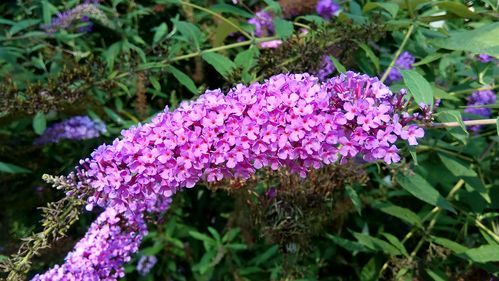
LATIN NAME: Buddleja lindleyana
COMMON NAME: Lindley’s Butterfly Bush
Plant Profile
Lindley’s butterfly bush is the plant behind the name, a Chinese shrub named for the English botanist John Lindley and sent to Europe by Robert Fortune in the 1840s. It grows one to two metres in a season, with square, grey-downy stems, narrow opposite leaves and long, curved spikes of violet flowers that open from the base upward through late summer. The flowers are set in whorls along the spike, which gives them a beaded look, and each is a narrow tube that only long-tongued insects can reach. It is hardier than most buddlejas in leaf, though its stems die back in a hard winter, and it regrows from the base to flower again the same year. It is the species most often used to bring cold tolerance into garden hybrids.
Science & Biotechnology
The name commemorates John Lindley, who described the plant from Chinese material and who was one of the first to argue that botany should be a laboratory science rather than a descriptive one. Fortune’s introduction reached the nurseries of Veitch in 1844, and from there it spread across Europe, where it was crossed with Himalayan and American species to produce the garden buddlejas of the early twentieth century. Molecular work places the genus in Scrophulariaceae, close to Verbascum, and shows that the tube-flowered species form a clade adapted to long-tongued pollinators. The species is tetraploid and interfertile with diploid relatives, which is why its hybrids are so variable. Unlike Buddleja davidii, it rarely sets seed in temperate gardens and has not become invasive, a difference that matters when choosing a buddleja for a garden near wild land.
Uses & Benefits
The shrub is grown for late-summer colour, for cut flowers and for its value to moths and bees, and it is a good choice for a cold garden where the more tender buddlejas die back. Its flowers are strongly scented and are used in Chinese medicine, and the leaves are applied to wounds in regional practice. The plant is not edible and the leaves are mildly toxic, so it belongs away from grazing. In the border it works at the middle or back, where its arching stems can lean into a path, and it pairs well with late grasses. It is also a useful plant for a wildlife corner, since it flowers when the second brood of butterflies is on the wing.
Growing from Seed
Sow the dust-like seed on the surface of a light mix in spring, press it down and do not cover it, because light is required. Keep at eighteen to twenty-two degrees with high humidity, and water from below. Germination takes two to four weeks and is often heavy. Prick out the seedlings when they are large enough to handle, and grow them on in a cool, bright place. Plant out after the last frost into well-drained soil in full sun, and water through the first summer. Cut the stems back to thirty centimetres in spring, since the plant flowers on new wood. Mulch in cold gardens to protect the crown.
Our Take
The hardy buddleja that started the garden hybrids, with beaded violet spikes and no invasive habit. Cut it back in spring.
Related Reading
If Lindley’s Butterfly Bush appeals to you, these related plants are worth a look: