


Robinia neomexicana Seeds | New Mexican Locust
LATIN NAME: Robinia neomexicana
COMMON NAME: New Mexican Locust
Plant Profile
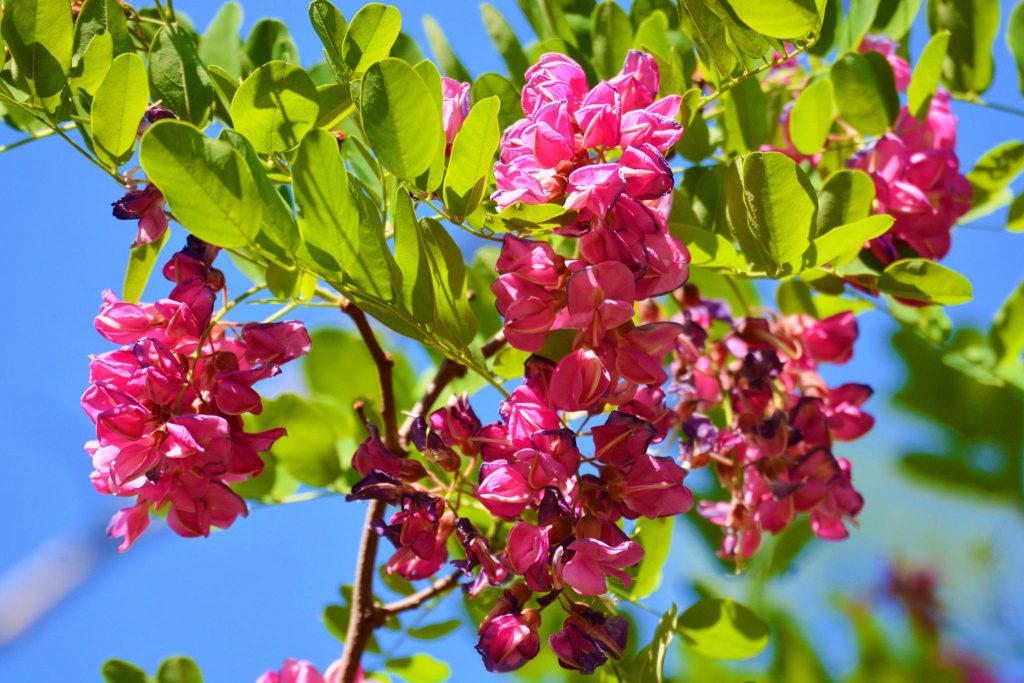
New Mexican locust is a thicket-forming shrub or small tree of the mountains of the American Southwest, growing two to five metres with arching, spiny branches and pinnate leaves of many small leaflets. In late spring it produces hanging clusters of rose-pink pea flowers, a colour that separates it at a glance from the white-flowered black locust, and these are followed by bristly brown pods. It grows at fifteen hundred to three thousand metres on rocky slopes and in canyon bottoms, often in dense clonal patches that spread by underground runners. It fixes nitrogen, tolerates drought and cold, and is one of the first woody plants to colonise disturbed ground after fire or logging. Its flowers are a good nectar source, and its foliage is browsed by deer and elk.
Science & Biotechnology
Robinia neomexicana is one of a small group of North American locusts, and it differs from the eastern black locust in its shrubby, clonal habit, its pink flowers and its higher-altitude range. Like its relatives it fixes nitrogen through rhizobial nodules, and its ability to sucker makes it a pioneer after disturbance, sometimes to the point of forming single-species thickets that exclude other plants. The species is less aggressive than black locust outside its native range and is not widely listed as invasive, though it can spread in disturbed sites. Its seed is hard-coated and requires scarification, and the seed bank can persist for years. The wood is hard and durable but rarely large enough to use. The plant contains robin and related toxic compounds, as do its relatives, and livestock poisoning has been recorded.
Uses & Benefits
The shrub is planted for erosion control on dry mountain slopes, for wildlife cover and as a nectar source for bees, and it is occasionally used in xeriscapes for its pink flowers. Its thickets give cover for small mammals and nesting birds, and its flowers are visited by bumblebees and solitary bees. In New Mexico it is browsed by deer and by livestock in spring, before the spines harden, though the toxicity means it should not be relied on as fodder. The wood is used locally for fence posts and firewood. In the garden it is a plant for a poor, dry site where a thicket is wanted, and it should be kept away from small plots, septic lines and paving, since the suckers travel.
Growing from Seed
Scarify the seed with hot water or sandpaper, soak overnight, and sow one centimetre deep in a gritty, free-draining mix. Keep at twenty degrees; germination takes one to three weeks. The seedling grows fast and develops a deep root system, so plant it out young, in autumn, into poor, well-drained soil in full sun. Water only in the first summer. It needs no feeding and tolerates both drought and cold. Be careful about siting: the plant suckers widely, and cutting it down tends to increase the thicket. If a single trunk is wanted, remove suckers annually. The first flowers appear in the third or fourth year.
Our Take
A pink-flowered mountain locust that makes a thicket whether you want one or not. Dry, poor ground and plenty of room.
Related Reading
Continue exploring with these related plants: