


Viburnum macrocephalum Seeds | Chinese Snowball
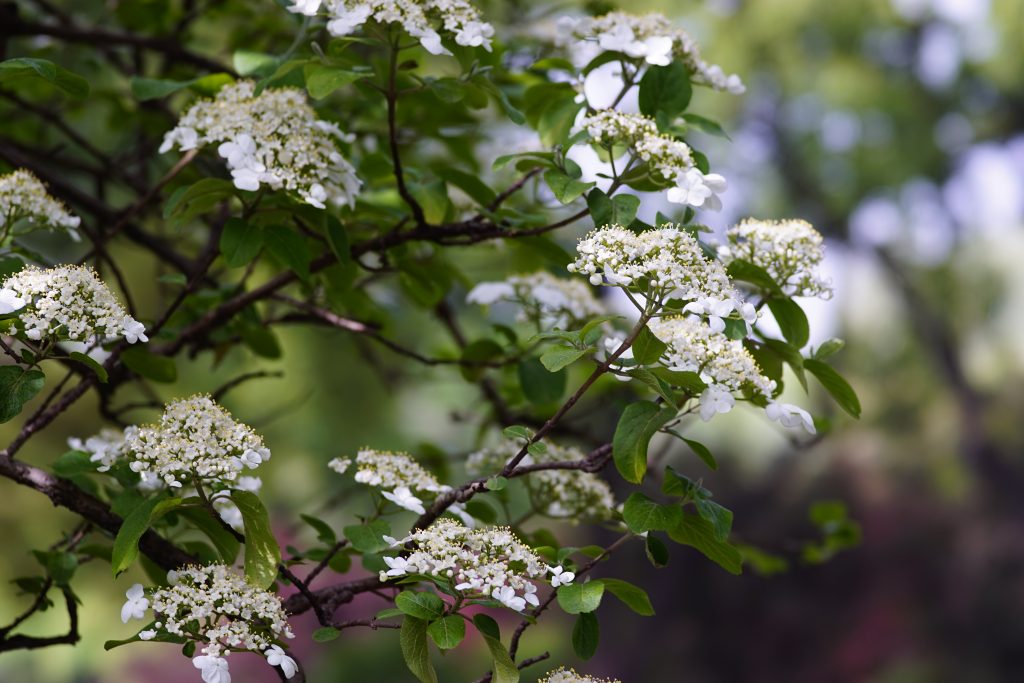
LATIN NAME: Viburnum macrocephalum
COMMON NAME: Chinese Snowball
Plant Profile
Chinese snowball is a large deciduous shrub of the honeysuckle family, growing three to five metres with stiff, upright branches and opposite, oval, coarsely toothed leaves. In late spring the ends of the shoots carry enormous, perfectly round heads of white flowers, eight to twelve centimetres across, made entirely of sterile florets, so that a bush in bloom looks hung with snowballs. The flowers last for weeks and fade to cream, and they are followed by no fruit at all, because every floret is sterile. It is a Chinese garden plant of long standing, grown around temples and courtyards for centuries, and it is one of the parents of the garden snowball viburnums. Old plants become leggy and should be renewed by hard pruning.
Science & Biotechnology
Viburnum macrocephalum is a Chinese species in the moschatel group of the genus, and the plant grown in gardens is almost always the sterile form, which is technically Viburnum macrocephalum f. macrocephalum, while the wild, fertile form with flat lacecap heads is f. keteleeri. The sterile form cannot set seed, because the florets have no functional stamens or pistils, so any seed sold under this name comes from the fertile form or from a hybrid, and seedlings will not produce snowball heads. That is why the cultivar is propagated by cuttings. The genus is a textbook example of the evolution of sterile flowers as a display strategy, since the showy ring of sterile florets in the fertile form attracts pollinators to the tiny fertile flowers in the centre. Viburnum is also studied for its diversity of defence chemistry and for its use in phylogenetic work on the Dipsacales.
Uses & Benefits
The shrub is grown purely for ornament, as a specimen, a hedge or a background plant, and its white flower heads are one of the signals of late spring in temperate gardens. The flowers hold well when cut and are used in arrangements. In Chinese medicine the stems and leaves are used for skin complaints and for rheumatism, though the plant is mildly toxic and should not be taken casually. It is a good shrub for a large garden or a park, and it tolerates hard pruning, city air and a range of soils. The sterile flowers mean no mess and no seedlings, which is an advantage near paving and in formal gardens. It is not a plant for a small border, since it wants space to arch.
Growing from Seed
Seed is only available from the fertile form and is slow: stratify at four degrees for three months, then sow one centimetre deep in a leafy mix at fifteen degrees. Germination can take a second spring. Remember that seedlings will not be the snowball form, so propagate the named plant by softwood cuttings in June, taken with a heel and rooted in a closed frame. Grow on in a rich, moist soil in sun or half shade. Plant out in autumn, and prune after flowering, cutting a third of the oldest stems to the base each year to keep the bush young and the flower heads large.
Our Take
A shrub hung with white balls in late spring, and sterile by design. Buy it as a cutting, not as seed, if the snowballs matter.
Related Reading
Gardeners who grow Chinese Snowball often pair it with these related subjects: