


Styrax obassia Seeds | Fragrant Snowbell
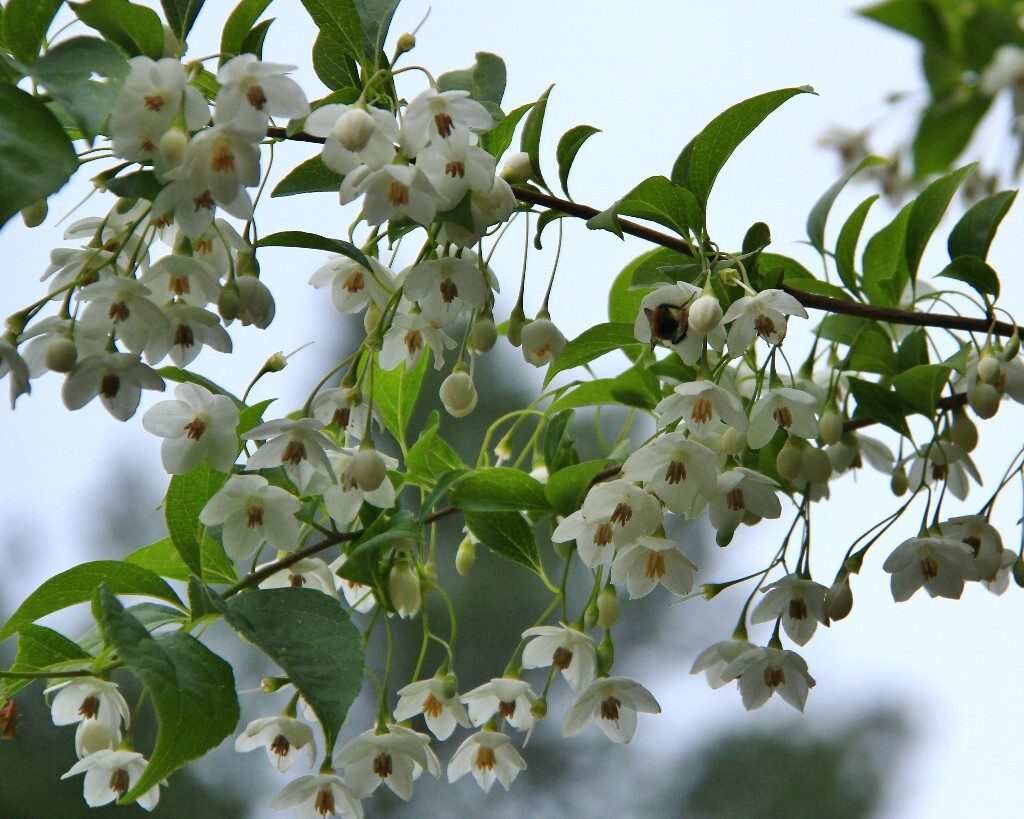
LATIN NAME: Styrax obassia
COMMON NAME: Fragrant Snowbell
Plant Profile
Fragrant snowbell is a deciduous tree of the storax family from Japan, Korea and northeastern China, growing eight to twelve metres with a single trunk, a broad crown and unusually large, rounded leaves up to twenty centimetres across. In early summer it hangs clusters of white, bell-shaped flowers along the underside of the branches, each flower nodding on a short stalk, and the scent carries some distance on still evenings. The flowers are followed by hard, ribbed capsules that persist into winter. The trunk is smooth and grey, and the leaves turn yellow before they fall. It grows in moist, wooded valleys and on shaded slopes, and it is one of the finest small flowering trees for a woodland garden, though it is rarely planted.
Science & Biotechnology
Styrax obassia belongs to the Styracaceae, the family that also produces benzoin resin, and its genus is named for the aromatic resin of a related species. The flowers are pendulous and adapted to pollination by bees that hang from the petals, and the fruit is a dry capsule rather than a fleshy berry, which distinguishes it from some of its relatives. The species is diploid and its genome has been used in phylogenetic work on the Ericales, the order that contains the family. Seed dormancy is deep, with both a hard coat and an immature embryo, and germination in the wild often follows two winters. In Japan the wood is used for small utensils and the seed is sometimes strung as a toy, and the tree is planted in temple gardens for its flowers.
Uses & Benefits
The tree is grown for its flowers and its large, handsome leaves, and it makes an excellent specimen for a woodland garden or the edge of a lawn, where the pendulous flowers can be seen from below. It is also a good tree for a small garden, since it grows slowly and stays manageable for decades. The flowers are fragrant and can be cut, though they wilt quickly. In Japan the seed is used as a toy and the wood for small carvings. It has no medicinal use in modern practice, though related species yield benzoin. It prefers a sheltered site, since the large leaves are damaged by wind, and it tolerates shade better than most flowering trees.
Growing from Seed
Sow in autumn and leave the pots outdoors for two winters, or stratify warm for three months followed by cold for three. Sow one centimetre deep in a leafy, free-draining mix. Germination is slow and irregular, and the seedlings are delicate for the first year. Grow them on in deep pots in half shade, and plant out in autumn into moist, humus-rich, acid soil with shelter from wind. Mulch with leaf mould and water through dry summers. Stake the young tree for two years, and prune only to remove dead or crossing branches in winter. The tree flowers from about the sixth year.
Our Take
A rare snowbell with leaves the size of a plate and flowers that hang and scent the evening. Slow, sheltered and worth it.
Related Reading
Readers interested in Fragrant Snowbell frequently explore these as well: