


Fagopyrum esculentum ‘Takane Ruby’ Seeds | Takane Ruby Buckwheat
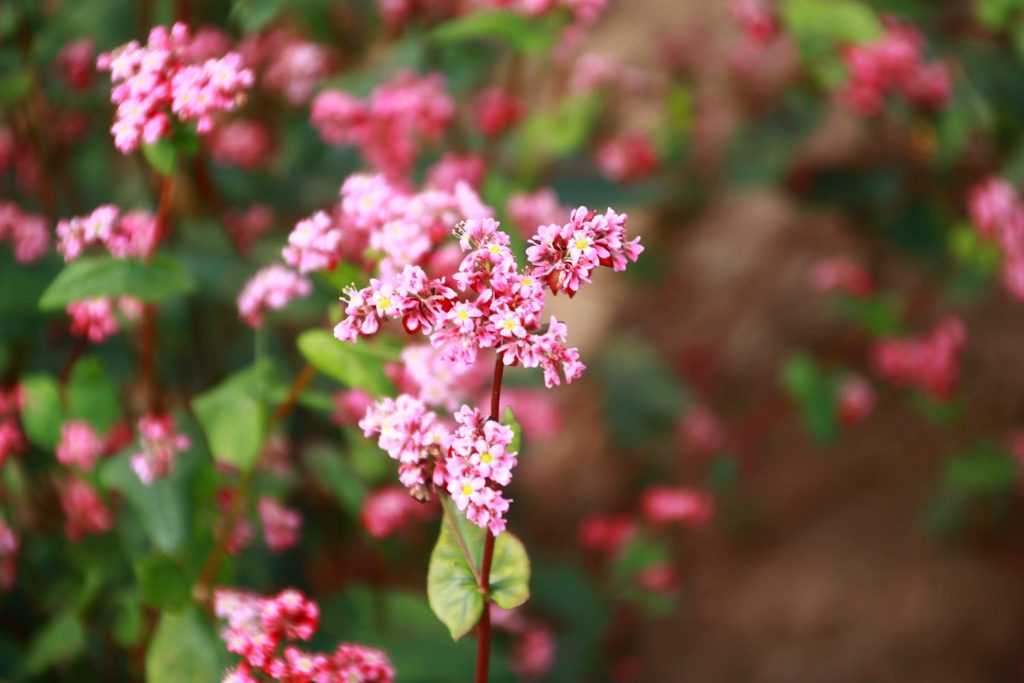
LATIN NAME: Fagopyrum esculentum ‘Takane Ruby
COMMON NAME: Takane Ruby Buckwheat
Plant Profile
Takane Ruby is a Japanese buckwheat bred for red flowers rather than for grain, and it has become a familiar sight in Japanese summer fields and in cover-crop trials elsewhere. It grows sixty to a hundred centimetres on hollow, reddish stems with heart-shaped leaves and, from July, dense heads of small, deep rose-red flowers that hold their colour for weeks. The plant is fast: from sowing to flowering in about six weeks, and to seed in under three months. It is frost-sensitive and dies at the first hard autumn frost, leaving a mass of hollow stems that are easy to compost. The flowers are heavy with nectar, and a field of it hums with bees. Its leaves and flowers are richer in rutin than the common grain types, which is part of why it is grown.
Science & Biotechnology
Common buckwheat is a pseudocereal in the Polygonaceae, unrelated to wheat, and its rapid growth and shallow roots make it a standard cover crop for weed suppression and for catching nutrients. The Takane Ruby cultivar was selected for a high anthocyanin content in the flowers and for elevated rutin, a flavonoid glycoside that is used in medicine for capillary fragility. Buckwheat is also unusual in its self-incompatibility system, with two flower morphs, pin and thrum, that must cross-pollinate; a field therefore needs both types and a pollinator population to set seed. The species has a small genome and has been proposed as a model for pseudocereals, and its allergenic proteins are being studied because buckwheat allergy is common in East Asia. It is also a useful trap crop for beneficial insects.
Uses & Benefits
The plant is grown as a green manure, a summer cover crop, a bee forage and an ornamental edge for a vegetable plot. Its roots exude acids that unlock phosphorus, and its fast canopy smothers weeds, so it is often sown between crops or on bare ground after harvest. The flowers are cut for arrangements and hold well. The grain is edible and is made into noodles in Japan, though this cultivar is not the best for that purpose. The leaves can be eaten young, and the flowers are used to colour and flavour sweets. It is not frost-hardy, so it must be sown after the last frost, and it will self-sow if a few plants are left to ripen.
Growing from Seed
Sow direct where the plants are to grow, since buckwheat resents transplanting. Broadcast at three grams per square metre, rake in, and water well; germination takes five to ten days at fifteen to twenty degrees. Thin to ten centimetres if the stand is dense. The plants need full sun and modest fertility; too much nitrogen produces leaf and few flowers. Water through dry spells, since drought shortens flowering. For green manure, cut the plants at first flower and dig them in before the stems harden. For seed, let the first heads turn brown, cut the stems and dry them upside down in a paper bag, then thresh. Do not follow with another buckwheat crop for three years.
Our Take
A red-flowered buckwheat that doubles as green manure and bee forage. It is fast, cheap, and gone at the first hard frost.
Related Reading
Readers interested in Takane Ruby Buckwheat frequently explore these as well: