


Fagopyrum esculentum Seeds | Buckwheat
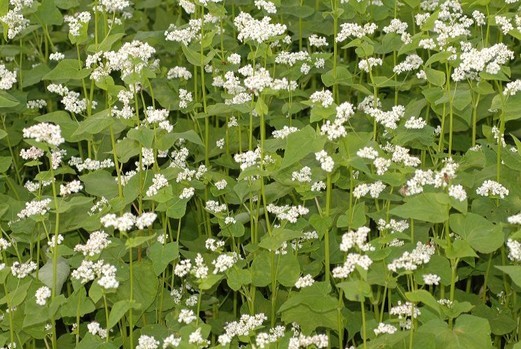
LATIN NAME: Fagopyrum esculentum
COMMON NAME: Buckwheat
Plant Profile
Buckwheat is not a cereal and not a grass, which is the first thing worth knowing about it. Fagopyrum esculentum is a member of the knotweed family, domesticated in southwestern China, and grown across temperate Asia and Europe for the triangular groats inside its dark hull. It grows 30-120 cm tall in about ten weeks, with heart-shaped leaves and dense clusters of small white flowers that fade to pink.
The speed is the defining feature. Buckwheat goes from sowing to seed in ten to twelve weeks, which makes it the fastest grain-like crop in temperate agriculture and the reason it works as a catch crop, a smother crop and a bee forage crop as well as a food.
Science & Biotechnology
The nutritional interest centres on rutin, a flavonoid glycoside that supports capillary integrity and is used in venous-insufficiency preparations. Buckwheat is one of the richest common food sources, and the rutin is concentrated in the leaves and in the dark outer layer of the groat, which is why whole groats and buckwheat greens carry more than refined flour.
The plant also makes fagopyrin, a naphthodianthrone that causes photosensitization in livestock and, rarely, in people who eat large amounts of raw buckwheat greens. It is the reason buckwheat is cooked and why buckwheat sprouts should be eaten in moderation. The species is a diploid with a strong self-incompatibility system, which makes breeding slow and is why the crop still relies on landraces in many regions.
Uses & Benefits
The culinary reach is wider than most people expect: soba in Japan, kasha in Russia, galettes in Brittany, and noodles in northern Italy, all from the same seed. The flavour is earthy and slightly bitter, and it works best when cut with something rich.
As a farm and garden plant, buckwheat is a fast smother crop that suppresses weeds, a scavenger of phosphorus from poor soil, and one of the best midsummer bee forages available, producing dark, strongly flavoured honey. It is frost-sensitive, so it fits into the gap between two cash crops rather than into a full season.
Growing from Seed
Sow 1-2 cm deep once the soil has reached 15°C, broadcast or in rows 15 cm apart, and expect germination in three to ten days. It emerges fast and covers the ground within three weeks, which is the point of using it as a smother crop.
It needs no feeding and tolerates poor soil, though it responds to moisture. Water during flowering if you want a seed crop, since drought at that stage reduces set. Harvest when about three-quarters of the seed is dark and the plants begin to yellow; leaving it longer means losing seed to shattering.
Our Take
Sow a patch even if you never harvest it: the flowers will be loud with bees within a month, and the plants will smother whatever weeds were planning to come up. It is the most useful two-month crop a gardener can put in the ground.
Related Reading
More species in the same orbit as Buckwheat: