


Livistona chinensis Seeds | Livistonia
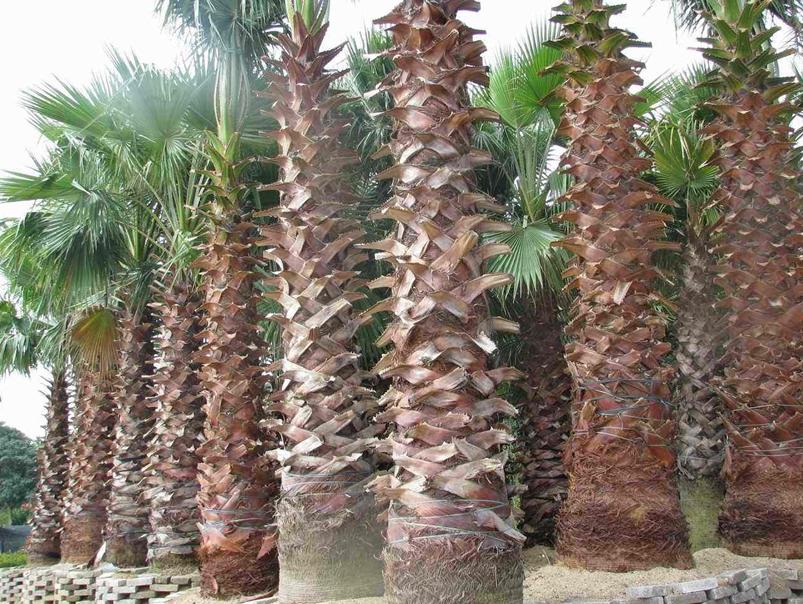
LATIN NAME: Livistona chinensis
COMMON NAME: Chinese Fan Palm
Plant Profile
This page looks at the Chinese fan palm as a landscape plant rather than as a seed-raised curiosity. Livistona chinensis is planted in courtyards, car parks and hotel gardens across southern China, where its tolerance of wind, salt and cramped root space makes it one of the few large palms that will grow in a paved square.
A mature specimen is eight to twelve metres tall with a crown four metres across, and the trunk stays slender, so the palm fits into spaces where a broadleaf tree would not. The leaf bases persist on the trunk for years, giving it a rough, woven texture.
Science & Biotechnology
The palm is unusually tolerant of root restriction, which is why it survives in planter boxes and in the narrow strips beside roads. Its roots are fibrous and spread laterally rather than descending, so it can find water under paving without lifting it, and it recovers from transplanting better than most palms if the root ball is kept intact.
Wind tolerance comes from the leaf anatomy: the segments are divided almost to the base, so each one twists independently and the crown sheds gusts instead of resisting them. That is why the palm survives typhoons that strip broader-leaved trees, though the oldest leaves are usually shredded afterwards. The palm is also planted along motorways in southern China, where it tolerates exhaust, wind and the restricted root space of a central reservation. The palm also tolerates salt spray, so it is used in coastal plantings where other trees are burned by wind-borne salt.
Uses & Benefits
The palm is used as a specimen in gardens, as a street tree and as a container plant for patios, and it is one of the standard palms for indoor use when young. In southern China the leaf is woven into fans and hats, and the fruit is eaten in some districts after processing.
In landscape terms it is a structural plant: it gives height without a heavy canopy, so underplanting with shrubs and ground cover works well. It should not be planted where leaf litter matters, since a mature palm drops a constant supply of dry segments onto the ground below.
Growing from Seed
Plant in spring or early summer, in sun or part shade, with the root ball set at the same level it grew at. Water deeply twice a week for the first season, then reduce to drought conditions; established palms need little irrigation.
Fertilise with a palm fertiliser containing magnesium and manganese, since the species shows yellowing of the older leaves when these are short. Do not remove green leaves, and cut only the dead ones, close to the trunk, in late spring. In cool climates, grow it in a large container and move it under cover before the first frost.
Our Take
The palm to plant where space is tight and wind is strong, and one of the few that looks settled in a paved courtyard within a few years.
Related Reading
Continue exploring with these related plants: