


Consolida orientalis Seeds | Larkspur
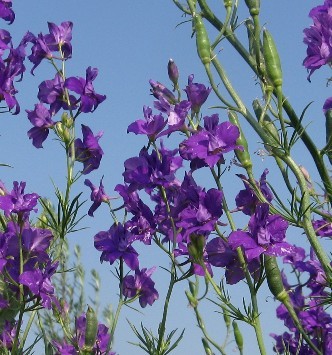
LATIN NAME: Consolida orientalis
COMMON NAME: Larkspur
Plant Profile
The easiest way to tell a true larkspur from a delphinium is to count the spurs. Consolida carries a single slender spur at the back of the flower, while the perennial Delphinium carries four, one behind each of its petal-like sepals. That one-spur rule is the quick field mark that keeps the two genera straight.
The leaves are deeply cut into fine, almost thread-like segments, giving the plant a light, airy foliage quite unlike the broad leaves of many border perennials. The slender stems carry that foliage without weight and let the flower spike read as a delicate wand.
The bloom is a loose raceme of irregular flowers in shades of blue, violet, pink, and white, each with its single backward spur. The blue forms are the classic larkspur colour and the ones most sought after for both the border and the dried stem.
In the garden Consolida is grown for its tall, airy spires that weave through other spring and early-summer flowers without dominating them. The same spires are cut for the vase, where they last well and mix with heavier blooms.
For drying, the spikes are cut at the peak of colour and hung in a dry, dark place so the hue sets rather than fades. The fine texture keeps its shape, which makes larkspur a useful structural element in dried work through the cold months.
For the home gardener the annual larkspur is the easier route to the look, because it asks only for a cool start and a freedraining spot, whereas the perennial delphiniums demand staking, division, and a watchful eye for mildew through the summer.
Science & Biotechnology
The plant is chemically protected by norditerpenoid alkaloids of the lycoctonine and related types, the same broad class that makes larkspur hazardous to grazing animals. These compounds sit in the foliage and seeds and are the reason cattle and horses are kept off dense stands.
Grazing management in regions where larkspur grows wild treats the plant as a scheduled hazard, with the highest risk timed to the period when the alkaloid load peaks, a reminder that the delicate flower hides a genuinely defensive chemistry.
The blue and violet colours come from anthocyanin pigments in the petal tissue, often complexed with metal ions in a way that shifts the hue toward the characteristic larkspur blue. Breeders select within that chemistry to fix the cleanest blues and the deepest violets.
Uses & Benefits
Consolida orientalis is the annual side of the group, finishing its life in a single warm season and throwing a loose spike of spurred blooms. It is the wild ancestor behind the rocket larkspur mixes sold for the cottage border and the cut-flower row.
The bitter alkaloid load rises as the plant matures, which is why livestock generally refuse the mature growth even if they sample young shoots. The risk is real enough that larkspur is a named poison plant in rangeland management, a fact the pretty flower hides well.
Growing from Seed
Beside the four-spur flower of Delphinium, the annual Consolida is shorter-lived, more finely leaved, and quicker to flower from seed. The perennial delphiniums give bigger, heavier spikes, but the larkspur gives the same airy look in a single season from a spring sowing.
The seed is straightforward to raise and the plants flower within a single season, which makes larkspur one of the easier spired flowers for a beginner who wants the delphinium look without the perennial’s demands. A cool sowing and a little support are most of what it asks.
The seed is small and is sown on the surface of a cool, moist, freedraining bed, because it needs light and dislikes a heavy cover. A cool start gives straight, sturdy seedlings rather than leggy ones stretched for light.
Once the seedlings show their first true leaves the patch is thinned so each plant has room to branch and the spike can develop without crowding. Good spacing also improves air flow and lowers the chance of mildew on the fine foliage.
The slender stems can lodge in a gusty site, so a quiet spot or a low support keeps the racemes upright and the blooms clean. In an open, windy border a simple twiggy stake is enough to hold the wand straight.
Our Take
Larkspur is the airy spire I weave through the early border, and I always sow it on a cool bed for straight stems. Compare it with the perennial Delphinium, the close Consolida ajacis, and the species Delphinium delavayi or the blue delphinium.
Related Reading
If Larkspur appeals to you, these related plants are worth a look: