


Echium vulgare Seeds | Viper’s Bugloss
LATIN NAME: Echium vulgare
COMMON NAME: Viper’s Bugloss
Plant Profile
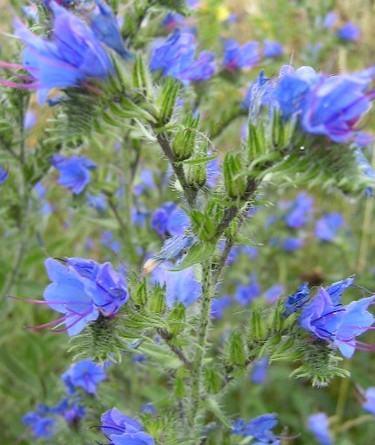
The defining botanical trick is the scorpioid cyme, a one-sided coiled flower cluster that straightens as it opens from the tip downward. Each coil uncurls like a fern crozier, presenting fresh blue buds day after day through the summer. This arrangement is a Boraginaceae signature and immediately separates the plant from the upright spikes of a true vervain or the loose panicles of a forget-me-not.
The corolla is funnel-shaped and shifts colour as it ages, opening pink from the bud and deepening to a vivid blue. What catches the eye is the stamens: four red filaments tipped with dark anthers protrude well beyond the mouth of the corolla, a feature that gives the flower its electric, almost unsettling look. The protruding anthers shed pollen onto visiting bees before the style matures, a staggered schedule that reduces self-fertilisation.
The two alkaloids most often reported from Echium vulgare are echinatine and lycopsamine, both open-chain pyrrolizidines that vary in concentration between populations and between the rosette and flowering stages. Chemists separate them by chromatography and use them as chemotaxonomic markers for the species. Their presence is the reason the old root salves fell out of favour even as the flowers remained a favourite of beekeepers.
Few native plants deliver nectar as freely as viper’s bugloss. The long corolla tube matches the tongue of bumblebees, which are the principal pollinators, and the flowers keep producing nectar across a long bloom. In areas where it grows in quantity it is rated among the best bee pastures of the summer, and the resulting honey carries a distinctive amber colour and a slightly spicy note.
Science & Biotechnology
Like many borages, viper’s bugloss packs pyrrolizidine alkaloids in its foliage and developing seeds. These compounds deter grazers but are toxic to the liver of livestock when eaten in quantity, which is why the plant is treated with caution in pasture management. The rough, bristly hairs that cover stem and leaf are a separate defence, making the herbage unpalatable to most mammals.
Uses & Benefits
Echium vulgare earns its common name from the nutlets, which are dark, wrinkled and patterned like a viper’s head, while the old root was once thought to resemble a coiled snake. Long before botanists catalogued it, herbalists called it viper’s bugloss and reached for the root as a remedy for snakebite. The plant itself is anything but sinister: a bristly, upright native of the dry, calcareous grasslands of Europe that now lights up roadside banks and wildflower meadows with a tower of gentian-blue flowers.
Growing from Seed
In the garden the plant earns its place on the dry, sunny bank where little else thrives, and as a bold vertical in the wildlife border. It pairs naturally with other Mediterranean and steppe natives that share its love of sharp drainage. Left to itself it will self-sow, threading blue towers through gravel and grass.
Beyond the hive, the plant holds a place in folk tradition as a vulnerary, the root once boiled into a poultice for wounds. The flowers were also used to tint honey and to make a reddish dye. These uses are historical rather than recommended, given the alkaloid load, but they explain why the plant was carried so widely by early gardeners.
Our Take
Viper’s bugloss is a biennial or short-lived monocarpic perennial: it builds a flattish rosette of lance-shaped, bristly leaves in its first season and sends up the flowering spike in the next. It demands full sun and a free-draining, even stony soil; rich ground simply produces floppy, disease-prone growth. A gritty border or a sunny slope with a long south-facing aspect suits it perfectly. The seedling develops a stout taproot early, and the plant resents disturbance once established. Sow where it is to flower rather than raising transplants, pressing the fine seed lightly into the surface so light can reach it. Thin the rosettes so the remaining plants stand clear of one another. Once the spike appears, little further care is needed beyond removing the earliest spent coils if you want to limit self-sown seedlings. I sow viper’s bugloss straight into the hottest, poorest strip of the border and let it run, and the bees repay the effort many times over. If you enjoy blue spikes in the same family, compare it with Borage and Alkanet, or try the showier Echium plantagineum for a similar bee pasture. For a soothing leaf crop in the shade, Comfrey makes a useful neighbour.
Related Reading
Gardeners who grow Viper’s Bugloss often pair it with these related subjects: