


Datura stramonium Seeds | Stramonium
LATIN NAME: Datura stramonium
COMMON NAME: Stramonium
Plant Profile
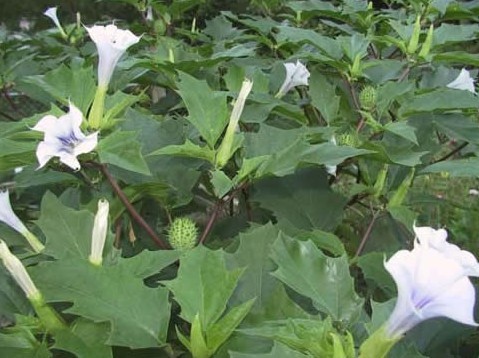
The flower of Datura stramonium is a pale, foot-long trumpet that opens in the evening and releases a heavy, sweet scent through the night, a clear invitation to moths. By day the bloom often closes, so the drama of this plant is an after-dark event that few casual gardeners expect from such a weedy-looking herb.
This is a fast, sprawling annual that can tower in a single warm season, with broad leaves and dramatic flowers that have made it both a curiosity and a danger. The “China” form in the trade is one of the selected ornamental strains with white or pale-violet trumpets.
After the flower fades it sets a rounded, fiercely spined capsule, the “thorn apple” of the common name, which splits to release many small, black, kidney-shaped seeds. The armour on that fruit is the plant’s way of protecting the load until it is ready to scatter.
The seeds pack the densest alkaloid load of any part of the plant, followed by the leaf, which is why ingestion of even a few seeds is dangerous. The concentration varies with the strain and the growing conditions, so no part of the plant should ever be treated as a safe dose.
Science & Biotechnology
Datura stramonium is famous for its tropane alkaloids: atropine (from hyoscyamine), scopolamine (hyoscine), and related compounds that act powerfully on the nervous system. These concentrate in the seed and leaf and are the reason the plant is treated as hazardous rather than merely ornamental.
Because the natural alkaloids are both potent and valuable to medicine, researchers grow Datura hairy root cultures, induced by Agrobacterium, to produce tropane alkaloids in the lab under controlled conditions. This tissue-culture route sidesteps field risk while studying the pathway that builds these molecules.
Uses & Benefits
The leaves are large, unevenly toothed, and softly hairy, and they give off a rank, slightly medicinal smell when crushed. That odour is a warning signal of the chemistry inside, and it is one reason livestock usually leave the plant alone.
As a garden subject the thorn apple is undeniably striking, with its night-opening trumpets and bold foliage, but it belongs in a garden where children, pets, and livestock cannot reach it. Admiration from a distance is the right relationship.
Historically the dried leaf was rolled into “stramonium” cigarettes meant to ease asthma by delivering the alkaloids as smoke, a practice now abandoned because the margin between a therapeutic and a toxic amount is far too narrow. It stands as a cautionary chapter in the plant’s long human use.
Given the seed toxicity, the safest garden rule is to grow thorn apple only where it cannot be eaten and to remove the spiny capsules before they shed if you do not want it to spread. Gloves are wise when handling the foliage, and the hands should be washed afterward.
Even the spent capsule should be treated with care, since the seeds inside are the most concentrated part of the plant, and a glove-and-bin approach to cleanup is simpler and safer than leaving the spiny fruit to scatter where it might be found by a child or a dog.
Growing from Seed
The seed is comparatively large and easy to handle, and it is sown in warm ground where it sprouts readily once the soil has heat. A warm start gives the plant the long season it needs to reach its full, dramatic size.
Once established the plant asks for little but sun and warmth, and in a hot summer it can surprise with how fast it climbs, so give it room and do not tuck it among small, slow neighbours that it would soon overshadow. A back-of-border or fence-line spot suits its scale best.
The young plant makes a stout taproot quickly, so seedlings are potted or set out before that root curls in the container. A straight root set into warm soil establishes faster and supports the heavy top growth of the season.
Thorn apple wants full sun and a warm, freedraining site, and it grows most vigorously in heat. In a hot summer it can reach a surprising height, so give it room and a spot where its sprawling habit will not smother smaller neighbours.
Our Take
I grow thorn apple only as a curiosity behind a fence, never where it can be eaten, and I always wear gloves. Its Solanaceae kin make safer company in the garden: Brugmansia, Nicotiana, Capsicum, and eggplant.
Related Reading
Readers interested in Stramonium frequently explore these as well: