


Delphinium Seeds | Larkspur
LATIN NAME: Delphinium
COMMON NAME: Delphinium
Plant Profile
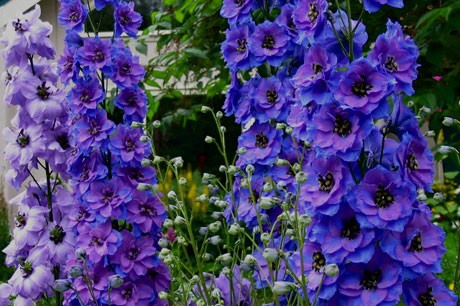
The delphinium’s flower is shaped like a dolphin, or so the ancient Greeks thought, and that likeness gave the genus its name from delphis, the dolphin. What the flower really is, is a five-petalled spur packed with nectar at the back, a design that only long-tongued bees can reach. The garden elatum types pile those spurs into towers two metres tall, the tallest flower spikes grown in the temperate border, and they do it in a blue so saturated that breeders measure their worth by how pure the colour stays. Behind the beauty sits a warning: every part of the plant carries diterpene alkaloids that are toxic.
The showy part is not a petal but a coloured sepal; the true petals form a cluster of spurs behind, one of which holds the nectar. Only bees with a tongue long enough to reach the spur can pollinate the flower, which is why delphiniums and bumblebees are so closely linked in the garden.
The leaves are deeply divided into finger-like lobes, a palmate shape that looks almost like a hand. The stems are stout but hollow, which is why the tall spikes need support; wind will snap an unsupported clump at the base in a single storm.
The true perennials such as D. elatum differ from the annual larkspurs of the genus Consolida, which were once placed in Delphinium and still carry the common name. Consolida forms looser, simpler spikes and completes its life in one season, while elatum returns from a crown and builds the dense, columnar spires. The two are often confused by name alone.
Science & Biotechnology
Because the toxin is in leaf, stem, and seed alike, the plant should be handled with care around children and pets and never eaten. Growers who cut the stems for the house should wash their hands afterwards. The toxicity is a fixed trait of the genus, not a cultivar difference, so all delphiniums share it.
The towering border delphiniums are hybrids built from Delphinium elatum and a handful of Asian and European species, selected over a century for height, colour, and a straighter spike. Modern elatum lines aim for a solid colour from base to tip and for stems strong enough to stand without splitting, though staking remains standard practice.
Uses & Benefits
The chemistry that demands respect is the diterpene alkaloid group, of which methyllycaconitine is the best known in Delphinium. These compounds are present throughout the plant and are toxic to livestock, especially cattle and sheep, which is why delphinium fields are fenced from grazing animals. The alkaloids are also studied for their action on nerve channels, a line of pharmacological interest that contrasts sharply with the plant’s ornamental role.
Growing from Seed
Annual larkspur (Consolida orientalis and kin) is the easy, quick version of the look, sown where it will bloom and finished in a season. The perennial delphinium is the long-game plant that rewards a prepared bed and a sturdy stake. Both share the dolphin spur, but only the perennial reaches for the sky.
Sow the seed on a moist, free-draining medium and keep it cool and bright; the seed benefits from a cold period and dislikes heat. Fresh seed emerges more reliably, so sow soon after harvest or purchase. Move seedlings to individual pots once they can be handled and grow them on before setting them out in rich, deep ground.
Press the seed onto the surface and cover it only lightly, then place the tray somewhere cool. Warm soil slows the process and can check the seedlings, so a shaded, airy spot works better than a hot bench. Prick out the young plants as soon as they are large enough to lift without damage.
Set a support in place while the plants are still short, because the hollow stems snap once they carry a full spike. Space the clumps generously so air moves between them and the leaves stay dry, which limits the mildew that delphiniums are prone to. Feed through the season and cut the first spike to encourage a later flush.
Our Take
Delphinium is the drama of the summer border, but it is a plant to admire, not to taste. Stake early, feed well, and keep the air moving. For the blue theme, see Blue delphinium, pink delphinium, and the annual Larkspur.
Related Reading
Gardeners who grow Delphinium often pair it with these related subjects: