


Acer palmatum Seeds | Japanese Maple Bonsai Tree
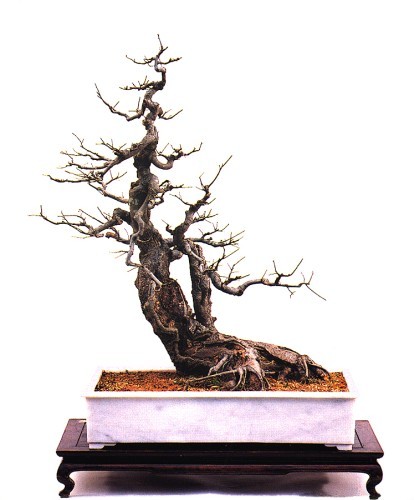
LATIN NAME: Acer palmatum
COMMON NAME: Japanese Maple
Plant Profile
Japanese maple is the classic small ornamental tree, 4-8 m in the ground and 20-60 cm as a bonsai, with palmate leaves in five to nine lobes and a colour range that runs from green through yellow, orange, red and near-black purple.
The species is variable in the wild, and centuries of selection have produced hundreds of named cultivars, distinguished by leaf shape, colour and habit. The weeping and dissected forms are the most ornamental and the slowest growing.
Acer palmatum comes from Japan, Korea and eastern China, where it grows as an understorey tree in mountain woodland. That origin explains the two things it needs: shelter from wind and a soil that does not dry out in summer.
Science & Biotechnology
Autumn colour in the Japanese maple is a two-part process: chlorophyll breaks down, revealing carotenoids that were present all along, and anthocyanins are synthesised in the leaf. The red is strongest when autumn days are bright and nights are cool, and weakest in a warm wet autumn.
The purple-leaved cultivars carry anthocyanin through the summer, which costs the plant energy and makes them slower growing than green forms. That is why a purple maple in a poor site looks dull: the pigment is produced at the expense of photosynthesis.
Grafting is used to fix the named cultivars, because seed from a purple or dissected maple will not come true. Seedlings of the species itself are variable but frequently good, and growing from seed is the cheapest way to obtain a tree for bonsai training.
Uses & Benefits
Japanese maple is grown as a specimen tree, in a courtyard, as a container plant and as a bonsai. The dissected forms are used beside water and in small gardens, where their fine texture suits a confined space.
In Japan the tree is planted in temple gardens and used in the art of bonsai and in the preparation of maple-leaf tempura, a seasonal speciality. Commercially the species is a major nursery crop, and the seed trade supplies growers who want to raise their own rootstock. Growers also raise the species from seed as rootstock for grafting, since seedling maples grow away faster than cuttings.
Growing from Seed
Sow in autumn or stratify for ten to twelve weeks at 3-5°C. Sow 1 cm deep in a free-draining mix, and germinate at 15-18°C. Fresh seed gives the best results; stored seed needs the full stratification period.
Plant out in light shade, in soil that is moist but well drained, and shelter from wind and from late frost, which damages new growth. Water in dry spells, and mulch to keep the roots cool. For bonsai, repot every two years in early spring, root-prune by a third, and wire in winter when the branches are bare. Shade the pot from afternoon sun in summer, because the roots in a dark container can cook on a hot day.
Our Take
The best small tree in the catalogue for autumn colour, and the one that will still be worth looking at in twenty years.
Related Reading
More species in the same orbit as Japanese Maple: