


Acer pentaphyllum Seeds | Five-lobed Maple
LATIN NAME: Acer pentaphyllum
COMMON NAME: Five-Lobed Maple
Plant Profile
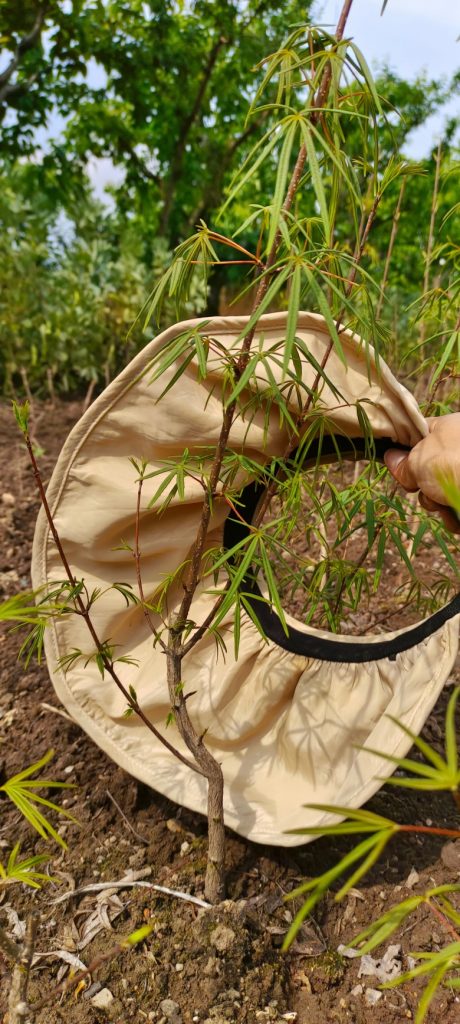
Five-leaflet maple is one of the rarest maples in cultivation, a small tree of five to eight metres from a few valleys in western Sichuan. Its leaves are palmately compound, with five narrow, drooping leaflets rather than the usual lobes, which gives the tree a light, almost fern-like crown unlike any other maple. The bark is smooth and grey, the flowers are small and greenish in spring, and the samaras are small and widely angled. In autumn the foliage turns a clear, even scarlet that lasts for weeks. It grows on limestone cliffs and in scrub above rivers at two thousand metres, in a region of deep gorges and dry winters, and it was introduced to the West by Joseph Rock in the late 1920s.
Science & Biotechnology
Acer pentaphyllum is placed in its own section of the genus because of its compound leaves, a trait that has evolved rarely among maples and that makes it a useful outgroup in studies of leaf development. Molecular work confirms it belongs within the core maple radiation but does not resolve its closest relatives, and its chromosome count is the same as the diploid species around it. The species is critically endangered in the wild: fewer than a few thousand individuals survive, in a handful of locations that are being lost to dam construction, road building and grazing. Its habitat is unusual for a maple, being dry, rocky and alkaline, and cultivated plants are often grown on limestone-based compost for that reason. The wild population has been surveyed repeatedly since the 1990s and shows little regeneration.
Uses & Benefits
The tree is grown as a collector’s specimen in arboreta and private gardens, where its compound leaves and reliable scarlet autumn colour make it one of the most desirable small maples. It is also used in bonsai, though the compound leaves make it a challenge to style. In China it is planted in a few mountain parks, and ex situ conservation collections in Europe and North America hold most of the genetic diversity now available. It is not a timber tree and has no medicinal use. Because it is rare, plants should be bought from nurseries that propagate from seed or cuttings rather than from wild collection, and its provenance should be recorded, since the species may need a coordinated breeding program to survive.
Growing from Seed
Sow the samaras in autumn, fresh, or stratify them at four degrees for three months. Sow one centimetre deep in a free-draining mix with added limestone grit, and keep at fifteen to eighteen degrees; germination takes one to three months. The seedlings are slow and should be grown in deep pots in half shade for two years. Plant out in autumn into well-drained, alkaline soil in sun or light shade, with shelter from wind. Mulch with grit rather than manure, since rich soil softens the growth. Water through the first two summers and protect from late frost, which damages the young leaves. Prune only to remove dead wood.
Our Take
A critically rare maple with five leaflets and scarlet autumn colour. Grow it on limestone, in shelter, and keep the provenance.
Related Reading
Readers interested in Five-Lobed Maple frequently explore these as well: