


Acer calcaratum Seeds | Spurred Maple
LATIN NAME: Acer calcaratum
COMMON NAME: Spurred Maple
Plant Profile
Acer calcaratum is a maple that most gardeners have never seen, a tree of the cool mountains from Yunnan into Thailand, Laos and Vietnam, described by Francois Gagnepain from Indochinese material and named for the spur at the base of its fruit. It belongs to the rich but poorly known maple flora of the Southeast Asian highlands, a group of species that botanists are still sorting out.
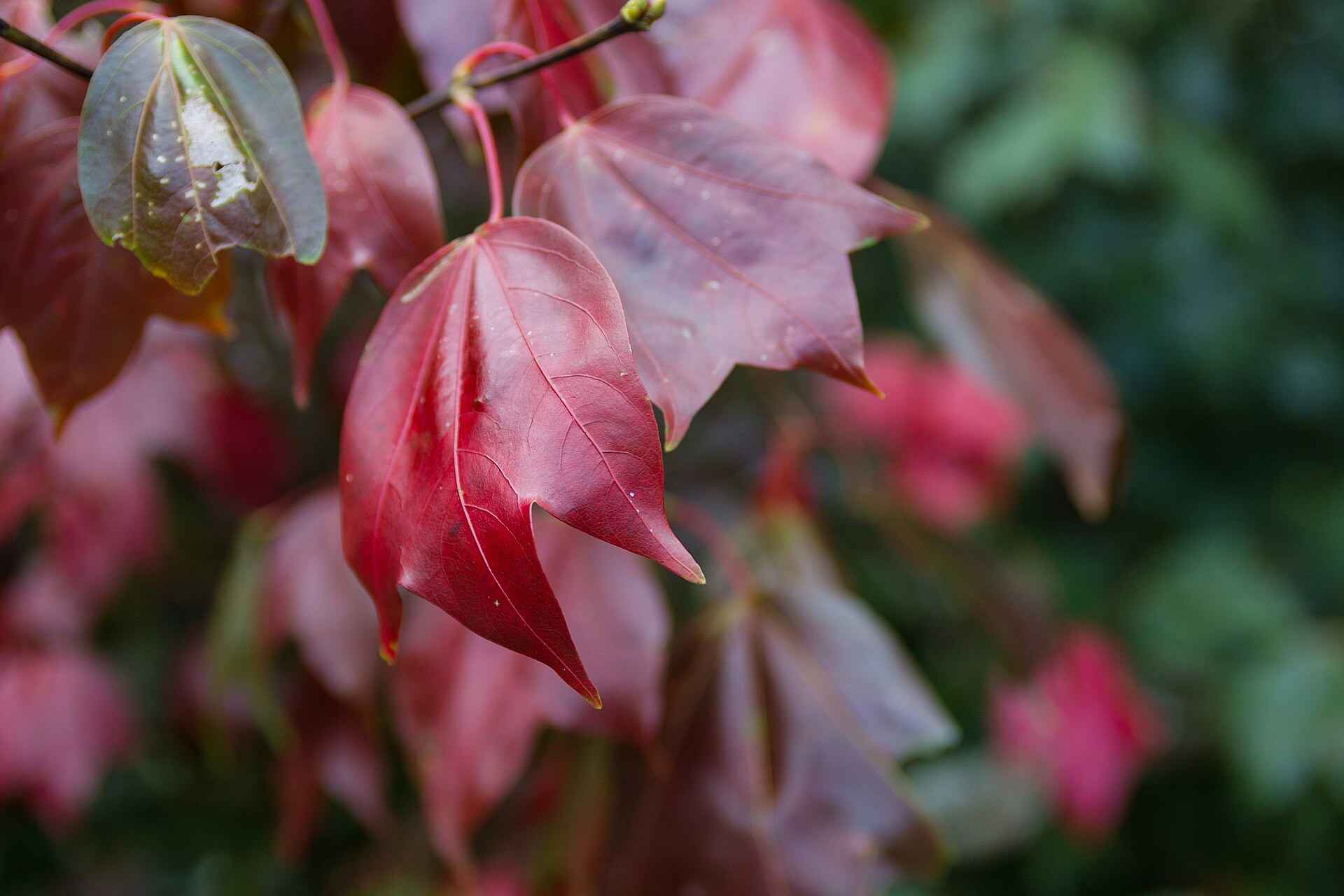
It is a deciduous small to medium tree, eight to fifteen metres in the wild, with the family’s paired samaras and lobed leaves. What distinguishes it is the fruit: each samara carries a small spur-like projection at the base of the nutlet, a character that gives the species both its epithet and its English name.
Flowering comes in January and February, on bare branches in the middle of the cool dry season, a schedule common among Asian maples of the subtropics and one that lets the tree set fruit before the monsoon and the new leaf canopy arrive together. The flowers are small and greenish-yellow, carried in short clusters along the twigs, and they pass almost unnoticed against the bark.
Its range is fragmented across the mountains of the region, from the eastern Himalaya through northern Thailand and Laos to central Vietnam, generally in montane forest between a thousand and two and a half thousand metres. The species is assessed as vulnerable on the international red list. The same family turns up again in Acer serrulatum, Acer duplicatoserratum and Cardiospermum halicacabum.
Science & Biotechnology
Maples used to have a family of their own, the Aceraceae, and molecular work has since placed them inside an expanded Sapindaceae alongside the lychees, the horse chestnuts and the soapberries. The paired winged fruit, the samara, remains the group’s most recognisable invention.
That fruit is a helicopter. The wing generates lift as the samara spins, slowing the fall and carrying the seed away from the parent, and the angle of the wing relative to the nutlet is a species character. The spur on this species may serve to wedge the fruit into leaf litter or to orient it as it lands.
Winter flowering in a deciduous tree is a bet on a particular pollinator and a particular climate. With no leaves the flowers are visible to whatever insects are flying in the cool dry season, and the tree avoids competing with the mass of spring bloom that follows the first rains. Bee flies and small bees are the likely visitors, working the clusters for nectar in a season when very little else offers any.
Uses & Benefits
The tree has no commercial role. Its timber is not traded, its sap is not tapped, and it appears in gardens only in specialist collections where a cool climate and a sheltered site can be offered. Its value is botanical and horticultural rather than economic.
For a collector the appeal is the winter flowering and the strange fruit, plus the satisfaction of growing something genuinely rare. The tree’s autumn colour is reported as good in its native mountains, though cultivated specimens are too few for the claim to be well tested.
Conservation is the practical benefit of cultivating it. A vulnerable species with a fragmented range across several countries is exactly the sort of plant that ex situ collections help, and every garden specimen is a small insurance policy against the loss of a forest patch somewhere in the mountains.
Growing from Seed
Maple seed should be sown fresh where possible. Clean the samaras, soak them overnight, and stratify in damp sand for eight to twelve weeks at refrigerator temperature, since most Asian maples need cold to break dormancy, though some germinate without it if sown immediately.
Sow in early spring in a free-draining mix, cover lightly, and keep cool and moist. Germination is often staggered over a month. The seedlings are slow and should spend their first two winters under cover while the root system builds.
Plant out in a sheltered site with deep, humus-rich, well-drained soil and light shade from the strongest sun. Young trees need protection from late frost, which can cut back the new growth, and from wind, which shreds the soft leaves of the first seasons. Mulch the root zone to keep it cool and moist, and expect several years of quiet growth before the tree begins to put on real height.
Our Take
Nobody grows this tree for a quick effect. It is slow, rare, and demands a climate that most temperate gardens simply do not have, and that is precisely why the people who do grow it are quietly pleased with themselves.
Sow fresh seed with a cold stratification, raise the seedlings slowly under cover, and plant out in sheltered, humus-rich ground. If it flowers in a January, the spur on the samara will be worth every one of the long waits.
Related Reading
Gardeners who grow Spurred maple often pair it with these related subjects: