


Isolepsis Seeds | Fiber Optic Grass
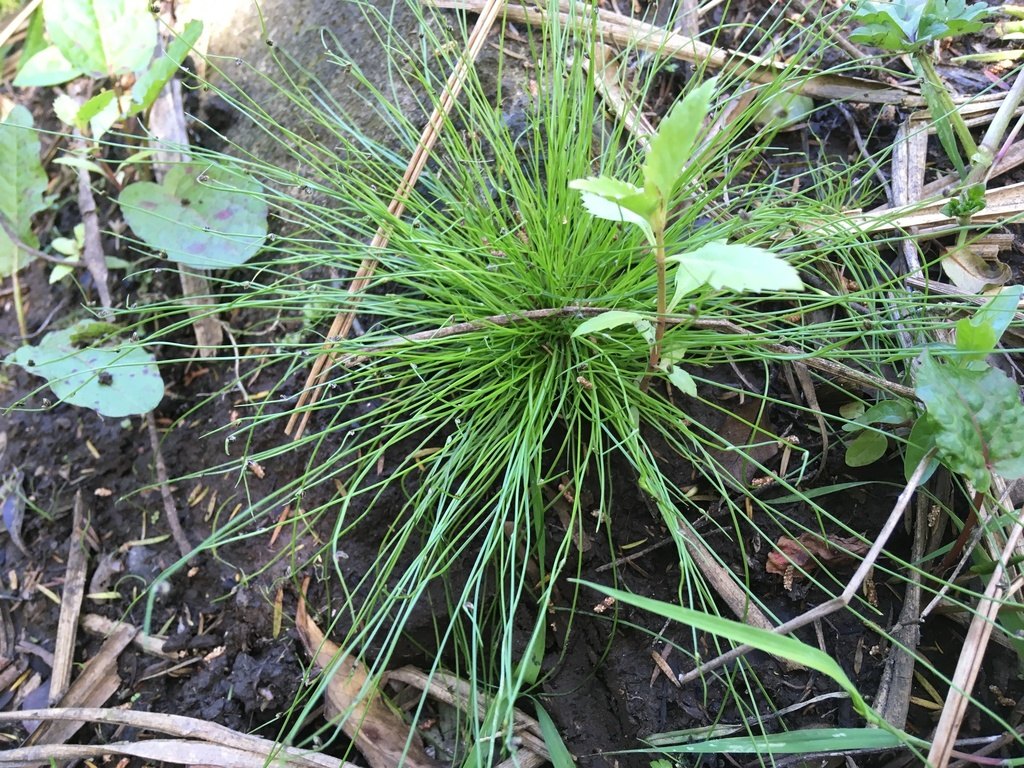
LATIN NAME: Isolepsis
COMMON NAME: Fiber Optic Grass
Plant Profile
Isolepsis is a spelling that appears on seed lists and plant labels more often than the correct one. The genus is Isolepis, from the Greek for equal scale, and the extra letter is a copyist’s error that has been in the trade for decades. The plant sold under it is usually Isolepis cernua, the fiber optic grass.
It is a sedge, not a grass, and it grows in tufts of thread-like green stems twenty to thirty centimetres tall. Each stem ends in a small brownish spikelet with a bract that continues the line of the stem, so the tip looks like a tiny brush. The overall effect is a pot of green optical fibres, hence the common name.
The genus holds about seventy species and is scattered across wet ground on every continent except Antarctica. Isolepis cernua comes from the Mediterranean and western Europe, I. setacea from Australia, I. fluitans from still water worldwide. They share a taste for mud, shallow water and disturbed wet ground, and several are weeds of rice fields.
The name was published by Robert Brown in 1810, separating these small sedges from Scirpus. The distinction rests on the spikelets and the reduced perianth, which is a ring of bristles or nothing at all. It is a genus that botanists recognise more by habit than by any single character, and it has been moved around since.
Science & Biotechnology
Sedges in this group are wind-pollinated and inconspicuous, and the flower is reduced to a glume, a few stamens and a pistil. The bract at the tip of the stem is longer than the spikelet and looks like a continuation of it, so the inflorescence appears lateral. That false continuation is the visual trick of the plant.
The stems are round in cross-section, not triangular like Carex, and they are filled with pith. That makes them stiff enough to stand without support and light enough to move in wind. The leaves are reduced to sheaths at the base in several species, so the green stems do the photosynthesis. It is an efficient arrangement in shallow water.
The seed is a small nutlet, and a single tuft can produce thousands. They germinate on wet mud within weeks, and the plant self-sows freely in a greenhouse or a bog garden. In constructed wetlands it is planted for nutrient uptake and for the root zone that supports biofilm. That is an engineered use for a plant most people grow as an annual. Three more Cyperaceae sit in the same catalogue: Cyperus glomeratus, Isolepis and Carex.
Uses & Benefits
Fiber optic grass is sold as a container plant, for the front of a mixed pot or the edge of a water bowl. It is grown as an annual in cold climates and as a short-lived perennial where winters are mild. In a pot it needs constant moisture and full sun; dry compost turns the tips brown within days and they do not recover.
The plant is also used at the margins of ponds and in rain gardens, where it tolerates fluctuating water levels and brief submergence. It is salt-tolerant, which makes it useful in coastal gardens and in brackish treatment beds. Few ornamentals combine those two tolerances, and that is why it appears in plans for sustainable drainage.
It has no food value and no medicinal use. Its ornamental value is entirely in the texture of the tuft, which catches light and moves with the slightest air. It is at its best in a pot on a table, where the tips can be seen against a dark background, and at its worst in a border where it disappears into other foliage.
Growing from Seed
Sow on wet compost at eighteen to twenty degrees and keep the tray standing in water. The seed is fine and needs light, so press it into the surface and do not cover it. Germination takes two to four weeks. Once the seedlings are up, keep them wet and bright, and thin them so the tufts have room to develop.
Prick out in small clumps, because a single stem is fragile and a group establishes faster. Pot them into a compost that holds water, with a saucer underneath, and grow them in full sun. Plant out after the last frost at the edge of a pond or in a container, setting the crown at or just below the surface.
Divide established tufts in spring, or take cuttings of the tips, which root in water in two weeks. In cold gardens, lift a pot before the first frost and keep it on a windowsill or in a cool greenhouse. The plant is not frost-hardy below about minus five degrees, and a wet freeze will kill it outright.
Our Take
The misspelling is worth a page because people search for it. Anyone who has bought fiber optic grass has probably bought it as Isolepsis, and a catalogue that only knows the correct name will not be found. The plant behind the error is a good one: tolerant, architectural, and cheap to raise from seed.
Sow it in a pot that can stand in water, keep it in sun, and bring it in before the frost. It will not feed anyone and it will not cure anything, but it will give a table something to look at in November, which is more than most annuals manage.
Related Reading
If Fiber Optic Grass appeals to you, these related plants are worth a look: