


Axonopus compressus Seeds | Broadleaf Carpetgrass
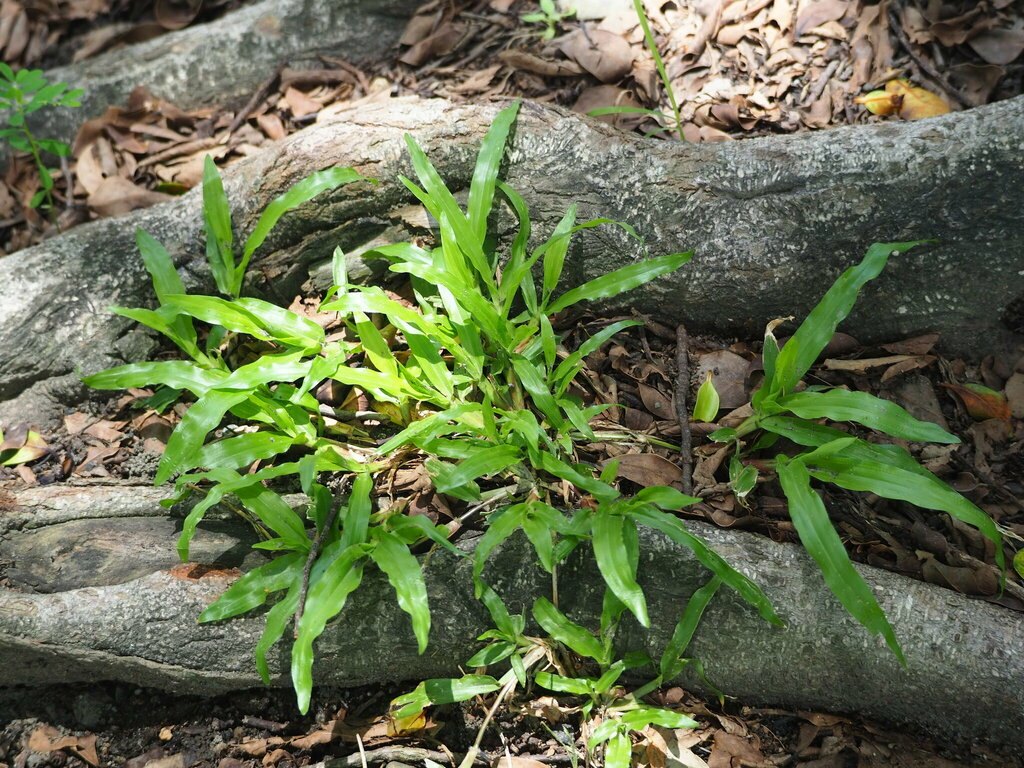
LATIN NAME: Axonopus compressus
COMMON NAME: Broadleaf Carpetgrass
Plant Profile
Broadleaf carpetgrass is a stoloniferous perennial of the Poaceae from tropical America, and it is now the default lawn grass of the humid tropics from Malaysia to Brazil. It forms a dense sward 15 to 30 cm high from flattened stems that root at every node, with broad, soft, slightly hairy leaves whose tips are blunt rather than pointed. That blunt tip is the easiest way to tell it from the fine-leaved grasses it grows beside.
The flowering stems are slender and carry two or three spike-like racemes, held above the leaves on a wiry stalk. Seed is set freely in the tropics, and a lawn that is never mown will seed into every crack and gutter within a season. In a mown sward the heads are cut off before they open, which is part of why a carpetgrass lawn stays so even.
It is a C4 grass of the Panicoideae, and it wants heat. Growth starts when the soil warms in late spring and stops in the first cool spell of autumn, and a frost will take the top off it entirely. In the subtropics it browns in winter and comes back from the stolons in spring; in a cold climate it is an annual at best.
Science & Biotechnology
The species has 40 chromosomes and is a tetraploid on a base of ten, though counts of 50, 60 and 80 also appear, and some populations set seed without fertilisation. Apomixis is common in the Paspaleae, the tribe to which Axonopus belongs, and it makes a grass easy to fix but hard to improve. That is why the trade sells a type rather than a cultivar.
Its advantage over finer turf grasses is physiological rather than genetic. Carpetgrass keeps a reasonable rate of photosynthesis in shade that would starve a bermudagrass, and it tolerates acid soil with low phosphorus better than most competitors. Its leaves hold 1 to 2 per cent nitrogen, and it is reported to gain more through microbes in the root zone, so it stays green where fertiliser is not an option.
The limits are just as physiological. The leaves are broad and soft, so they tear rather than cut when blunt mower blades pass over them, and the sward recovers slowly from wear. The root system is shallow, so a fortnight of drought turns it brown while the weeds stay green.
Uses & Benefits
It is a low-input lawn for the tropics: shade-tolerant, tolerant of acid soil, tolerant of neglect, and requiring far less mowing than a turf built on ryegrass or bermudagrass. It is the grass of the village football pitch, the school yard and the roadside verge, and it holds all three without irrigation or fertiliser.
It is also used for erosion control on slopes and for rough pasture, though its forage value is modest and it is too low-growing to cut for hay. In mixed grazing it contributes ground cover rather than bulk, and stock prefer almost anything else.
For a garden in the humid tropics it is the pragmatic choice under trees, along fences and on any bank too steep to mow easily. It will not give the fine carpet of a putting green, and it was never meant to. Poaceae is well covered here, with Achnatherum extremiorientale, Lagurus and Agrostis nebulosa alongside.
Growing from Seed
Seed is small and light, and sowing rates are low by grass standards: 6 kg per hectare is the recommendation, and a garden patch needs a fraction of a gram per square metre. Broadcast it on a prepared surface, roll it in, and keep the ground moist until the seedlings are through. The seed needs light and will not germinate from depth.
Sprigs are more reliable than seed where the ground is weedy or the slope is steep. Press lengths of stolon into wet soil at 30 cm spacing and keep them watered for a fortnight; they root at the nodes and spread faster than any seedling. A single patch can reach a metre across in one season. Sow at the start of the wet season, when the soil is warm and rain is reliable.
Mow it high, at 4 to 6 cm, and mow often enough that you never take more than a third of the leaf at once. A carpetgrass lawn cut short in one pass browns for a month, and a blunt blade leaves a frayed edge that goes the same way. Water it through the first dry season after planting and then leave it alone, because it is more likely to be killed by kindness than by neglect.
Our Take
Carpetgrass is not a beautiful lawn and it has never pretended to be. It is a lawn that survives, in heat, in shade, on acid ground, with nobody looking after it, and in the tropics that is worth more than fineness. Where water and labour are cheap, use something better. Where they are not, this is the grass that will still be there in five years.
Related Reading
More species in the same orbit as Broadleaf Carpetgrass: