


Elymus trachycaulus Seeds | Slender Wheatgrass
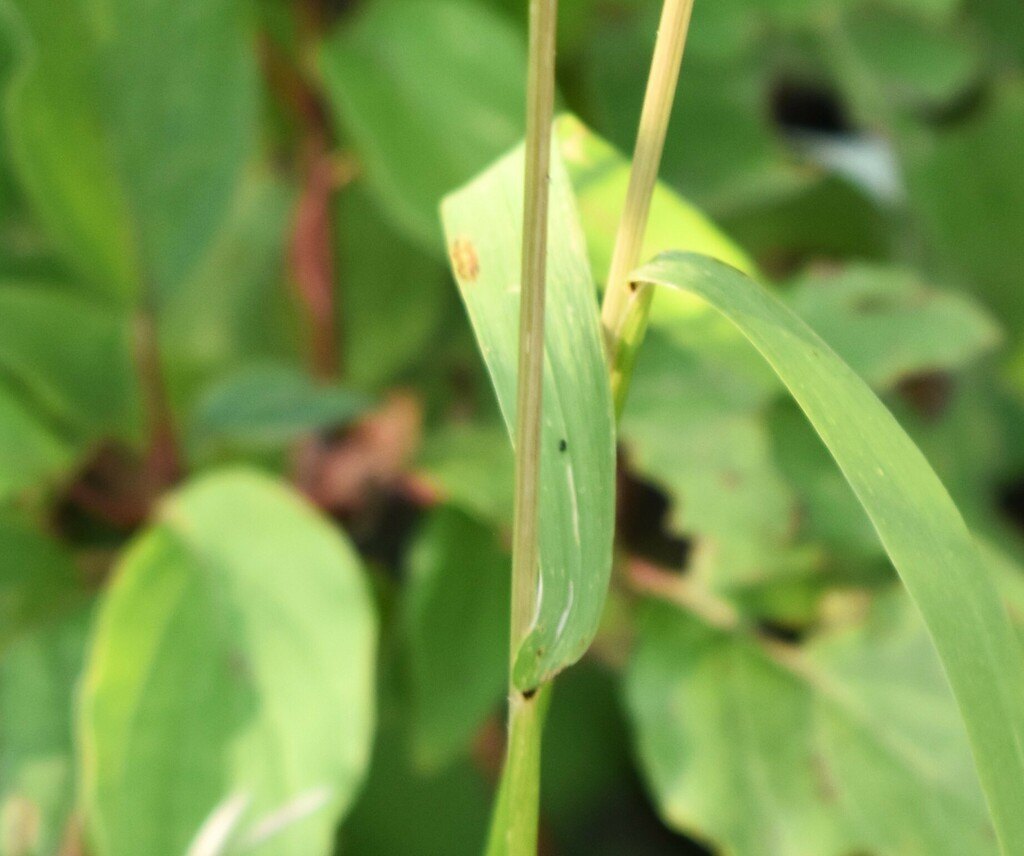
LATIN NAME: Elymus trachycaulus
COMMON NAME: Slender Wheatgrass
Plant Profile
Slender wheatgrass is a bunchgrass of the Poaceae, native to most of North America from Alaska and the Mackenzie Delta south to the Mexican plateau. It is absent from the southeastern states and uncommon through the deep South, where the summers are too long and too wet for it. It belongs to the cool, open country: prairie edge, mountain parkland, roadside, river terrace and the margins of aspen groves.
It grows 50 to 100 cm tall in a loose bunch of flat, blue-green leaves, with a narrow spike that stays close to the stem and rarely spreads. The spikelets are appressed, the awns vary in length from one population to the next, and the whole head ripens in midsummer and shatters soon after. That shattering is what makes seed harvest a matter of timing rather than of machinery.
The plant is variable, and three subspecies are recognised, one of them confined to Greenland. It hybridises with other Elymus species wherever the ranges meet, which is a large part of why the genus is such a tangle for taxonomists. For anyone keying out a specimen from a roadside, the practical advice is to collect the whole plant, roots included, and not to trust a single spike.
Science & Biotechnology
Elymus trachycaulus is an allotetraploid with 28 chromosomes, built from two genomes: one from the wheatgrass line represented today by Pseudoroegneria spicata, the other from a Hordeum relative. The ancestry shows in the plant, which has the body of a wheatgrass and something of a barley in its head. The cross that produced it happened more than once, and the genus is still making new combinations where species meet.
It is largely self-pollinating, unusual among the wild ryes and useful for seed production, because a field of it stays fairly uniform from one generation to the next. The trade-off is that a population holds less genetic variation than an outcrosser would, and a cultivar can be caught out by a new rust or a run of bad springs. Breeders work around this by keeping several distinct lines and blending seed at the end.
The root system is fibrous and shallow compared with the long-lived wheatgrasses, and the plant lives three to five years at most. That combination, quick cover and shallow roots and a short life, is exactly what a nurse crop needs to be. It is also why it is cheap to produce and easy to handle in a drill. Its Poaceae company here includes Elymus dahuricus, Elymus sibiricus and Beckmannia syzigachne.
Uses & Benefits
It is a reclamation grass first: mine spoil, pipeline corridors, roadside cuts, burned ground, saline and alkaline seeps. It goes into mixes with longer-lived species such as thickspike wheatgrass, western wheatgrass and a legume, covers the ground in the first season and gives way as they close in. In the oilfields of Alberta and the coal country of Wyoming it has been sown by the thousand hectares for exactly this reason.
On pasture it is palatable in spring, before the heads emerge, and it provides cover for ground-nesting birds. It is cut for hay on marginal land where better grasses will not persist, and it ranks among the few natives that will grow on ground that has been stripped and stockpiled for a season. Graze it lightly in the first autumn, or not at all.
Seed of named cultivars is widely available. Revenue, released in Canada for reclamation work, was selected for vigour and for seed yield rather than for forage quality. That is the right set of priorities for the job it is asked to do, and it explains why the cultivar is not the one to choose for a horse paddock.
Growing from Seed
The seed is small and should go into the top centimetre, on a firm bed, at 8 to 12 kg/ha in a mix or rather more in a pure stand. It germinates at low temperatures, so it can be sown in late autumn or very early spring on sites that will not carry machinery later in the year. Broadcast it with a carrier or roll it after drilling, because the seed is light enough to move in wind.
No inoculation is needed, since this is a grass and not a legume. What it does need is weed control in the first six weeks, because the seedlings are not competitive until they tiller, and a flush of annual weeds will finish them before they are established. On a weedy site, mow above the seedlings rather than spraying over them.
Expect a good stand in the first year and a thinning one in the third. If the site needs permanent cover, sow it with a longer-lived grass or with a legume that will still be there when the wheatgrass has gone. Judge the result on what remains after five years, not on what came up in the first spring.
Our Take
Slender wheatgrass is honest about what it is: a five-year grass. Plant it for the establishment phase rather than for the long haul, and it will do more for the money than most natives. It is not a lawn, it is not a permanent pasture, and it is not improved by being asked to be either. The mistake is to sow it alone on a site that will be judged in ten years, and then to blame the seed when the cover thins.
Related Reading
Continue exploring with these related plants: