


Buchloe dactyloides Seeds | Buffalograss
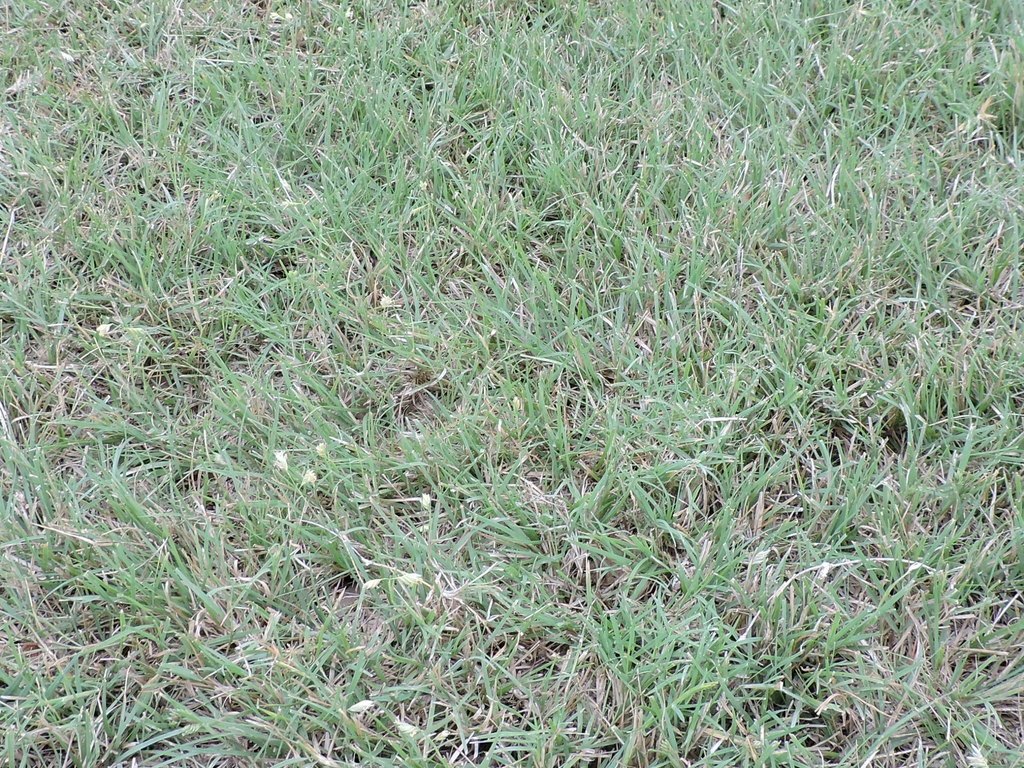
LATIN NAME: Buchloe dactyloides
COMMON NAME: Buffalograss
Plant Profile
Buffalograss is a North American prairie species, native to Canada, Mexico and the United States, and it belongs to the shortgrass prairie rather than the tallgrass. Across much of the High Plains it grows alongside blue grama as co-dominant, and the two together made up the turf that the great herds of bison actually grazed.
It spreads by stolons, and it does so briskly: a plant can push runners 15 to 45 cm in a single season, and under ideal experimental conditions stolons have been measured at 5.71 cm a day. Flowering culms are short, anywhere from 1 to 30 cm, and the whole plant knits into a tight, solid mat with a dense root system beneath it. Those roots run deeper than the top growth suggests, which is how the plant comes through a dry August.
The name in the trade is still Buchloe dactyloides, but the accepted botanical name is now Bouteloua dactyloides. Gardeners in Australia should note that their “buffalo grass” is a different species entirely, and nothing here applies to it. It has also travelled. The grass is naturalised in Spain, Greece and south-central China, and recorded growing without cultivation in New Zealand, which says something about how willing it is to move into new ground. Three other Poaceae are catalogued alongside it: Elymus trachycaulus, Setaria faberi and Axonopus compressus.
Science & Biotechnology
Buffalograss has a base chromosome number of ten, and it exists as diploid (2n = 20), tetraploid (4n = 40) and hexaploid (6n = 60) populations. The diploids and tetraploids tend to occupy the southern part of the range, the hexaploids the north, and the difference has real consequences for which cultivars will survive where.
The species is largely dioecious, with separate male and female plants, which is unusual in a turf grass and extremely useful. Because pollen comes only from male plants, breeders have selected female-only cultivars that produce no pollen at all, and those are what most low-allergen lawns are planted with.
It also has a strange relationship with a fungus. Salmacia buchloëana, formerly placed in Tilletia, infects the plant and causes male plants to develop female flowers, altering the sex ratio of a population. A second fungus, Porocercospora seminalis, prevents normal grain development and cuts both yield and germination.
Uses & Benefits
Its main modern use is as a lawn for places with little water. Buffalograss survives on 25 to 40 per cent of the irrigation a bluegrass lawn needs, and it does it without going dormant in midsummer the way fescue does. It is the standard choice for xeriscaping and for municipal ground where irrigation has been cut off.
As forage it is excellent and it takes grazing well, recovering quickly because it spreads vegetatively rather than relying on seed. That same trait makes it useful for erosion control on banks and disturbed ground. The catch is establishment. A buffalograss lawn is slow to close, and in the first season it loses ground to weeds unless you stay on top of them. Once closed, though, it holds: the mat is dense enough that few weeds get through.
The cultivars fall into two camps. ‘Texoka’ and ‘Comanche’ were selected for forage and grow to about 30 cm; the lawn types are shorter and denser. ‘609’, released in 1990 by the Texas and Nebraska experiment stations, is a deeper green but sensitive to cold and drought, which keeps it in the south.
Growing from Seed
Sow when soil is reliably above 20 °C, in full sun, at 1 to 2 cm deep. Buffalograss needs heat to germinate and a cold spring sowing will simply sit there and rot. Keep the surface moist until seedlings are up, which takes two to three weeks.
Seed is expensive and the germination rate is variable, so sow thicker than the final stand needs and accept that you are paying for insurance. Hulled seed germinates more evenly than the bur-like natural seed, at a higher price. Water the seedbed lightly and often, since the seedlings are slow to root.
In the first year, mow high, at 5 to 7 cm, and water through dry spells to keep it growing rather than dormant. Weed control is the whole job in year one. After that, cut back to 4 to 6 cm, water rarely and deeply, and the grass will out-compete almost everything.
Our Take
This is a grass for someone who has decided not to water the lawn any more, and it does that job better than anything else on the market. It is not a grass for someone who wants a lawn by next summer. Budget two seasons, buy more seed than the calculator suggests, and be ruthless with weeds in the first year. After that it asks for almost nothing except an annual mowing regime.
Related Reading
If Buffalograss appeals to you, these related plants are worth a look: