


Arctotis stoechadifolia Seeds | African Daisy
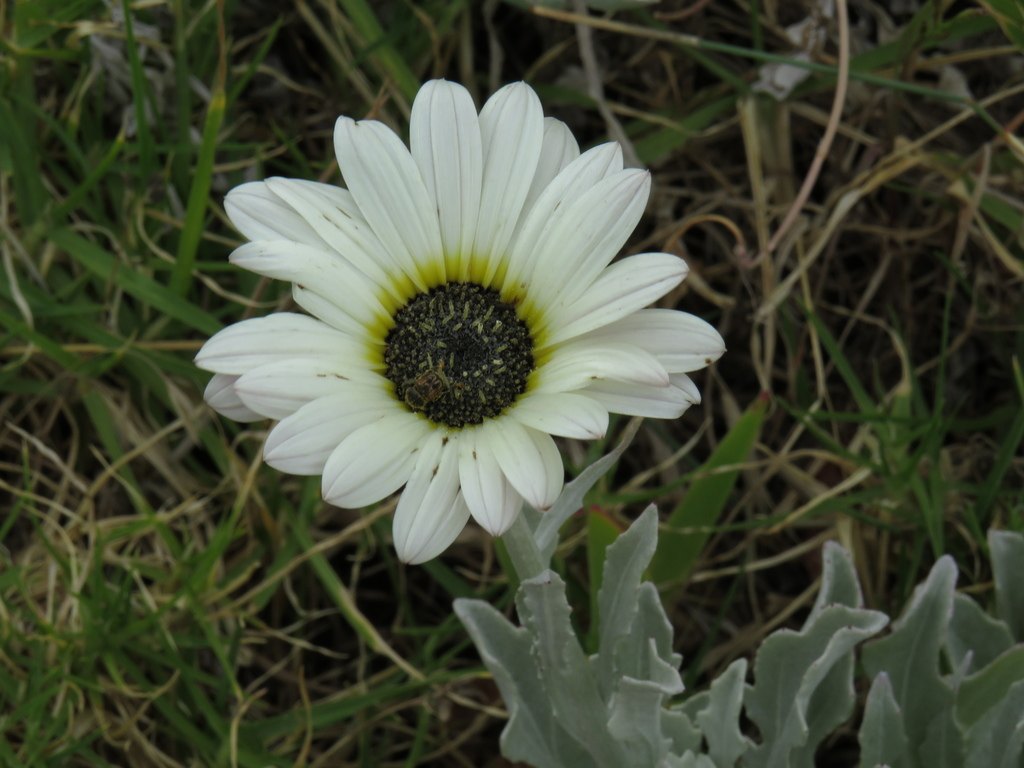
LATIN NAME: Arctotis stoechadifolia
COMMON NAME: African Daisy
Plant Profile
Arctotis stoechadifolia is a South African perennial of the Asteraceae, native to a narrow strip of sand dunes along the west coast of Cape Province, where it is uncommon in the wild. It has been introduced to New Zealand and is grown in gardens around the world, which is a strange fate for a plant with such a small natural range.
It makes a loose mound of lobed, silver-grey leaves 30 to 60 cm high, and the foliage alone is worth the space in a grey and white planting. The flowers are 5 to 7 cm across, in shades of cream, grey-blue, pink and orange, with a dark blue-black ring around a yellow centre, and they open in full sun and close at dusk.
The species is often treated as the same plant as Arctotis venusta, which is much more common in cultivation and much more widespread in the wild. Most of the garden plants sold as African daisy are A. venusta or hybrids between the two, and true A. stoechadifolia is a collector’s plant rather than a garden centre one.
Science & Biotechnology
Arctotis is a genus of about 50 species, all southern African, and it is closely related to Venidium and to the annual Dimorphotheca. The silver foliage is produced by dense hairs on the leaf surface, which reflect light and reduce water loss; the same adaptation appears in many plants of dry, windy habitats, from lavender to olive.
The dark ring around the disc is an anthocyanin band that functions as a nectar guide, and it is unusual in being almost black rather than blue or purple. The pigment is a high concentration of cyanidin derivatives, layered over a dark background of chlorophyll-free tissue, which produces the near-black appearance.
The closing of the flower is a phototropic response, driven by cell expansion at the base of the ray florets, and it is faster in this genus than in most daisies: a flower will close within half an hour of the sun going in and open again within an hour of it returning. That responsiveness is why the plant is a poor cut flower and a good indicator of the weather.
Uses & Benefits
Use it on a hot bank, in a gravel garden, or at the front of a border where its silver leaves lighten the composition. It is drought-tolerant enough for the driest corner of a garden and holds up in sea wind, which makes it a coastal plant above all.
It combines well with lavender, perovskia and ornamental grasses, and the flower colour is unusual enough to be worth planning around: the grey-blue and the near-black ring are hard to match, and they look best against silver, purple and white rather than against hot colours.
The flowers close in the afternoon and on cloudy days, which in a cool summer can mean a disappointingly short daily display. That habit is worth knowing before you plant it where you will only see the garden in the evening, since a bed of closed arctotis is a bed of grey leaves. The other Asteraceae in the catalogue are Anthemis arvensis, Aster novi-belgii and Ageratum conyzoides.
Growing from Seed
Start them under cover six to eight weeks ahead of the last frost, at 18 to 21 °C, with a light covering of compost. Two to three weeks pass before anything shows. The seedlings are vigorous and grow fast; prick them out as soon as they can be handled, since they resent root disturbance later.
Plant out after the last frost, 30 to 40 cm apart, in full sun and very well-drained soil. The plant tolerates poor, sandy ground and needs no feeding; rich soil produces soft growth that rots in winter. In a container, use a gritty compost and water sparingly.
Deadhead to prolong flowering, and cut the plants back by half in late summer if they become straggly. In a mild, dry climate they will overwinter and flower again; in a wet one they rot at the crown, and the plant is best treated as an annual. Seed can be sown in autumn in mild climates for earlier flowers the following year.
Our Take
This is a plant for a hot, dry, windy garden, and it is wasted anywhere else. The silver foliage is its real value, since the flowers are shut for half the day and the plant is at its best in the weeks before they open. Use it as foliage first and flower second, and it will not disappoint. Grow it in gravel, at the front of a border, or on a bank where nothing else will hold. Give it sun and drainage, and leave it alone.
Related Reading
If African Daisy appeals to you, these related plants are worth a look: