


Aglaia odorata Seeds | Chinese Perfume Tree
LATIN NAME: Aglaia odorata
COMMON NAME: Chinese Perfume Tree, Mock Lime
Plant Profile
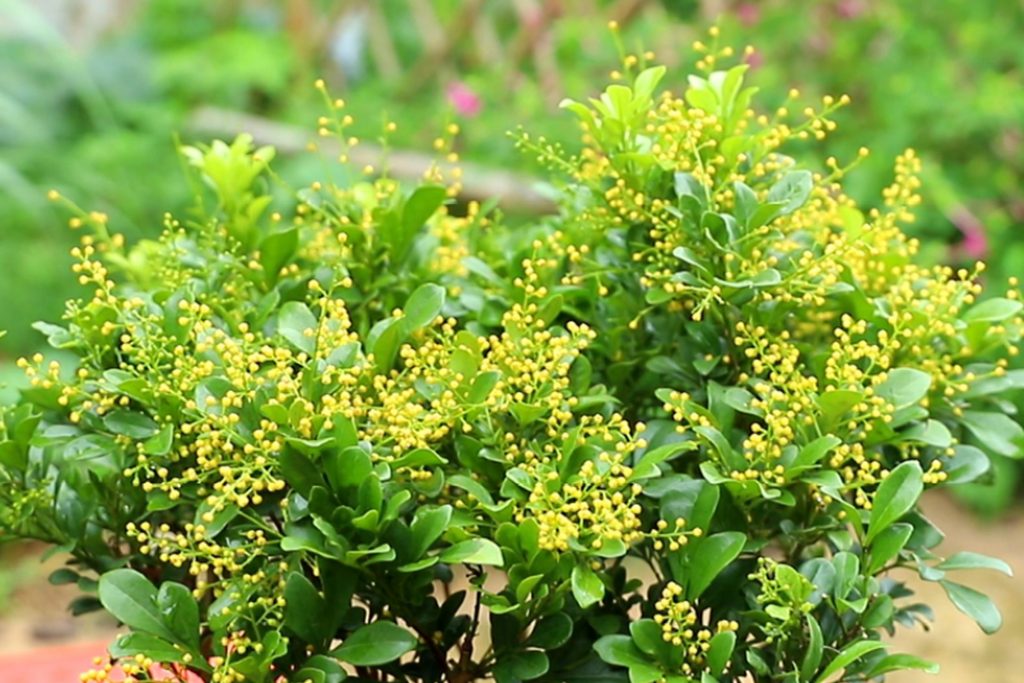
Chinese perfume tree is a small evergreen tree of the mahogany family from southern China and Southeast Asia, grown for flowers so small they are almost invisible and so fragrant that a single plant scents a courtyard. It reaches two to five metres with a dense crown of pinnate leaves, each with three to five glossy leaflets, and through the warm months it carries loose panicles of tiny, round, yellow-green flowers like beads. The scent is sweet, deep and slightly tea-like, strongest in the evening, and it is used to perfume tea in China. Female plants produce small, brown, one-seeded fruits that are rarely seen in cultivation. In Guangdong it is a common pot plant and a favourite of bonsai growers.
Science & Biotechnology
Aglaia is the largest genus in the Meliaceae, with over a hundred species in the tropical forests of Asia and the Pacific, and it is chemically remarkable for a group of cyclic peptides called rocaglamides, which are among the most potent insect antifeedants known from plants. Those compounds, and the flavaglines derived from them, are also under investigation as anticancer agents because they inhibit protein translation. The flowers of Aglaia odorata produce a volatile profile dominated by sesquiterpenes and benzenoids, and the species is androdioecious, with male and hermaphrodite plants, which is why some plants never set fruit. The genus is a classic example of chemical defence replacing physical defence: the leaves are soft and undefended, but insects that eat them do not survive.
Uses & Benefits
The flowers are used to scent tea, especially in Fujian and Guangdong, where the dried blooms are layered with green tea in a process similar to jasmine scenting. They are also used in perfumery, in incense and in sachets, and the wood is used for small carvings. In Chinese medicine the flowers and leaves are used for coughs and for digestive complaints, and the plant appears in regional pharmacopoeias. In the garden it is grown as a specimen for a warm, sheltered courtyard, as a container plant and as a subject for bonsai, where its small leaves and dense branching suit the technique. It needs full sun to flower well, and a cool winter rest improves the spring flush.
Growing from Seed
Sow fresh seed, since viability is short, in a rich, free-draining mix, one centimetre deep. Keep at twenty-five to thirty degrees with high humidity; germination takes three to six weeks. The seedling is slow at first and needs filtered light. Grow on in a large pot with a loam-based compost, watering steadily and feeding monthly in summer. Plant out only in a frost-free, sheltered site with rich, well-drained soil, or keep the plant in a container and move it under cover for winter. Shape the bush after it flowers, because the buds form on the current season’s wood. Repot every two or three years, and reduce watering in winter when growth slows.
Our Take
A courtyard tree whose flowers are too small to see and too fragrant to ignore. Warmth, sun and a cool winter rest.
Related Reading
Readers interested in Chinese Perfume Tree frequently explore these as well: