


Juniperus scopulorum ‘Blue Arrow’ Seeds | Blue Arrow Juniper
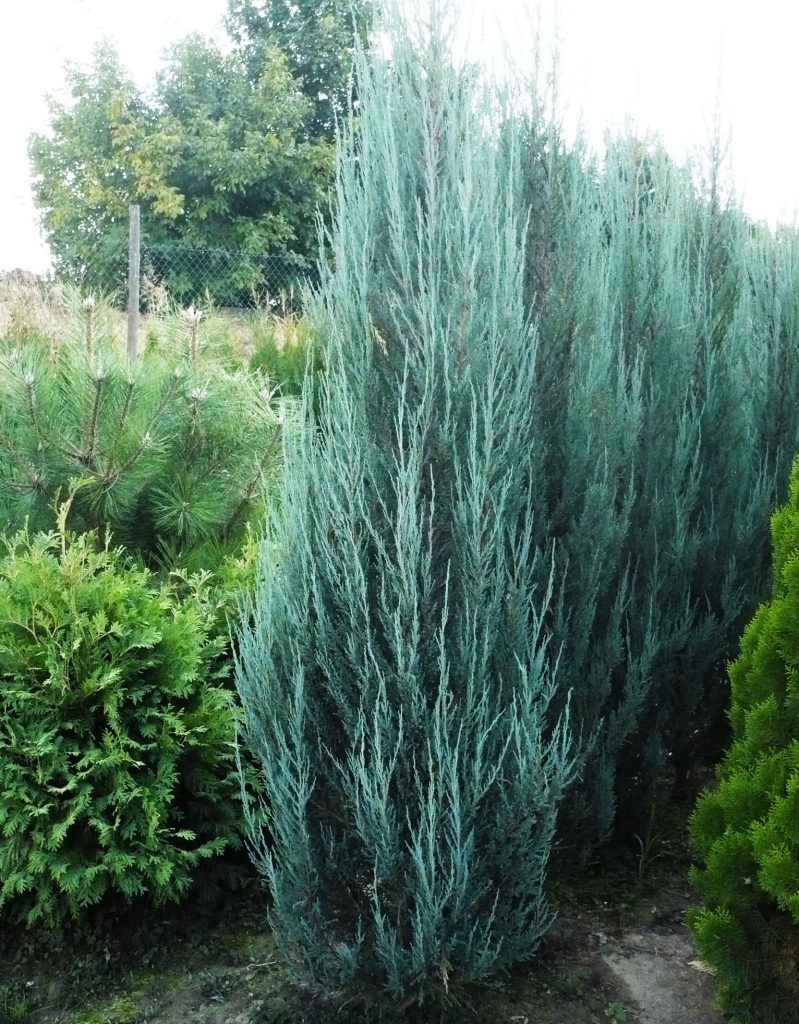
LATIN NAME: Juniperus scopulorum ‘Blue Arrow
COMMON NAME: Blue Arrow Juniper
Plant Profile
Blue Arrow juniper is a garden selection of the Rocky Mountain juniper, chosen for a habit that is almost a pencil: a single leader, tightly packed branches and a crown no wider than sixty centimetres, rising three to four metres. Its foliage is a steady silver-blue that holds its colour through winter, and it keeps its shape without clipping for decades. It is male, so it bears no cones and makes no litter. The plant is used as a substitute for Italian cypress in cold and dry climates, where the true cypress dies of frost or of canker, and it is planted in pairs to frame doorways, in rows as a narrow screen and in containers. It grows slowly, a few centimetres a year, and it is at its best in full sun and poor, sharp-drained soil.
Science & Biotechnology
Blue Arrow is a cultivar, propagated only by cuttings, and its value lies in a combination of two traits: a strongly columnar branching pattern and a waxy leaf cuticle that gives the blue colour and reduces water loss. The blue tone comes from epicuticular wax rather than from pigment, which is why it intensifies in cold, bright weather and fades in humid heat. The cultivar is male, and male junipers are preferred for narrow plantings because they produce no cones and no seedling progeny. Junipers in general are susceptible to Phomopsis tip blight and to root rot in wet soil, and this selection is no exception, though its open habit helps it dry quickly. Cuttings root slowly and are usually taken in late winter from firm wood and given bottom heat.
Uses & Benefits
The plant is grown as a vertical accent in small gardens, as a pair flanking a door or a gate, as a narrow screen along a boundary and as a container specimen for a terrace. Its tolerance of cold, drought, wind and alkaline soil makes it useful where few narrow evergreens survive. It is also used in cemeteries and in formal planting, where its regular outline substitutes for clipped cypress at a fraction of the maintenance. The foliage is used in floristry, where it lasts for weeks. It is not edible, and the wood and foliage are mildly toxic. Because it is a cultivar, it should be bought as a named plant rather than raised from seed, which will produce a variable, wider tree.
Growing from Seed
The plant is raised from cuttings, not seed: take ten-centimetre cuttings of firm wood in late winter, dip them in rooting hormone and place them in a gritty mix with bottom heat at twenty degrees. They root in three to four months. Grow the young plants on in a free-draining compost in full sun, and pot on sparingly, since junipers resent disturbance. Plant out in autumn or early spring into well-drained, preferably alkaline soil, and water only in the first two summers. Do not prune the leader, which ruins the shape; remove only wayward side shoots in spring. Shelter from drying wind for the first winter, and keep the root zone free of grass.
Our Take
A pencil-thin blue juniper that does the work of Italian cypress where cypress will not grow. Buy a named plant, never seed.
Related Reading
More species in the same orbit as Blue Arrow Juniper: