


Juniperus scopulorum Seeds | (blue Arrow Juniper )
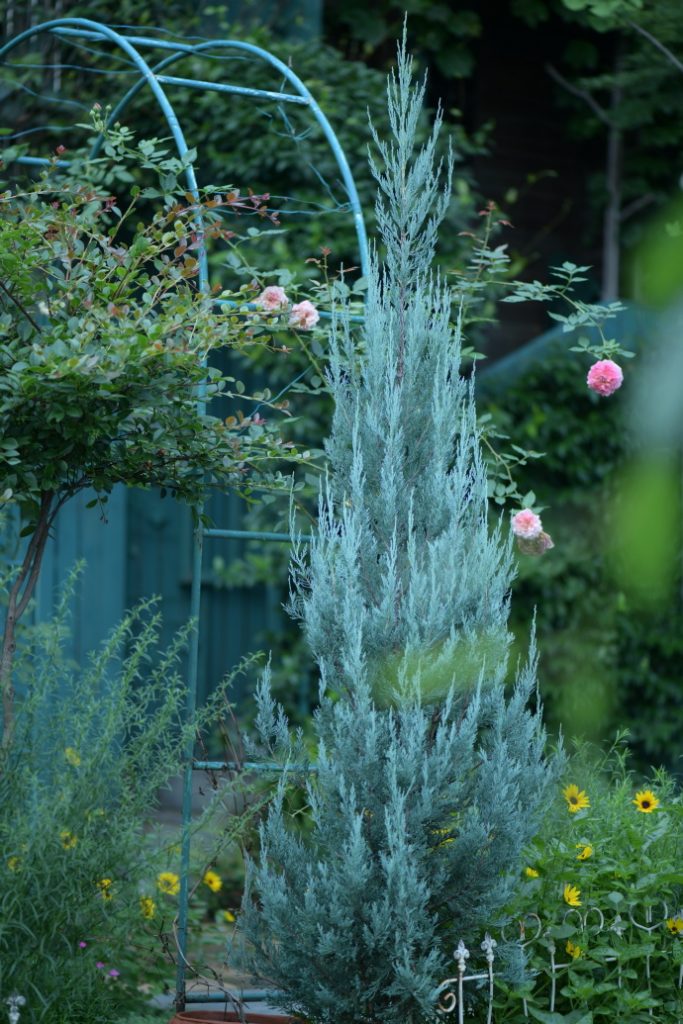
LATIN NAME: Juniperus scopulorum
COMMON NAME: Blue Arrow Juniper
Plant Profile
Rocky Mountain juniper is a slow-growing evergreen conifer of the dry hills of western North America, reaching five to ten metres, often with several stems from the base and a narrow, irregular crown. Its foliage is scale-like, dense and blue-green, and on young plants it is awl-shaped and prickly. Male and female cones are borne on separate trees; the female cones are small, round and berry-like, covered in a waxy blue bloom, and they ripen over two years. The wood is fragrant, fine-grained and extremely durable, and it is used for fence posts and for chests. The tree grows on rocky slopes and in canyon country from British Columbia to Arizona, where it tolerates drought, wind, poor soil and extreme cold, and it is one of the hardiest junipers in cultivation.
Science & Biotechnology
Juniperus scopulorum is a tetraploid species that hybridises freely with the eastern red cedar where their ranges meet in the Great Plains, producing a zone of intermediate plants that has confused botanists for a century. The berry-like cones are not fruits but fleshy seed cones, and their blue waxy coating reflects ultraviolet light, which may protect the developing seed. The species is dioecious, so only female trees bear cones, and a row of nursery plants may be entirely male and fruitless. Its wood is one of the most decay-resistant in North America, and the aromatic oils that provide that resistance, chiefly cedrol and thujone, are also the reason the wood is used in chests and closets. Juniper berries from related species flavour gin, but the cones of this one are too bitter and resinous for that use.
Uses & Benefits
The tree is planted as a windbreak, a screen and a specimen in dry, cold climates, and its cultivars are among the most useful narrow evergreens for small gardens. The wood is used for posts, for small carvings and for aromatic chests, and the bark for cordage. The cones are eaten by birds, including waxwings and robins, and the dense foliage gives winter shelter. In traditional medicine the leaves and cones were used as a steam inhalation for colds and as a poultice, and the wood was burned as a smudge. It is not a plant for wet ground, and it resents shade and root disturbance. Its tolerance of alkaline soil and road salt makes it useful in difficult urban sites.
Growing from Seed
A tough seed coat and an immature embryo together delay germination by months. Scarify it in acid for half an hour, then stratify warm for two months and cold for three, all in damp sand. Sow one centimetre deep in a gritty mix and keep at fifteen to twenty degrees; germination is slow and often spread over a year. The seedlings are slow and should be grown in deep pots for two years. Plant out in autumn into well-drained, preferably alkaline soil in full sun, with shelter from drying wind when young. Water through the first two summers, then leave it to the rain. Do not prune into old bare wood, which does not regenerate.
Our Take
A tough mountain juniper with blue cones and rot-proof wood. It wants sun, drainage and cold, and it will outlive the fence.
Related Reading
Readers interested in Blue Arrow Juniper frequently explore these as well: