


Acer duplicatoserratum Seeds | Taiwan Red Maple
LATIN NAME: Acer duplicatoserratum
COMMON NAME: Taiwan Red Maple
Plant Profile
Taiwan red maple is a small deciduous tree of the Sapindaceae, native to southern and eastern mainland China and to the mountains of Taiwan. It is a maple of the palmata group, the same section as the Japanese maples of the nursery trade, and it grows to about ten metres with a rounded crown and smooth olive-grey bark that stays smooth well into middle age.
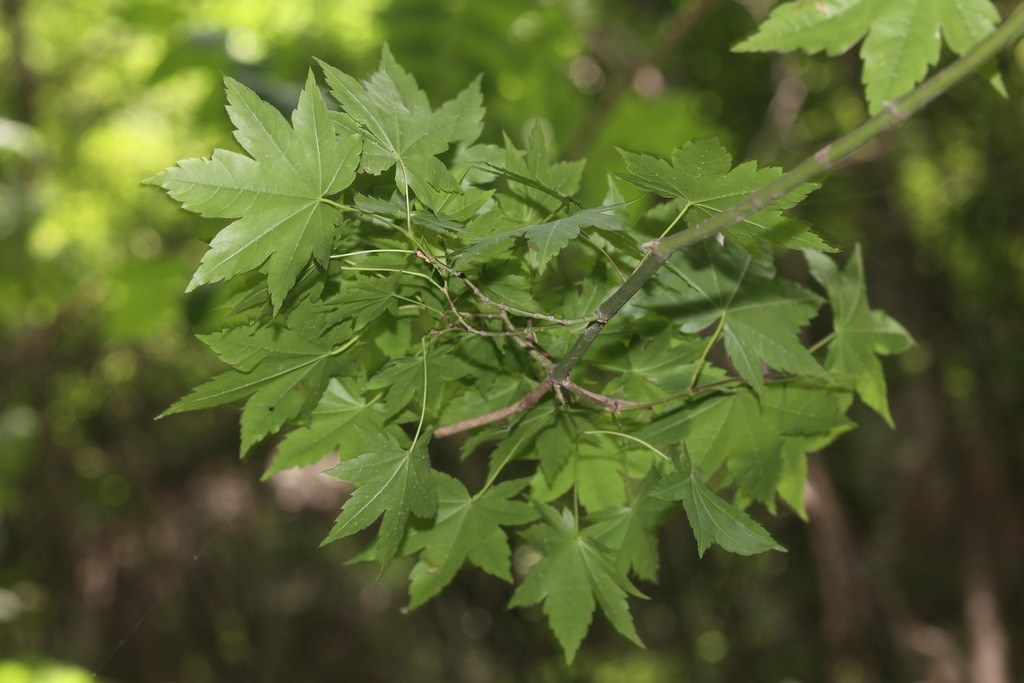
The leaves are palmately seven- to nine-lobed, from about two to ten centimetres long and three to ten wide, with margins that are toothed twice over. That double serration is what the epithet means, and it is the feature to look for when the leaf shape alone could be any of half a dozen maples.
Two varieties are recognised. The typical one is endemic to Taiwan, scattered in submontane broadleaved forest from about a thousand to two thousand metres, mostly in the centre and north of the island, and it is treated as Vulnerable in the Taiwanese assessments. The mainland plant, var. chinense, grows in deciduous forest at lower elevations and has a far wider range.
Science & Biotechnology
The section Palmata is the group of maples with palmately lobed leaves and paired samaras, and it is the group that gardeners care most about. Acer duplicatoserratum sits among the Asian members of that section, close to A. palmatum and A. japonicum, and its relationships have been worked out with both morphology and DNA.
The autumn colour is a matter of chemistry. Chlorophyll is broken down and its nitrogen withdrawn into the stems, and the anthocyanins that were already in the leaf, or are made in the last weeks, become visible against the yellow carotenoids that were there all along. A cool, bright autumn with dry air gives the best colour; a wet, windy one strips the tree before it turns.
The winged fruit is a samara pair, and the wing is a single blade of papery tissue that spins the seed away from the parent. The pair separates at maturity and each half autorotates, which buys it a few more metres of distance and a few more seconds in the air. The seed ripens in October and comes down through November.
Uses & Benefits
Outside Taiwan and China it is grown as a compact specimen tree for autumn colour, and it earns its place in mild, humid climates where the Japanese maples of the nursery trade look tired by August. It takes more heat and more humidity than A. palmatum, and it holds its leaves later into the season.
The wood is hard, pale and fine-grained, and it is used locally for small turnery and for fuel, though the tree is too scarce to be a timber species. In Taiwan it ranks among the maples that people travel to see in November.
In a garden it works best as a single specimen on a lawn or at the edge of woodland, where the low sun can get under the crown. It is also good in a large pot for the first years, which is useful where the soil is alkaline or the winter is wet. The Sapindaceae list also carries Acer pictum, Acer pseudowilsonii and Acer calcaratum.
Growing from Seed
Sow the samaras fresh in autumn, in a pot of leaf mould and grit, and leave them outside for the winter. They need a cold, moist period of two to three months, and fresh seed germinates far better than seed that has been stored dry. Expect the seedlings in spring, unevenly, over three or four weeks.
Prick them out when the first true leaves are open, and grow them on in light shade for the first summer. The young tree is slow for two years and then accelerates, and it will flower at about eight years from seed.
Plant out into deep, moist, acid soil in a sheltered position. It scorches on a hot, dry wind and it sulks in alkaline ground, and it is happier with a mulch of leaf mould than with a feed. Prune only to remove dead wood, in late winter, and never in spring when the sap is running. In a pot, use an ericaceous mix and repot every second spring before the buds break.
Our Take
This is a maple for the gardener who has killed a Japanese maple and wants to know why. It is tougher, later into the season, and just as good in November. The catch is supply. It is rare in the trade, and the plants that are offered are usually seedlings of uncertain parentage. Grow it from seed if you can find the seed, and expect to have to look for it.
Related Reading
Continue exploring with these related plants: