


Mostuea brunonis Seeds | Brunon’s Mostuea
LATIN NAME: Mostuea brunonis
COMMON NAME: Brunon’s Mostuea
Plant Profile
Mostuea brunonis scrambles through African forest as a shrub or small climber, with opposite leaves, yellow or cream tubular flowers in small clusters, and a dry capsule that splits to release a few winged seed. It belongs to the Gelsemiaceae, a small family most gardeners have never heard of, and one that also holds a famously poisonous American plant.
The family is the interesting part. Gelsemiaceae was created in the 1990s, when DNA work showed that Gelsemium, Mostuea and Pteleocarpa formed a group of their own, separate from the Loganiaceae where they had been parked for a century. Three genera, about a dozen species, and this one has the widest range of them.
Mostuea brunonis grows from Ivory Coast and Ghana through Nigeria, Cameroon, Gabon and the Congo basin to Uganda, Kenya, Tanzania, Zambia, Malawi, Zimbabwe and Mozambique, and it reaches Madagascar. Forest margins, thickets, river banks and secondary growth suit it, from sea level to about two thousand metres.
The genus is named for a person, and the epithet honours Brunon, a French botanist, in the compressed Latin that nineteenth-century authors used. Didrikson described the genus in the 1820s from West African material, and the species was added later from the same region.
Science & Biotechnology
The flowers are tubular, five-lobed and yellow, built for long-tongued insects: a moth or a butterfly can reach the nectar at the base of the tube, a short-tongued bee cannot. The tube acts as a filter, an arrangement common across the family. In African forest the usual visitors are moths, whose tongues match the local fauna.
The chemistry made the family famous. Gelsemium contains gelsemine and related indole alkaloids, and it ranks among the most toxic plants in North America, with deaths in livestock and in people who took it as medicine. Mostuea has its own alkaloids, less studied, and the whole family deserves caution.
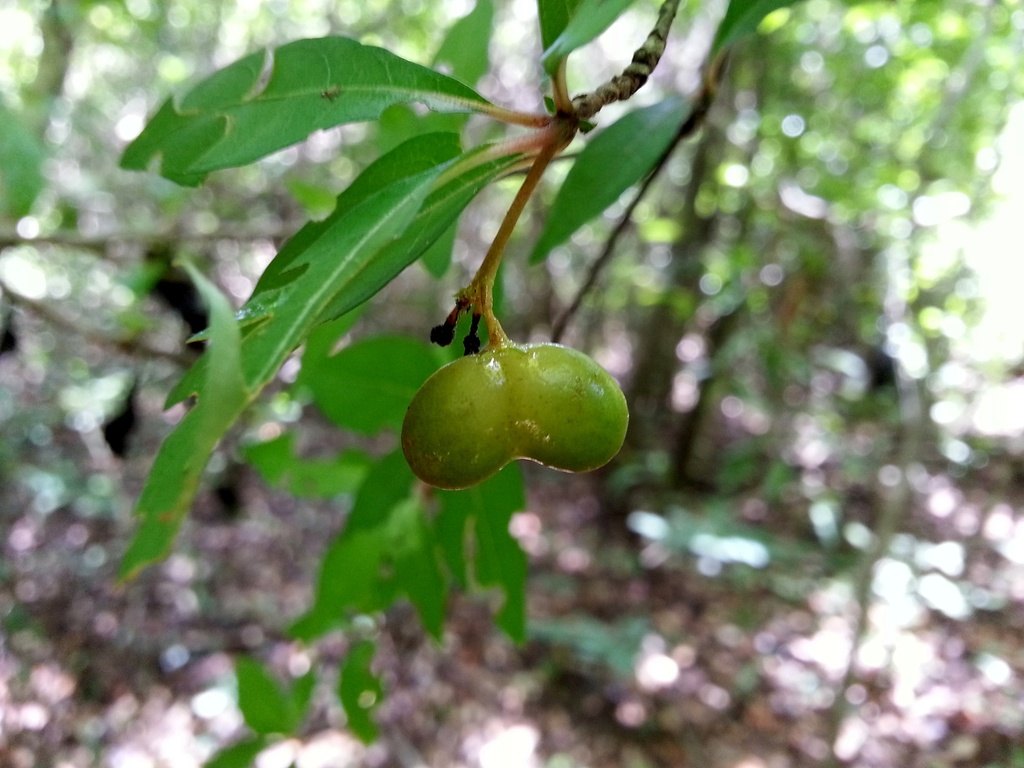
The fruit is a capsule with a few seed, each carrying a thin wing that suggests wind dispersal; the plant also layers where stems touch the ground. Winged seed plus a scrambling habit make it a quick colonist of gaps and disturbed ground.
Uses & Benefits
African practice uses the root and leaves in decoctions for a range of complaints, and local pharmacopoeias from Nigeria to Mozambique list it. The alkaloids make dosage a serious matter, and the plant is not one to experiment with outside a trained tradition. A decoction is not a prescription, and the difference matters with an alkaloid-rich plant.
Stems serve for small cordage and tying, and the plant is sometimes set as a live fence, being thornless, dense and quick. Its ecological role is that of a pioneer shrub of forest edges, one of the species that holds a gap together while the trees come back.
In the tropics it suits a wild corner, grown for yellow flowers and for scent, which is strongest in the evening. It does not appear in the ordinary trade, and it will probably stay a plant of botanic gardens and local nurseries. Seed is rarely offered, and cuttings are the usual route where it is grown at all. Allied plants on the list: Asclepias tuberosa, Asclepias verticillata and Oxypetalum caeruleum.
Growing from Seed
Seed should be sown fresh at warm temperatures in a free-draining mix, and germination is reported to be uneven, with a proportion of the seed waiting for a second season. Cuttings of half-ripe wood root readily in a humid bed, and they are the practical route in cultivation.
Plant in light shade or sun in any well-drained soil, with a support if you want it to climb. It is drought-tolerant once established and it resents waterlogging, and it will seed itself around in a warm climate if the conditions suit it, which may or may not be what you want.
Prune after flowering to keep it compact and to push new wood, which carries the next season’s flowers. Frost hurts it, so it wants a warm, sheltered site; in a cool climate it becomes a greenhouse shrub, and it will flower in a large pot given sun and space.
Our Take
The African forest edge is its home, and the flowers and the family history alone justify growing it. The Gelsemiaceae is a small club with a notorious member, and this species is the milder, more sociable relative, with flowers rather than a body count. Few plants come with a family tree this interesting.
Grow it in a wild corner, away from the vegetable garden and away from children, and enjoy the yellow tubes at dusk. It asks for little, and returns a great deal for very little trouble, with a warm wall helping more than any feeding.
Related Reading
If Brunon’s Mostuea appeals to you, these related plants are worth a look: