


Nothapodytes pittosporoides Seeds | Pittosporum Nothapodytes
LATIN NAME: Nothapodytes pittosporoides
COMMON NAME: Pittosporum Nothapodytes
Plant Profile
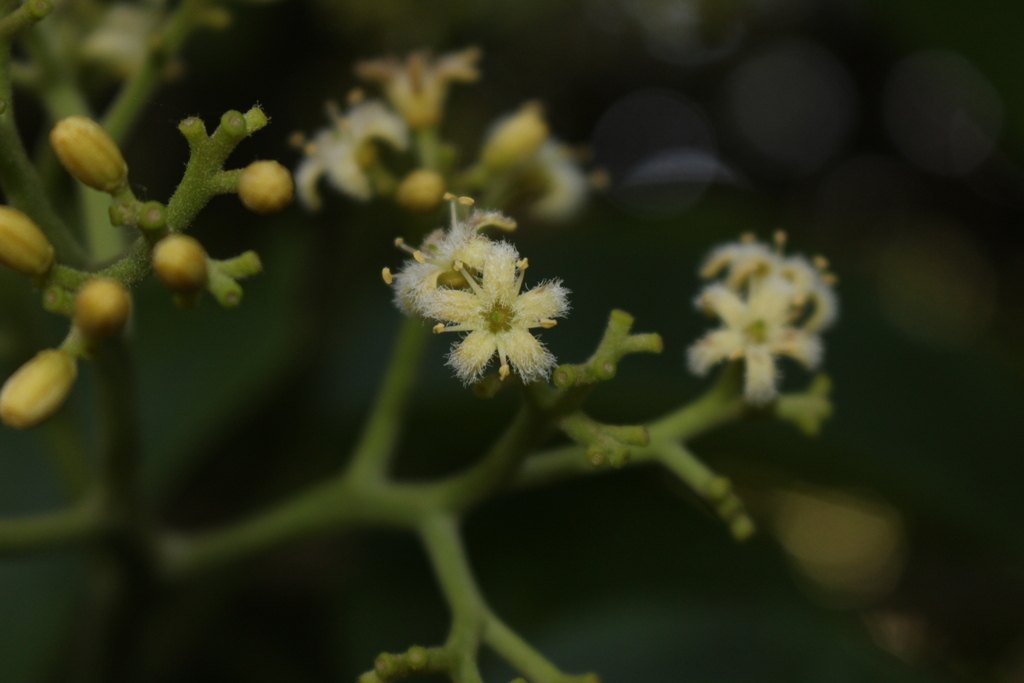
Nothapodytes pittosporoides is a small evergreen tree or large shrub of the Chinese south-west, with leathery leaves that resemble those of a pittosporum, small yellow-green flowers in terminal clusters, and a black, egg-shaped drupe. The resemblance in the leaves is the reason for the epithet, and it is a good one.
It grows in the understorey of evergreen forest on limestones and acid ridges, from Gansu and Shaanxi south through Sichuan, Hubei, Hunan, Guizhou, Guangxi and Guangdong, usually as scattered individuals rather than in stands. It is never common, and in much of its range it is a plant that a botanist finds once and remembers.
The genus name means false Podytes, a name that no longer exists, and the plant has been moved between genera several times since Oliver described it in the nineteenth century. It has sat in Nothapodytes since Sleumer’s revision of the Icacinaceae in 1940, and the family itself has since been taken apart and reassembled.
That history is the interesting part. The old Icacinaceae was a dumping ground for tropical woody plants with a single seed and a fleshy disc, and DNA work has scattered its genera across several families. Nothapodytes and its close relatives stayed in a much smaller Icacinaceae, while others went to Metteniusaceae, a family nobody had used for a century. Its Icacinaceae company here includes Merrilliodendron megacarpum, Iodes cirrhosa and Natsiatum herpeticum.
Science & Biotechnology
The flowers are small and unassuming, with five petals, five stamens and a lobed disc at the base of the ovary, and they are pollinated by small insects that are after the nectar the disc secretes. The disc is the family character, and it is visible with a lens on any open flower. Fruit set is often poor, and many flowers drop without setting anything at all.
The plant’s real significance is chemical. It accumulates camptothecin and 9-methoxycamptothecin in its bark, stem and leaves, and it does so independently of Camptotheca, which sits in a different family entirely. The two genera have arrived at the same unusual alkaloid by separate routes, a case of convergent chemistry that is still not fully explained.
That convergence matters practically. As the supply of Camptotheca has come under pressure from plantation disease and land competition, Nothapodytes has become an alternative commercial source, and wild populations in India and China have been stripped for bark. The genus is now a conservation problem as well as a chemical one. Several species are listed as threatened, and the pressure comes almost entirely from the pharmaceutical trade.
Uses & Benefits
In Chinese practice the bark and root are used, often under local names, for pain and for conditions that would now be described as inflammatory. The plant is not a major item in the pharmacopoeia, and much of the collecting is driven by the camptothecin trade rather than by traditional demand. Where the two overlap, the pharmaceutical price sets the harvest intensity.
The wood is pale, hard and fine-grained, and in its range it is used for small turnery and tool handles, though the trees are too scattered to support a timber trade. Its main economic value is the alkaloid, and that value has been enough to threaten it. A kilogram of dried bark is worth more than the whole tree is as timber.
In the garden it is a foliage shrub for shade, with a dense, dark, slightly glossy canopy and a habit that stays compact for years. The flowers are inconspicuous and the fruit is handsome in a quiet way, and the plant is grown for form rather than for show. It is also, for the chemically inclined, a living example of a convergent pathway.
Growing from Seed
Seed is slow and erratic. Sow fresh in a humus-rich, free-draining mix, keep it warm and shaded, and expect germination over several months rather than weeks; a proportion of the seed may wait a full year. Fresh seed from a good year is worth more than a large packet of old seed.
Seedlings want shade, humidity and a soil that never dries out completely, and they are slow to establish. Plant out when the stem is pencil-thick, in leaf litter under a canopy, and keep the roots mulched; the plant’s natural position is the forest floor, and it resents both drought and full sun.
Once established it needs little: an annual mulch, a little water in dry spells, and no pruning beyond the removal of a wayward branch. It is not frost-tender in the way its tropical relatives are, but late frost on new growth will blacken the tips. Growth is slow and the plant is long-lived.
Our Take
This is a plant for the shade garden and the chemistry shelf at once, which is an unusual combination. It is not beautiful in any obvious way, but it has a good leaf, a neat habit and a story that runs from a Victorian genus to a modern anticancer drug. The story is better than the flower, and the leaf is better than both.
Grow it for the foliage and the oddity, and if you collect seed, do it sparingly. Wild plants of this genus are under enough pressure already, and a garden plant raised from cultivated seed is a small contribution to leaving the rest alone. That is a reasonable ethic for a plant with a price on its bark.
Related Reading
Gardeners who grow Pittosporum Nothapodytes often pair it with these related subjects: