


Miquelia dentata Seeds | Toothed Miquelia
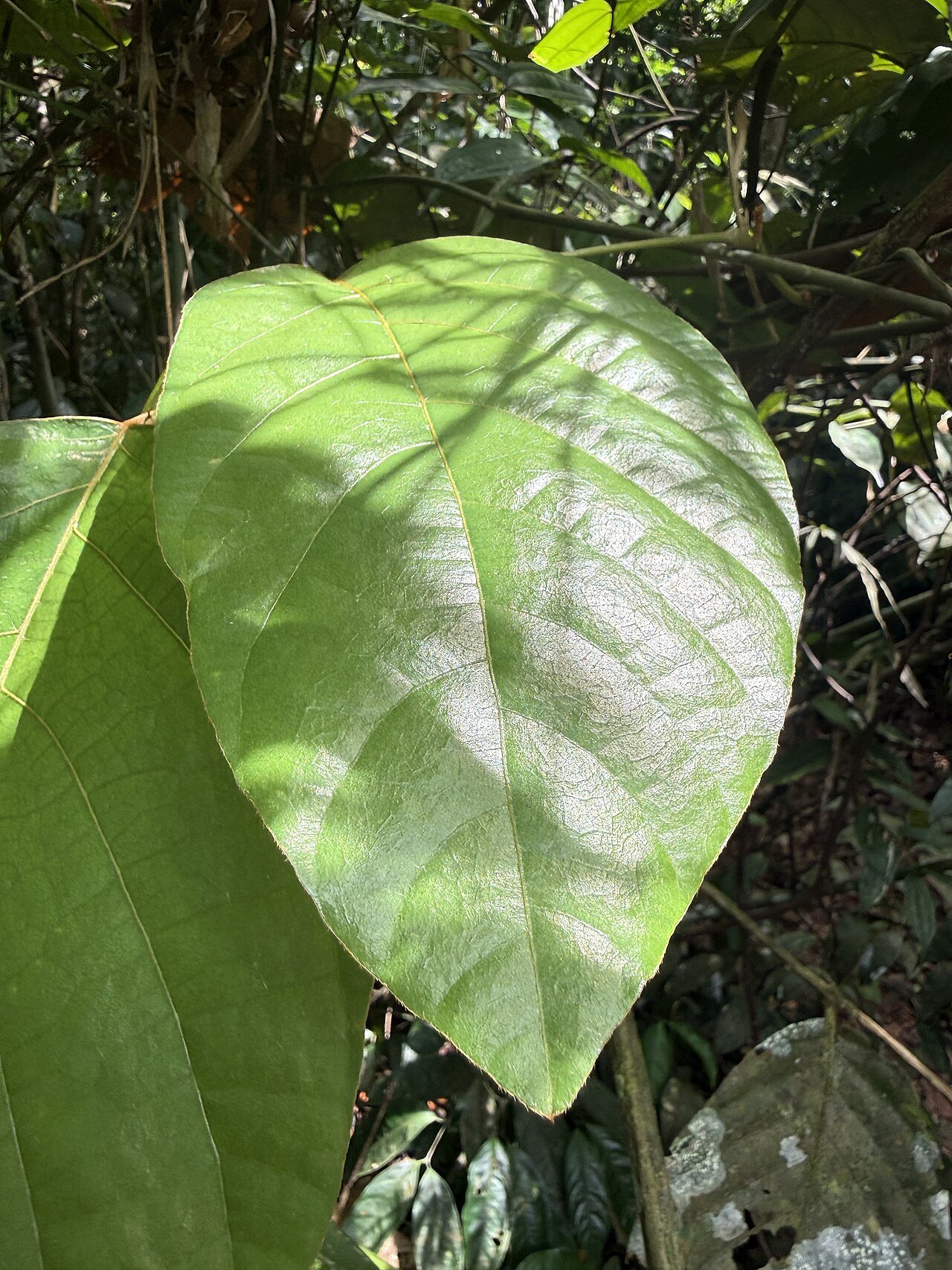
LATIN NAME: Miquelia dentata
COMMON NAME: Toothed Miquelia
Plant Profile
Miquelia dentata is a woody climber of the evergreen hill forests of the Western Ghats, recorded from Tamil Nadu and Kerala wherever closed canopy survives at middle elevation. It belongs to the understorey rather than the canopy, and it is far better known in herbaria than in the field, or in any garden anywhere at all. It has never acquired an English common name in any southern Indian flora.
The species was described by Richard Henry Beddome, the British forest officer who spent four decades in the Madras Presidency and who named an extraordinary number of southern Indian trees, ferns and orchids. His descriptions came from living material collected on his own surveys, and they remain the foundation of the regional flora. His surveys covered country that few Europeans had walked before the railways came.
The genus honours Friedrich Anton Wilhelm Miquel, the Dutch botanist who held chairs at Rotterdam, Amsterdam and Utrecht and who wrote the first systematic account of the flora of the Dutch East Indies. He worked entirely from dried specimens sent to Europe, and he never set foot in India. Miquel’s own collections came from Java and Sumatra rather than from the Indian mainland.
The epithet dentata refers to the toothed margin of the leaf, a character that separates this species from its relatives in a genus where entire margins are the norm. The teeth are small, gland-tipped and most obvious on the mature foliage of vigorous shoots. The teeth are most numerous on the lower leaves of shaded, slow-growing stems.
Science & Biotechnology
Miquelia belongs to Icacinaceae, a family that has been taken apart and rebuilt more thoroughly than almost any other group of tropical woody plants. The old, broad concept included lianas, shrubs and trees from every continent, and molecular work has since moved many of its genera into other families altogether.
The genus itself has survived the rearrangement and remains in the narrow family, together with Iodes, Pyrenacantha and a small number of other pantropical climbers and shrubs. What unites them is a combination of floral and wood characters rather than any single obvious feature visible to a passer-by. The wood anatomy has been used more than once to support the grouping.
The climbing habit is achieved by twining stems rather than by tendrils or hooks, and the young shoots make most of their growth in the weeks before the monsoon breaks. Once the rains arrive the plant is already in position to exploit the light that reaches the forest floor. A single plant can cross several metres of forest floor in one wet season. The same family turns up again in Miquelia kleinii, Pyrenacantha klaineana and Merrilliodendron megacarpum.
Uses & Benefits
There is no timber trade in a plant this size, and no commercial fruit. The wood of the larger lianas is tough and fibrous, and it has been used locally for cordage and for the handles of small tools where nothing better was at hand.
Regional practice attributes medicinal value to the root and bark, usually in decoctions taken for fevers and for complaints of the joints. These uses are recorded in local and colonial-era compilations rather than in any modern trial, and nothing here should be read as a recommendation.
As a garden plant it is essentially unknown. The few plants in cultivation sit in tropical botanical collections, where they are grown as curiosities and where they rarely flower well enough to set fruit under glass. The few cultivated plants flower in the wet season and set fruit only in the hottest collections.
Growing from Seed
The fruit is a small black drupe with a hard, bony stone, and germination is slow and uneven by any account. Sow the cleaned stones in a free-draining mix under warm, humid conditions and expect the first seedlings after two or three months, with stragglers for a year afterwards.
Seedlings want deep shade for their first season and a substrate that stays moist but never waterlogged. The root is easily damaged by disturbance, so raise plants in deep pots and move them once, at the size where the stem begins to twine. The first true leaves appear long before the stem begins to search for support.
Outdoors the plant needs frost-free conditions, high humidity and a host structure to climb. In the tropics it will follow a tree trunk once established, and it asks for nothing beyond shade at the roots and light at the crown.
Our Take
This is a plant for the person who enjoys the obscure end of the flora, a climber that most field botanists have never seen alive and that no nursery lists anywhere in the world. Its interest is taxonomic rather than ornamental, and that is a perfectly good reason to grow something.
If you find seed, treat it as an experiment and record what happens, because almost nothing has been published on the cultivation of this species by anyone at any point. Growers who have tried it report a plant that is easy to keep and hard to flower.
Related Reading
Gardeners who grow Toothed Miquelia often pair it with these related subjects: