


Arnica americana Seeds | American Arnica
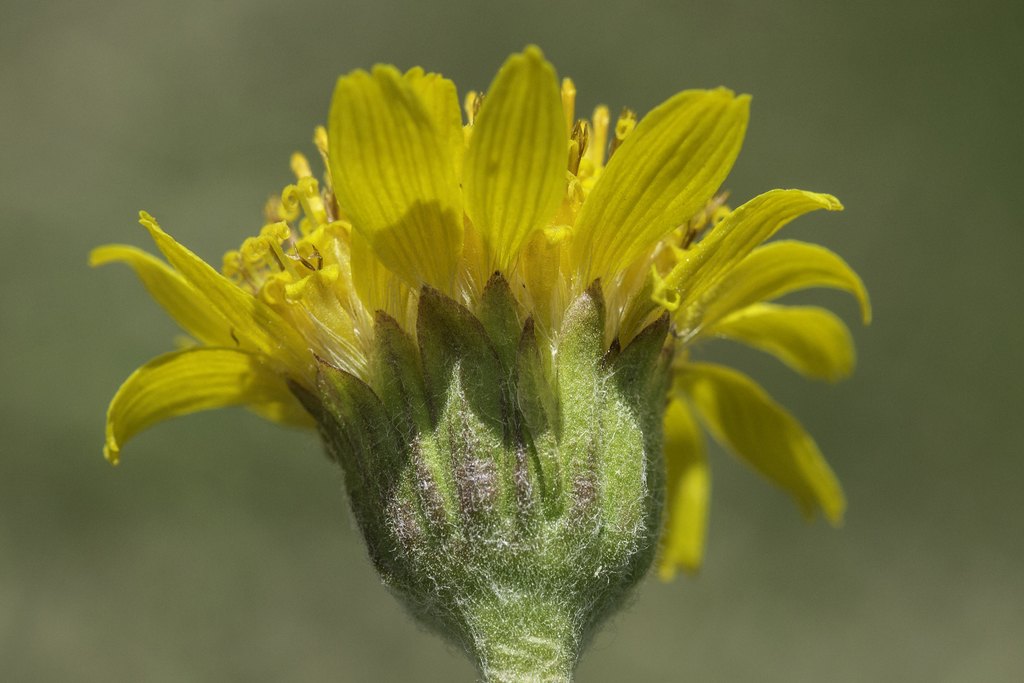
LATIN NAME: Arnica americana
COMMON NAME: American Arnica
Plant Profile
The name Arnica americana has no standing in current taxonomy, and it appears on seed lists rather than in floras. What is sold under it is chamisso arnica, Arnica chamissonis, a plant of wet meadows from Alaska to California and east into the Rockies. It is a wetland plant in a genus of mountain plants, which is the first thing to understand about it. Its leaves are soft and unarmoured, without the felted protection of the alpine species.
The epithet honours Adelbert von Chamisso, the French-born Prussian who sailed on the Rurik and who wrote the first account of the plants of the North Pacific. He collected widely in California and the Aleutians, and his name sits on species from both sides of that ocean. That voyage also produced the first scientific description of the California poppy. Chamisso’s own account of the voyage remains readable and still useful.
Arnica chamissonis is a stoloniferous perennial that spreads by underground runners into loose colonies in wet ground. It grows a rosette of lance-shaped leaves and one to several flowering stems, each carrying a single yellow head with a disc of tubular florets and a ring of ray florets. The heads face the sun and follow it while they are young. The runners are brittle and break easily when a colony is lifted.
Its habitat is the opposite of what most people expect from an arnica. It wants wet meadows, stream banks, seepage slopes and the edges of fens, often at middle to high elevation, and it will not persist in dry garden soil without constant help. In the southern part of its range it is confined to the higher meadows.
Science & Biotechnology
Arnica belongs to the sunflower family and to a small tribe of its own, the Arniceae, which molecular work has placed among the tarweeds and their relatives. The genus is northern in distribution, with most species in western North America and one in Eurasia. The centre of diversity is the Pacific Northwest. The tribe is small and its relationships were long unclear.
The medicinal reputation of the genus rests on helenalin and related sesquiterpene lactones, which are concentrated in the flower heads. Helenalin is the reason arnica preparations can cause contact dermatitis, and it is also the reason they were once taken internally, a practice now abandoned. Helenalin was first isolated in the 1950s, and its structure followed slowly.
Pollination is generalist. The open heads are visited by bees, hoverflies and beetles, and the plant sets seed freely where the ground stays damp through summer. The seed is a small achene with a pappus of rough bristles that catches on fur and clothing. The achenes ripen unevenly and are shed over several weeks.
Uses & Benefits
Arnica tincture is a licensed traditional herbal medicine in much of Europe, applied externally for bruises and muscle soreness. It should never be applied to broken skin, and it should never be taken by mouth except under medical direction, because the lactones are genuinely toxic. The tincture is diluted, and the flowers are also used in creams.
The European mountain arnica, Arnica montana, is the species of the pharmacopoeia, and wild populations have been stripped across much of its range. Cultivation has become the responsible alternative, and the North American wetland species is one of the substitutes grown for that purpose. Cultivated material is preferred because it removes pressure from wild stands.
In the garden the plant is worth growing for the yellow heads in midsummer and for the fact that it will take a wet corner that kills most perennials. It is not a plant for a dry border, and it will tell you so within a season. It will not survive a dry summer without irrigation, whatever the books say. Near kin on the list are Arnica chamissonis, Layia platyglossa and Tagetes lucida, all Asteraceae.
Growing from Seed
Sow the seed in autumn or early spring on the surface of a moist mix, because light helps germination and the achenes are small. Germination is usually good and quick, and the seedlings transplant well if they are moved young.
Plant out into ground that stays damp, in full sun or light shade, and give the runners room to travel. A wet meadow, a bog garden edge or a ditch bank suits it better than any border, and it will make a colony within two seasons.
Divide the colonies every third year to keep them vigorous, and cut the stems down after the seed has set if you do not want seedlings everywhere. The plant dies back to the ground each winter and returns late in spring.
Our Take
Here is a plant that is common in the trade, absent from the floras under the name it is sold by, and useful in medicine under a different species altogether. That triple confusion is worth knowing before you buy a packet.
Grow it as a wetland perennial with yellow daisies and a famous cousin, and it will do well. Expect nothing more and you will not be disappointed. Both halves of that confusion are worth understanding. The two species are worth keeping straight, and the label rarely does it.
Related Reading
Continue exploring with these related plants: