


Suaeda salsa Seeds | Seepweed
LATIN NAME: Suaeda salsa
COMMON NAME: Seepweed
Plant Profile
Suaeda salsa is the annual that paints the salt flats red. Linnaeus knew it as a Chenopodium in 1753 and Pallasso moved it into Suaeda in 1771, and its range today reads like a map of the Eurasian salt belt: Baltic shores, the Caspian and Central Asian steppe, the whole sweep of northern China, Korea and down to Karachi.
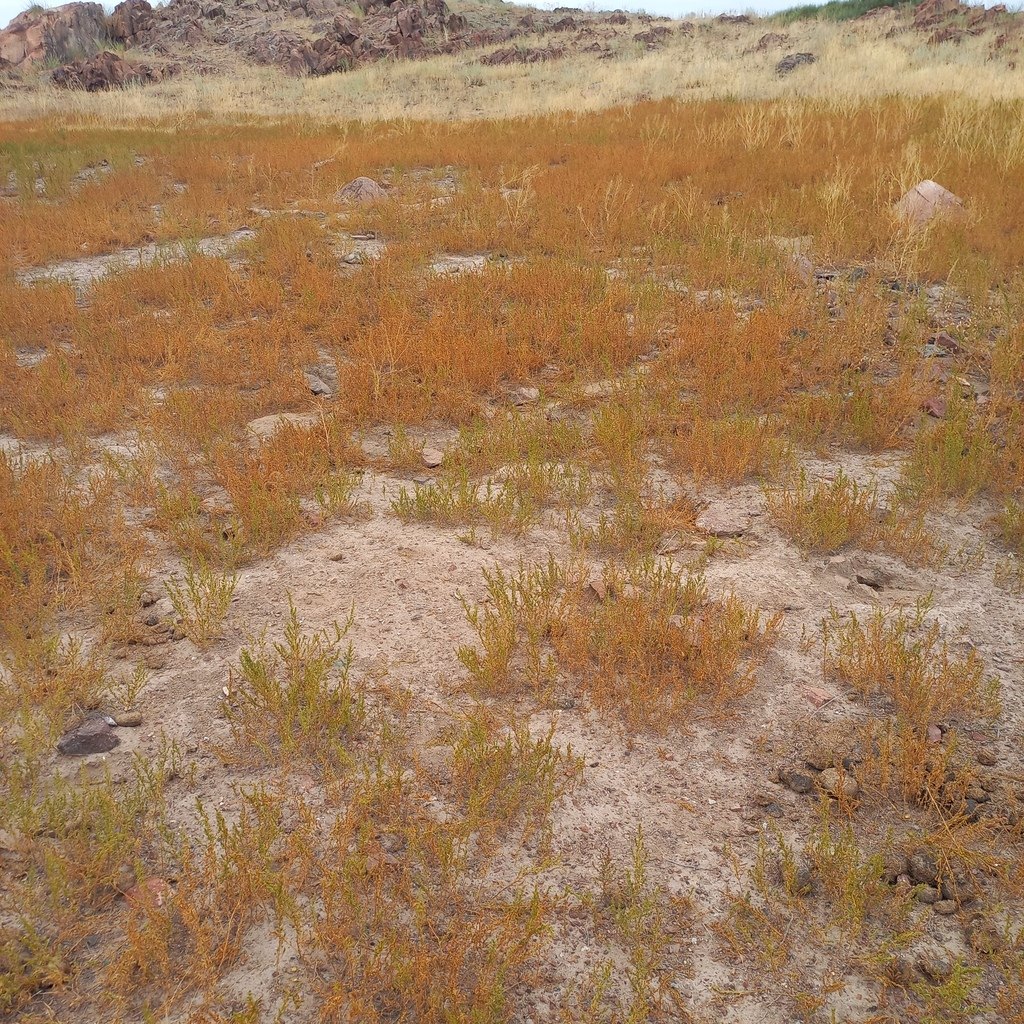
The plant is an upright annual twenty to eighty centimetres tall, fleshy and hairless, with narrow succulent leaves packed along often striped stems. Through early summer it looks like any green chenopod on the mud. On strongly saline ground the same plant turns crimson from late August as pigments flood the tissues, and fields of it stop traffic.
Habitat is the solonchak proper: coastal high marsh, the margins of inland salt lakes and continental soda flats, where the water table carries salt and few competitors can follow. In the Yellow River delta it covers flats by the thousand hectares, and inland it follows the salt lakes of Inner Mongolia and Xinjiang.
Chinese country cooking knows the young spring shoots as huang xu cai, a gathered green of the Dongying coast eaten steamed or in dumplings, a use that began in famine years and stayed on the family table long after the famines had ended. Alongside it in Amaranthaceae: Suaeda glauca, Ptilotus exaltatus and Amaranthus hypochondriacus.
Science & Biotechnology
The red that makes it famous is betacyanin, the betalain pigment class proper to the Amaranthaceae rather than true anthocyanin, and its intensity tracks salinity and light. The redder the stand, the saltier the ground, which makes the autumn colour of the Bohai flats a working map of soil conditions as seen from the road.
Physiologically the species is a salt accumulator of the textbook sort. It takes sodium up deliberately, banks it in leaf vacuoles to keep water entering the roots, and fleshes its leaves out to dilute the load. That combination of tolerance mechanisms has made it a model halophyte, and its transcriptomes and salt-response genes are among the most cited of any wild saltbush relative.
The seed biology hides one elegant trick: the plant is heterocarpic, producing two seed morphs in the same leaf axils, larger and smaller seeds that differ in dormancy and germination timing. The bet spreads the species’ risk across seasons, one morph germinating fast after rain, the other waiting in the saline soil bank.
Uses & Benefits
The gathered young shoots are eaten steamed or in dumplings on the Shandong coast, valued for mineral content and a clean salty tang that needs no seasoning. Nutrition analyses back the habit up, the greens carrying useful vitamin levels and a distinctive mineral profile shaped by the brackish ground they grow on.
The seed has drawn industrial interest for its oil, rich in unsaturated fatty acids with linoleic acid dominant, and experimental work has looked at the seedlings and seeds as a source of salt-tolerance traits for breeding into crops. For a common wayside plant it carries a disproportionate share of applied science.
In the field it earns three livings at once: sheep graze the stands as salt-tolerant forage, dense autumn growth traps wind-blown sediment and shelters the shoreline, and deliberate seeding of the plant is used to begin the recovery of abandoned saline farmland, shading the crust and starting the organic matter from zero.
Growing from Seed
Seed is small and carries no deep dormancy, but germination in the wild waits for freshwater. Rain or river flood leaches salt from the soil surface, and the seeds germinate in that temporary fresh window, which is the whole strategy. In cultivation this translates simply: sow in spring and water freely with fresh water through establishment.
Sow on the surface or half a centimetre deep in ordinary to saline ground, keep it moist, and plants run away fast in warm weather, reaching flowering size by midsummer on any soil. On genuinely saline ground, a spring irrigation or two makes the difference between a patchy stand and a solid one.
Seed ripens through autumn in the leaf axils and holds on the dried stems, so harvest is a matter of cutting whole plants and threshing. Collect from red, salty-ground plants if you want the crimson habit, because the colour response follows the soil, and seed does not fix it entirely.
Our Take
Few annuals deliver three distinct seasons of interest: a green muddy-spring carpet, a soft structural summer presence, and a crimson autumn that photographs like nothing else in the coastal flora. The plant’s needs are the negatives, no fertiliser, no fuss, no fresh-water competition.
Sow in spring on the most inhospitable, salty ground you have and water with fresh water until the stand is running. It will reward poor soil with rich colour, the red deepening exactly as the ground gets worse, and by autumn the patch will look like nothing else in the garden.
Related Reading
If Seepweed appeals to you, these related plants are worth a look: