


Silene gallica Seeds | Small-flowered Catchfly
LATIN NAME: Silene gallica
COMMON NAME: Small-flowered Catchfly
Plant Profile
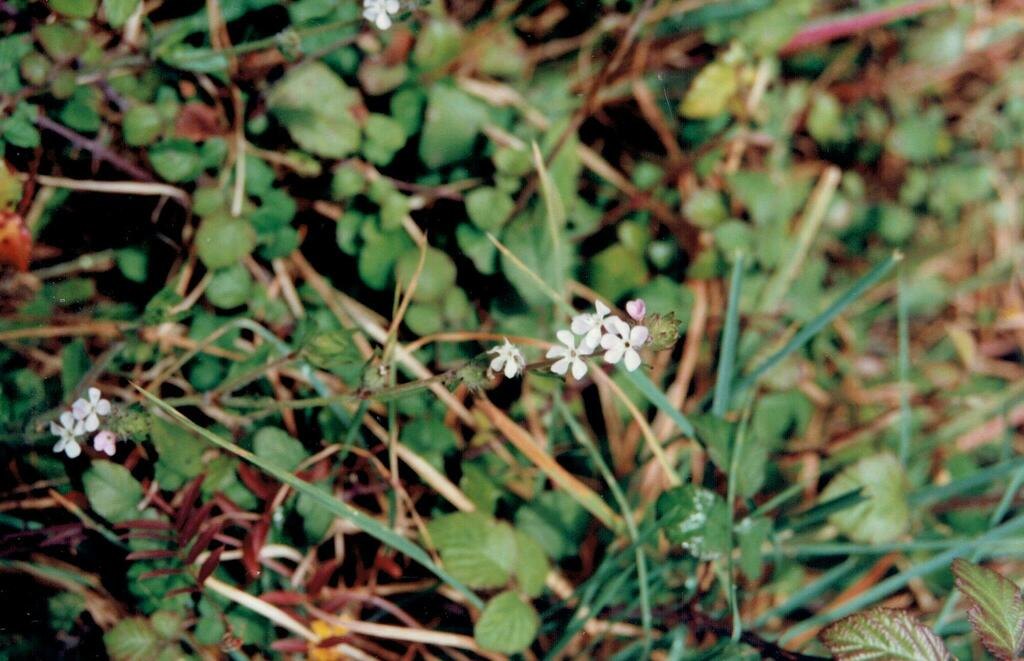
Small-flowered catchfly, common catchfly, windmill pink: the third name comes from the twist in the petals, which are spatulate and slightly rotated, so the flower reads as a small white propeller with a pink reverse. It is an erect or semi-erect annual to 50 cm, with a branching stem covered in long curling hairs and shorter glandular ones.
The stems are erect or sprawling, 15 to 45 cm long, hairy below and sticky-glandular above. The leaves are opposite and lance-shaped, 2 to 7 cm long and 1 to 15 mm wide, the lower ones stalked and spoon-shaped. Flowers are 5 to 8 mm across, in a one-sided raceme, and each sits in a calyx 7 to 10 mm long, ribbed with ten veins and closed by five narrow teeth.
There are five white or pink petals, each with a limb up to 6 mm and two small appendages at the base, ten stamens and three styles. The fruit is a capsule 6 to 9 mm long that opens by six recurved teeth. The number matters: it separates this species from its relatives at a glance, and it is the first thing to count on a dried plant.
Science & Biotechnology
The name catchfly refers to the glandular hairs on the upper stem and calyx, which secrete a sticky fluid and trap small insects. The plant is not carnivorous; it gains nothing from the corpses. The most likely explanation is defence, since a stem covered in glue is difficult to walk up, and the trapped insects may also distract predators.
The inflated calyx in fruit is a mechanical device. As the capsule swells, the calyx stretches and the teeth at the tip spread, and the whole structure becomes a small dry lantern that rattles the seed loose in the wind. The seeds are 0.5 mm across, dark reddish brown and kidney-shaped, and a plant sheds them over weeks rather than all at once.
The species has 24 chromosomes, on the same base number as white campion, and it crosses with several relatives where ranges overlap. Two former species, S. anglica and S. quinquevulnera, are now sunk into it; the second was separated only because its petals carry a crimson spot. The ten-veined calyx and the six teeth hold, and almost everything else varies with the population.
Uses & Benefits
In the garden it is a meadow annual: sow it into a cornfield strip or a patch of bare sandy ground and it will flower from June to August, then set seed and disappear. It is not showy enough for a border, and it is not meant to be. Its value is as part of a community, with corn marigold and cornflower and the poppies that go with them.
The conservation case is stronger than the horticultural one. The plant has been in long-term decline across northern Europe and is no longer present at many inland sites in Britain and Ireland, with an 80 per cent population reduction over ten years reported in 2006. It is a UK Priority Species, and the Great Britain Red Data List ranks it as endangered.
The cause is agricultural change rather than climate: herbicide use, cleaner seed, autumn sowing and the loss of the spring fallow that this plant needs to germinate and flower before the crop closes over. It survives on coastal sand, shingle, walls and dune grassland, which are the last places that still behave like the fields used to. Caryophyllaceae is well covered here, with Silene pendula, Silene conoidea and Gypsophila muralis alongside.
Growing from Seed
Sow in autumn or early spring on bare, raked ground in full sun. Light is required, so press the seed into the surface and leave it uncovered. Germination is quick at 12 to 18 °C, usually ten days to three weeks, and the seedlings are easy to recognise by the hairy stem and the opposite leaves.
Do not thin too hard. The plant is small and sparse, and a density of twenty per square metre gives the effect of a stand rather than a row. It competes poorly with grass, so sow into ground that has been cleared and keep the edges open for the first month.
Leave the plants to set seed and shake the capsules over the same ground in July. The seed is small and the capsule holds a lot of it, and a single season is enough to stock a seed bank that will come back for several years if the ground is disturbed each spring. Do not bury it: seed more than 2 cm deep will not come up.
Our Take
It is a plant for people who like the idea of a cornfield more than the reality of a border. Grown in a strip of bare sand, with the sun on it and the wind through it, it is a small, precise thing with a calyx like a little ribbed lantern, and it rewards a close look.
The 80 per cent decline is the number to remember. This is not a rare plant that was always rare; it was a common weed of every spring-sown field in Europe within living memory, and it went in a generation. A garden patch will not save it, but it keeps the seed and the knowledge alive.
Related Reading
Readers interested in Small-flowered Catchfly frequently explore these as well: