


Cerinthe major Seeds | Honeywort
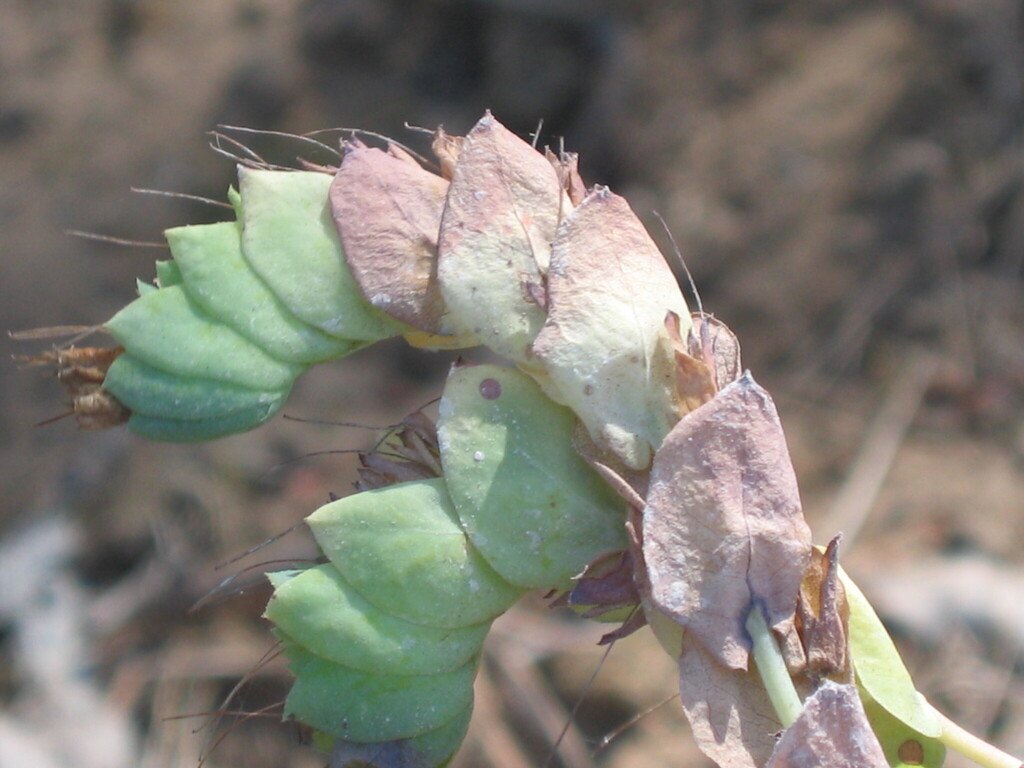
LATIN NAME: Cerinthe major
COMMON NAME: Honeywort
Plant Profile
Cerinthe major comes from the Mediterranean basin, where it grows on rocky slopes, in scrub and along roadsides, from Portugal and Spain through France, Italy and Greece to Morocco and Algeria. It has been carried into New Zealand and into northern gardens, and it rarely survives a hard winter outdoors.
The plant is one of the best bee plants in the annual catalogue, and a patch in full flower will be covered with bumblebees from morning to evening. The flowers are rich in nectar, and the shape of the tube is a good fit for a bumblebee’s tongue, so the plant is so effective at attracting them.
The flowers hang in a one-sided cluster, tubular and pendulous, and the bracts behind them do the colour work. In Europe the plant flowers from May to August, and a patch in full sun is covered with bumblebees for the whole of that period. The stems are soft and need conditioning before they go in water.
Science & Biotechnology
Cerinthe is a small genus of about 10 species in the Boraginaceae, the borage family, and it is characterised by the fleshy leaves and by the bracts that surround the flowers. The family includes borage, comfrey and forget-me-not, and it is known for its hairy leaves and its blue flowers.
The blue colour of the bracts is produced by anthocyanins, and it is unusually intense for a bract, which is usually green. The colour is strongest in cool weather and fades in heat, so the plant is most spectacular in late spring and early summer.
Three subspecies are accepted. Cerinthe major subsp. major carries sea-green bracts and yellow flowers; subsp. purpurascens carries blue bracts and purple flowers and is the form in most gardens; subsp. oranensis comes from North Africa. Linnaeus described the species in 1753, and nineteen synonyms have accumulated around it since.
The plant carries pyrrolizidine alkaloids, as many borages do: the same class of compound that makes comfrey and ragwort a problem for the liver. Livestock that eat it in quantity are poisoned, and the damage builds over weeks rather than hours. Handling the plant is harmless, and the nectar is not affected at all.
Uses & Benefits
It is used in borders, containers and cutting gardens, where its arching habit and its unusual colour are valuable. It is also a good plant for a wild garden, where it will self-sow and return year after year, and it ranks among the best annuals for a pollinator garden.
The plant is not edible, and the foliage is mildly toxic, like many members of the borage family. It is grown for ornament and for bees, and its value in a garden is in what it does for insects rather than in what it produces for people.
In a border it works at the front or middle, where its arching stems can spill over an edge, and it combines well with grasses, with silver foliage and with dark flowers. It is not a plant for a formal bed, since its habit is loose and its self-sowing is enthusiastic.
The seed is large, hard and easy to collect, and one plant yields enough for a whole border the following year. Sow in autumn where winters are mild, or in early spring where they are not, at 15 to 18 °C. The seedlings are up in two to three weeks and grow fast in cool weather. It shares the family with Myosotis sylvatica, Anchusa capensis and Cynoglossum amabile.
Growing from Seed
Sow in autumn in a mild climate, or in early spring in a cold one, at 15 to 18 °C. Cover the seed lightly and keep it moist until germination, which takes 14 to 21 days. The seed is large and germinates reliably.
Sow direct where the plants are to flower, since they resent disturbance, or raise seedlings in deep cells and plant out while small. Space plants 30 cm apart in full sun or light shade. Keep it watered while it settles, and after that only when the weather turns. Do not feed, since rich soil produces soft growth and fewer flowers. The plant tolerates poor ground and is one of the few annuals that will grow in dry shade.
Let a few plants set seed if you want the colony to persist, and shake the seed where you want it in autumn. In a mild climate it self-sows freely; in a cold one it must be resown each spring, though the seedlings are easy to raise.
Our Take
Honeywort is one of the best annuals for bees and one of the most unusual plants in the catalogue. Its blue bracts and its drooping flowers are unlike anything else, and it is easy to grow from seed. Sow it in a warm border, let it self-sow, and watch the bumblebees. It is a plant that gives more to the garden than it takes, and it asks for almost nothing.
Related Reading
If Honeywort appeals to you, these related plants are worth a look: