


Limnanthes alba Seeds | Meadowfoam
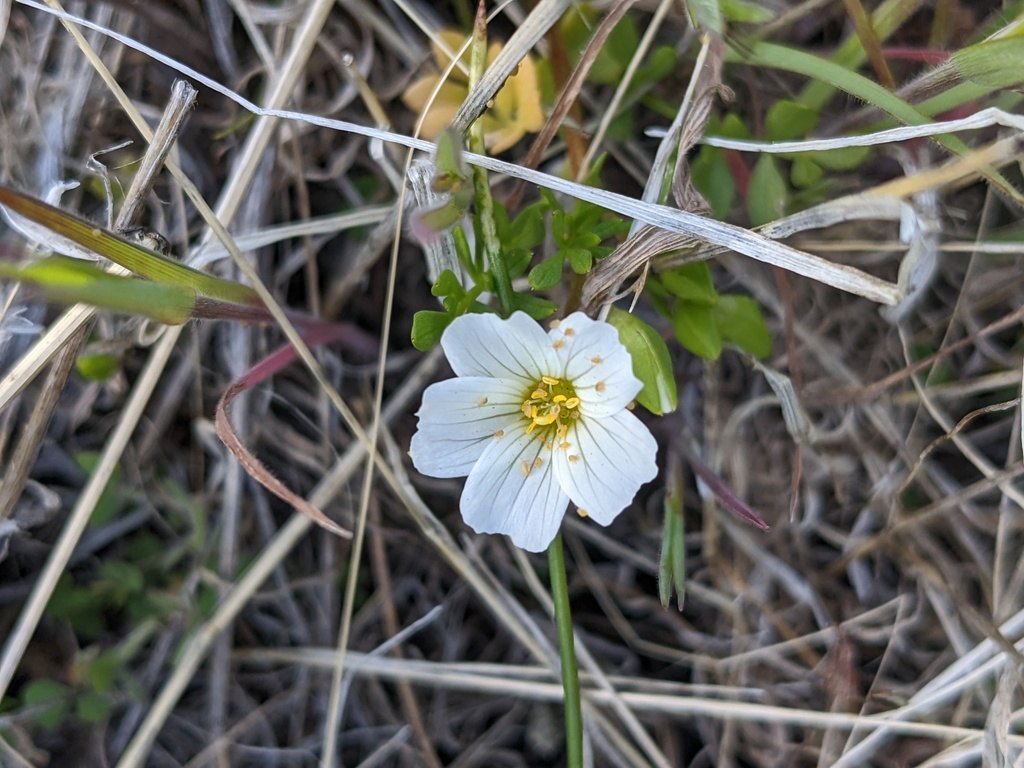
LATIN NAME: Limnanthes alba
COMMON NAME: Meadowfoam
Plant Profile
Bentham described Limnanthes alba from Hartweg’s Californian collections, and the species lives in vernal pools and wet meadows from Oregon into California. Those pools fill in winter and dry in spring, and the plant finishes its whole life in the weeks between. Almost every record comes from that narrow belt.
The flowers have five petals, sometimes with a yellow base, and spring brings them in such numbers that the ground turns to a sheet of cream. The whole plant is soft and slightly succulent, and it collapses within days of the soil drying. Its season runs to a pattern: a wet winter, a brief spring, then nothing.
The species belongs to the handful of plants grown commercially for a seed oil, sold as meadowfoam oil and used in cosmetics and personal care. The oil is unusually stable, because long-chain fatty acids resist oxidation, and that stability is the whole commercial case.
Growers also use it as a cover crop and as bee forage, since it flowers early and yields a great deal of nectar. In a garden it counts as a curiosity rather than a staple, but a useful one, and few annuals will grow in wet, heavy soil at all. The list carries allies in Malcolmia maritima, Lobularia maritima and Lunaria annua.
Science & Biotechnology
The Limnanthaceae is a small family of eight species, all North American, and it is placed in the Brassicales, the order that includes cabbages and mustard. The family is characterised by the deeply lobed leaves and by the nut-like fruit, which splits into one-seeded sections.
The seed oil is unusual because it contains eicosenoic and docosenoic acids, fatty acids rare in plants and almost absent from the oils we eat. Eicosenoic acid makes up more than half the total, and that keeps the oil liquid and slow to oxidise. The profile explains the crop.
A vernal pool species, it is adapted to a habitat that fills with water in winter and dries completely in summer. The cycle drives everything: germination in autumn, growth through winter, seed set before the pool goes dry. A garden that is wet in summer or dry in winter will kill it.
The genus has a base chromosome number of x = 5, which is low for a flowering plant, and the species are diploid and self-compatible. That combination makes the plant easy to breed and easy to grow from seed, which is one reason it was domesticated relatively quickly.
Uses & Benefits
Ground cover in wet areas, green manure, bee plant: it does all three, and few annuals will grow in a boggy corner where most plants rot. In a container it works too, provided the compost never dries. The March flowers alone justify the space.
The seed oil is the main commercial product, used in skincare and hair products where its stability and light texture are valued. Few new oil crops have been developed in the last fifty years; this is one of them, and it came straight from a wildflower.
The plant is not edible in quantity, and the seed contains glucosinolates that make it unpalatable. The oil never goes to the kitchen, and the meal left after pressing becomes feed only after processing. Its garden value lies in early flowers and tolerance of wet soil: a patch in March, in a damp corner, feeds the first bees, and a few flowers left to set seed will keep it coming.
Growing from Seed
Sow in autumn in a mild climate, or in early spring in a cold one, at 10 to 15 °C. The seed needs cool conditions and constant moisture, and it germinates in 10 to 21 days. Do not sow in warm soil, since the seed will not germinate above 20 °C.
Sow direct where the plants are to grow, since they resent disturbance, or raise seedlings in deep cells and plant out while small. Space plants 20 cm apart in full sun and wet, heavy soil. Keep the soil wet until flowering, then allow it to dry as the seed ripens. The plant collapses quickly once the soil dries, which is normal and not a sign of failure. Collect the seed when the fruits turn brown, before they split.
In a mild climate it self-sows and returns to the same wet corner year after year; in a cold one it must be resown each autumn. A rain garden, a boggy corner or the edge of a pond suits it, and its early flowers feed the first bees of the year.
Our Take
Meadowfoam lives a double life: wildflower of California vernal pools, and commercial oil crop. In a garden it counts as a curiosity, but a useful one, since it grows where most annuals rot and flowers in the hungry gap of early spring. Grow it in a wet corner, let it seed, and enjoy the cream flowers in March. Nothing else will fill that place.
Related Reading
Continue exploring with these related plants: