


Scabiosa stellata Seeds | Starflower Pincushion
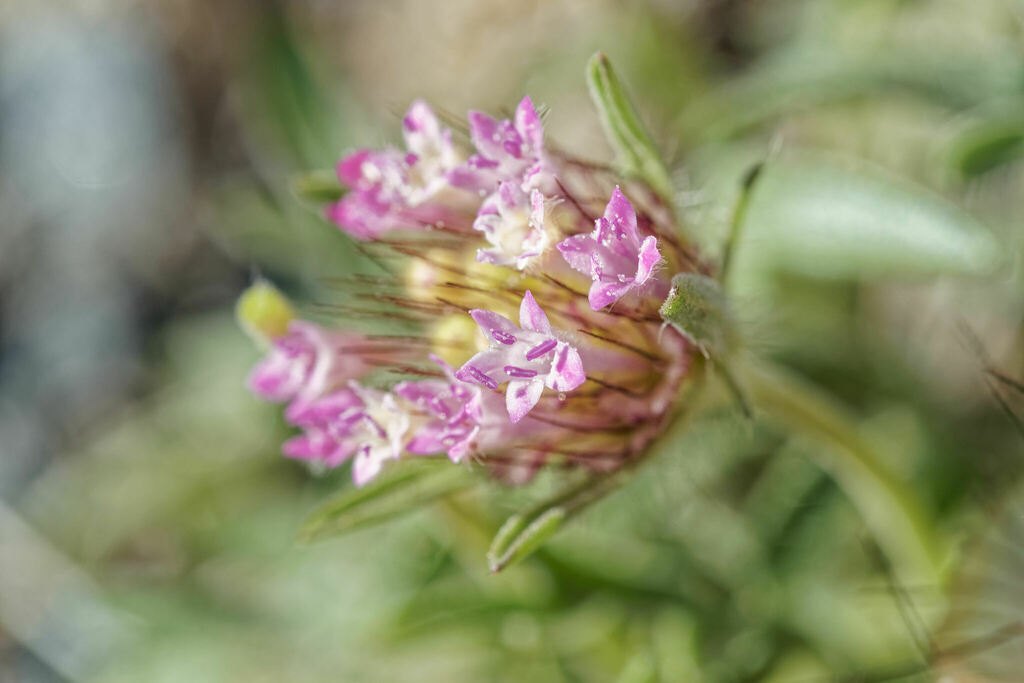
LATIN NAME: Scabiosa stellata
COMMON NAME: Starflower Pincushion
Plant Profile
Starflower pincushion is a plant sold on its second act. Lomelosia stellata, still widely listed as Scabiosa stellata, is an erect annual from south-western Europe and North Africa, forty to seventy centimetres tall, with the pale blue pincushion heads that the genus is known for and a much better reason for growing it.
The flowering head is a dense spherical cluster of small pale blue florets, flat-faced and neat, held on long stiff stems that branch near the top. It is pleasant rather than spectacular, and in a border it reads as a soft blue detail among stronger colours.
Then the flowers fade and the head opens into something else entirely: a papery, funnel-shaped structure of striped, fan-like bracts that stands an inch across and lasts for months. It ranks among the best dried flowers in the trade, and it is why the plant is grown at all.
The genus was separated from Scabiosa by Greuter and Burdet, on the form of the epicalyx and the shape of the fruit, and the split has been accepted by most authorities while the seed catalogues have ignored it entirely. Both names still sell plants. Closest relatives on the list are Scabiosa caucasica, Dipsacus fullonum and Scabiosa atropurpurea.
Science & Biotechnology
The star is an epicalyx, a ring of bracts sitting outside the true calyx. In this genus the epicalyx bracts are fused into a cup and expand after flowering into a flared, ribbed structure with a distinctly geometric pattern, and the whole thing is dry and papery at maturity.
That structure has a function beyond decoration. It increases the surface area of the dispersal unit and gives it a shape that catches the wind, and the striped pattern is produced by lignified tissue in bands, which is also what makes the head stiff enough to stand upright on a dead stem through winter.
The family has been reorganised. Dipsacaceae, the teasel family, is now sunk into Caprifoliaceae on molecular evidence, which puts scabious in the same family as honeysuckle and weigela. Nothing about the plant changed; the address did, and the older floras still use the old one.
Uses & Benefits
The use is dried flowers, and the cut-flower trade grows it in rows for exactly that. Heads are cut when the bracts have fully opened and turned papery, hung in a dark airy place for a fortnight, and used for winter work, buttonholes and the kind of small arrangement that needs structure rather than colour.
It is also a reasonable garden annual in its own right: quick from seed, tolerant of poor soil, and useful in a cutting patch where the blue flowers can be picked in June and the heads left for August. The two harvests from one row are the argument for growing it.
The plant is not edible and has no medicinal use, though the genus name refers to the old belief that scabious cured scabies, a claim that gave the group its name and has no support. It is not toxic, and handling the dry heads is harmless.
Growing from Seed
Sow in early spring at eighteen degrees, on the surface and barely covered, or in autumn in mild climates for earlier flowers. Germination is usually ten days to three weeks at a steady temperature, and the seedlings are robust enough to handle by the time the first true leaves are open.
Plant out at twenty-five to thirty centimetres in full sun. Rich soil produces a tall soft plant that falls over before the head has opened, so it is worth growing on the lean side and staking only the tallest selections; a crowded row will flower but produce small heads.
Cut for drying when the bracts are fully reflexed and the centre has lost its blue, which is roughly three weeks after the flowers pass. Cut for fresh use earlier, at the pincushion stage. Either way, cut in the morning and strip the lower leaves, which blacken in water.
Our Take
Grown for its flowers it is a pleasant annual that nobody would plant twice; grown for its seed heads it ranks among the most useful things in a cutting garden. The catalogues should say so, and some of them now do, which is an improvement on the years when it was sold as a blue bedding plant.
There is a lesson in the shape of the thing. A plant that makes its best feature after it has finished flowering asks you to wait, and waiting is not what most annuals are for. This one is worth the patience, and worth the row of dead stems left standing into November.
Related Reading
More species in the same orbit as Starflower Pincushion: