


Pentas lanceolata Seeds | Egyptian Starcluster
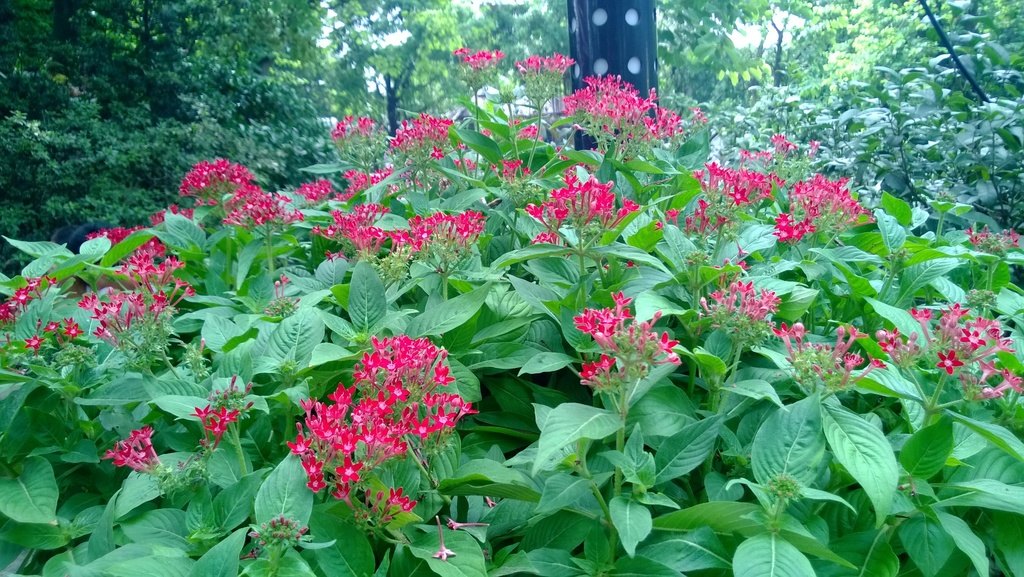
LATIN NAME: Pentas lanceolata
COMMON NAME: Egyptian Starcluster
Plant Profile
Pentas lanceolata is sold everywhere as Egyptian starcluster, a name that misplaces it badly: the species is African and Arabian, not Egyptian in any meaningful sense, and its centre of diversity is the East African highlands from Eritrea down to Mozambique.
It is a soft shrubby perennial, usually fifty centimetres to a metre in gardens and taller in the wild, with opposite, lance-shaped, slightly hairy leaves and square-ish stems. The flowers are five-parted stars in dense rounded heads, white through pink to deep magenta and red.
Eight subspecies and varieties are accepted, and their ranges are unusually precise. One is confined to the Ufipa highlands of Tanzania, another to the Comoro Islands, another to the eastern Usambara Mountains, and the nominate subspecies covers the whole span from Eritrea to Arabia. That fragmentation into named local forms points to a species isolated in highland refuges for a long time, and it is one reason the taxonomy stays unsettled.
The corolla tube is long and narrow, two to three centimetres, opening into five reflexed lobes. That proportion is the plant’s signature and the reason for its reputation: a flower built for a long tongue, held in a head that gives even a clumsy visitor somewhere to stand. Its nearest neighbours on the list are Asperula orientalis, Cynanchum chinense and Chonemorpha grandiflora.
Science & Biotechnology
The genus belongs to Rubiaceae, the coffee family, and shares its opposite leaves and interpetiolar stipules. The name Pentas is simply Greek for five, a reference to the five-lobed corolla and five stamens, and it is one of the few botanical names that requires no explanation at all.
Nectar sits at the base of that long tube, which restricts the visitor list to long-tongued butterflies and moths, plus the occasional bee willing to rob the flower by cutting in at the side. In a garden the result is a plant that hummingbird hawkmoths and swallowtails treat as a fuel station.
Several species in the genus are distylous, with pin and thrum flower forms that enforce outcrossing through differential pollen placement. The breeding of garden pentas has largely ignored this, and most cultivated strains are selected for colour and compact habit rather than for the mechanics of their stamens.
Uses & Benefits
Butterfly gardening is where this plant earns its keep. Public observation records run to more than thirteen thousand, with peaks in November and April, and most of them come from gardens rather than from wild habitat, which tells you exactly what the plant is for.
The flowering period is the point. In frost-free conditions a single plant can be in flower for nine or ten months, and the heads are replaced continuously without a pause, so a butterfly population has a constant supply rather than a flush followed by nothing. Trim spent heads away, since a head that has set seed stops producing new buds.
In cold climates it works as an annual bedding plant, in a container, or as a houseplant in a bright window, where it flowers through winter and can be cut back hard in spring. The taller older strains are better for butterflies; the compact modern ones are better for pots.
Growing from Seed
Sow on the surface at twenty to twenty-four degrees, since the seed is fine and needs light. Do not bury it; press it onto a moist, fine-textured compost and cover the tray with glass until the first seedlings show, usually in two to three weeks, then remove the cover immediately.
Prick out when the first true leaves are large enough to handle, and grow on warm and bright. The plants are fast: sown in late winter they will be in flower by early summer, roughly twelve to sixteen weeks from sowing, which is quick for a shrub.
Plant out only when night temperatures stay above ten degrees. Pinch the growing tips twice before flowering to build a bush rather than a stick, never after midsummer, water regularly but never let the pot stand wet, and feed lightly. In cold gardens, take cuttings in late summer and overwinter them indoors.
Our Take
If the aim is butterflies rather than a collection, Egyptian starcluster does more work per square metre than almost anything else in the catalogue, and it does it without deadheading, staking or any particular skill. The name is wrong, the plant is right.
Grow it in groups of three rather than singly, because the heads are small and the effect depends on mass. Cut it back by a third in early spring, feed once, and expect three or four years from a plant before it goes woody and needs replacing from a cutting.
Related Reading
If Egyptian Starcluster appeals to you, these related plants are worth a look: