


Scabiosa atropurpurea Seeds | Sweet Scabious
LATIN NAME: Scabiosa atropurpurea
COMMON NAME: Sweet Scabious
Plant Profile
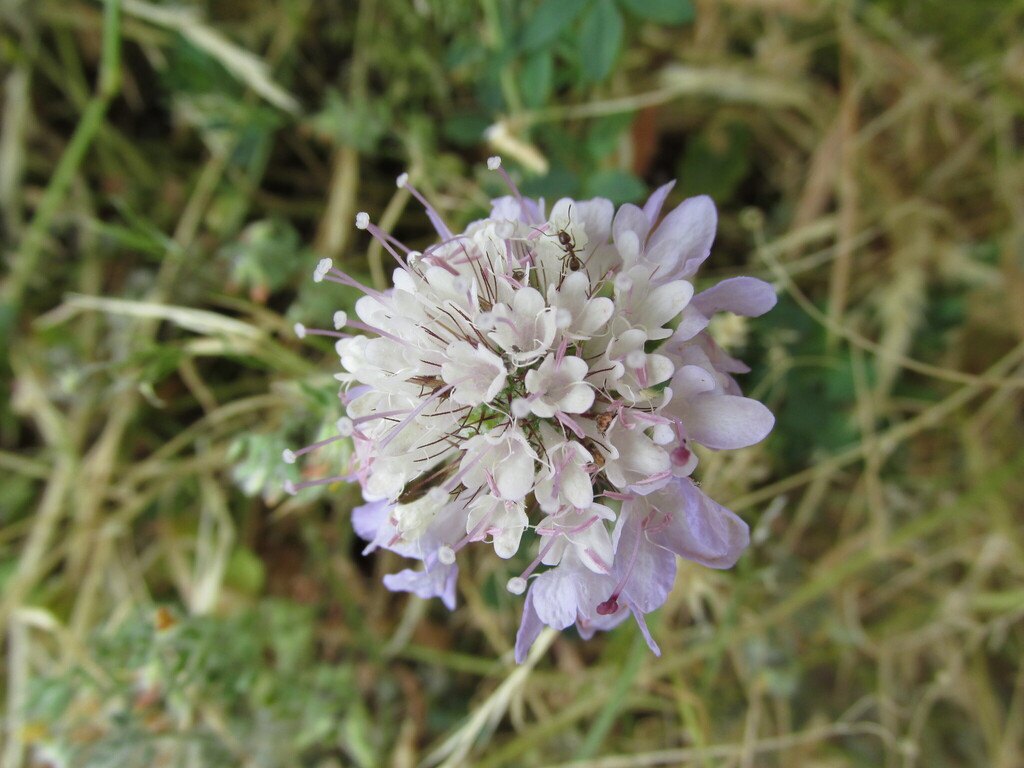
Sweet scabious, also called pincushion flower, mourningbride or mournful widow, is an annual of the honeysuckle family grown from southern European stock. Its cauline leaves are pinnately dissected, feathery up the stem, and the flowers run red to purple: a domed head of florets whose protruding stamens give the pincushion its name.
The species carries three accepted subtaxa: subsp. atropurpurea, var. grandiflora and subsp. maritima, and it has travelled under a second generic name, Sixalix atropurpurea, in some floras. Seed racks ignore the argument and sell the plant as it has been sold for two centuries.
The mourning names are literal. The deepest colour form is a wine-purple so dark it reads as black in the evening, flecked with white anthers like pins in cloth, and the Victorians who named it were describing exactly that. Garden strains now add rose, lavender and near-white, but the black-purple remains the signature.
Native to southern Europe, it has spread by seed well beyond it: naturalised or casual records run through Germany, Slovakia, Corsica, Sicily and Malta to New Zealand and Honduras. It propagates by seed alone, and the seeds are dispersed by animals as well as by the gardener’s rake.
Science & Biotechnology
Its weedy biography is part of the species file: outside its native range it has become an invasive, notably in California where it has invaded grasslands, and it ranks among the most commonly recorded weeds in South Australia. A cut-flower annual in one hemisphere is a rangeland problem in another, and the difference is climate and bare ground.
Cultivation requirements run against its weed success: it prefers cooler climates, and high temperatures and humidity negatively impact growth. It does best in rich, alkaline soils high in organic matter with good drainage, which is the opposite of the dry grasslands it colonises where summers are dry and nobody waters.
The flower head is an engineering set: outer fringed ray florets as the collar, and the central dome opening from the rim inwards over days, so one head supplies pollen and receptive stigmas at the same time. Butterflies read the heads as landing platforms, and a row of them is steady traffic on any warm afternoon.
Uses & Benefits
Its first use is the vase: it makes a good cut flower, straight stems above clean ferny foliage, and the dark forms hold their colour in water better than most annuals. Cut deep, and the plant responds with more stems, which is the correct arrangement for both parties.
In the border it fills the late-summer gap with colour that ordinary bedding cannot reach, especially the burgundy-black tones of forms such as Beaujolais Bonnets, a cultivar grown for its long blooming period. Sown in drifts it reads as a soft, old-fashioned mass; planted single colours it reads as modern.
For pollinator schemes it ranks among the most reliable annuals: the heads are open long, accessible to short-tongued insects, and the succession of new buds outlasts most of the bed. The one caution is heat, which shuts the plant down early in hot-summer climates. The same family turns up again in Scabiosa stellata, Scabiosa caucasica and Dipsacus fullonum.
Growing from Seed
Sow where it is to flower in mid-spring, or start earlier in modules in cool conditions, covering the seed lightly. It germinates in cool soil and dislikes the transplant shock of a hot propagator, so the module route only works if the trays are grown hard and cool.
Give it the soil it asks for: fertile, alkaline, well-drained, improved with organic matter but never waterlogged. Space 25 to 30 cm apart, since the heads and stems crowd badly when packed. In hot-summer regions, position it for afternoon shade and expect the season to end earlier than the packet says.
Through the season, cut or deadhead relentlessly; every head left to mature is a head that ends the stem’s run. If seed is wanted, let one plant set pods at the end of the row, collect the dark woody achenes, and store them dry. It comes reasonably true from seed with only light rogueing.
Our Take
Sweet scabious is the annual that behaves like a professional: cool feet, alkaline soil, endless stems, and a colour range that includes the one black-purple nobody else provides. Its weed record elsewhere is a warning about sowing it casually into open landscapes, not about the border.
Sow it thickly where you cut flowers, thin it once, and cut it hard all summer. The mourning names will make sense by August, and the vase will not care. Keep one plant back from the shears at the end of the row, and the next year’s sowing is already paid for.
Related Reading
Continue exploring with these related plants: