


Eryngium yuccifolium Seeds | Rattlesnake Master
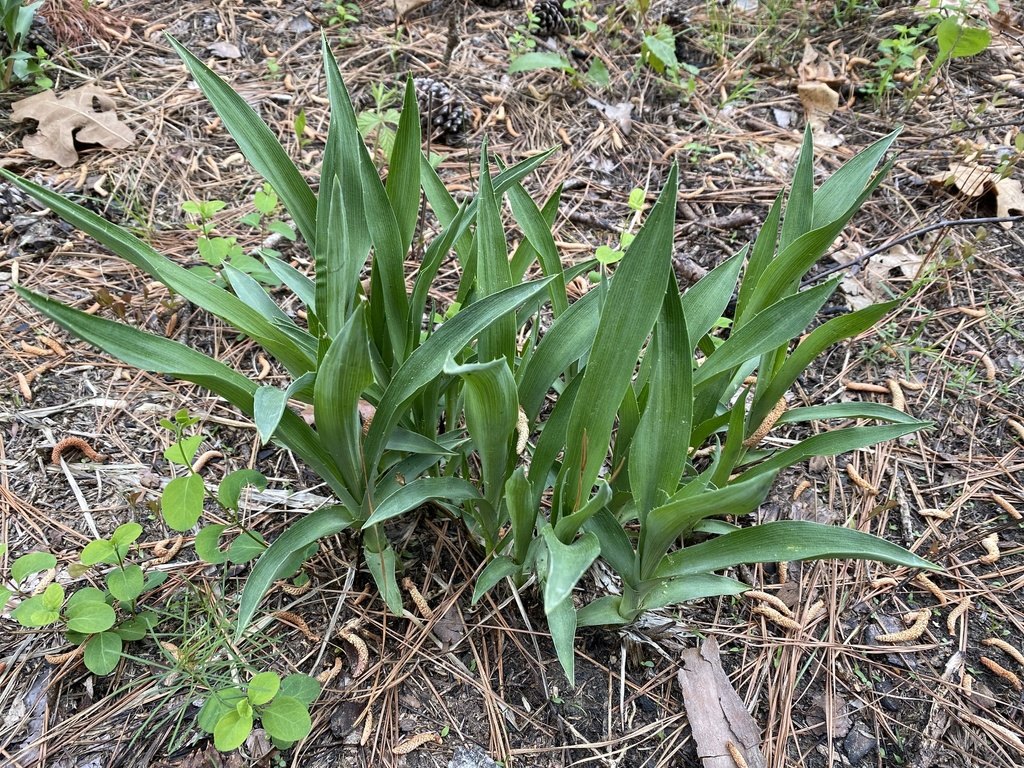
LATIN NAME: Eryngium yuccifolium
COMMON NAME: Rattlesnake Master
Plant Profile
Andre Michaux described Eryngium yuccifolium from the American southeast, where it grows as a perennial of the tallgrass prairie from Minnesota to Texas. The leaves explain the epithet: strap-shaped, spiny-margined and yucca-like, up to sixty centimetres. More than twenty thousand records place it firmly in the American middle west.
It makes a clump of stiff, sword-shaped, grey-green leaves with spiny margins, 30 to 60 cm long; hence the species name, which points at yucca although the plant belongs to the carrot family. Flower stems rise to 1 to 1.5 m and carry spherical heads of small white flowers, ringed by spiny bracts, in midsummer.
The common name rattlesnake master comes from Native American use: the root was chewed and applied against snakebite. Early European settlers recorded the practice, and ethnobotanists later documented it, which left the plant with a name that has nothing to do with its appearance.
Among the carrot family, few members are grown as ornamentals, and this one earns its place on architecture rather than flowers. It also ranks among the best prairie plants for a meadow, since it lives long, tolerates drought and pulls in pollinators.
Science & Biotechnology
Eryngium is a genus of about two hundred and fifty species, spread through the temperate and subtropical regions of both hemispheres, and it is the only member of the carrot family that has abandoned the umbel for a dense head. The change is why the flowers look like a thistle and why the insects that visit them are wasps and beetles rather than the flies of a true umbel.
The Apiaceae, the carrot family, is characterised by hollow stems, umbel inflorescences and aromatic foliage, and it includes many culinary plants as well as several deadly poisonous ones. Eryngium is unusual in the family for its dense, head-like inflorescence, which is an adaptation to pollination by a wide range of insects rather than by a specialist.
The pale colour of the heads comes from white petals and bracts, which reflect light and make the plant visible to pollinators at a distance. The heads are condensed rather than true umbels, and the nectar sits in a shallow disc open to short-tongued insects as well as long-tongued ones.
A deep taproot explains both the drought tolerance and the hatred of transplanting. The same root makes division almost impossible, so the plant is best raised from seed and then left alone. Left undisturbed, it will flower for a decade or more. Three more Apiaceae sit in the same catalogue: Cuminum cyminum, Carum carvi and Ammi visnaga.
Uses & Benefits
It is used in prairie plantings, meadow gardens and herbaceous borders, where its stiff stems and globe heads give structure in midsummer and its dried heads persist into winter. It combines well with grasses, with rattlesnake master’s fellow prairie plants such as silphium and echinacea, and with late-summer daisies.
Bees, wasps, beetles and flies all work the flowers, and few prairie species support a wider range of insects. Birds eat the seed heads, and several moths use the plant as a larval host. A single plant can be worked by dozens of species in an afternoon.
Native American groups used the root for snakebite, fever and digestive complaints, and European settlers adopted it for the same conditions. No evidence supports any effect on snake venom, and modern medicine has dropped it. The name survives; the practice does not.
The plant is not edible in quantity, and the leaves are tough and spiny, which discourages grazing. Gardeners grow it for ornament and for ecology rather than for food or medicine, and its value lies in what it does for insects and for winter structure.
Growing from Seed
Sow in autumn or early spring at 18 to 21 °C, covering the seed lightly. Germination takes 21 to 30 days and is improved by cold stratification; a period of four to six weeks in the refrigerator is the usual treatment. The seed is slow and the seedlings are small.
Prick out into deep pots, since the taproot grows fast and resents disturbance. Plant out in spring, 45 cm apart, in full sun and well-drained soil. Poor dry ground suits it and feeding ruins it: lean sites flower best. Water through the first season, then leave it be. Once established it lives for a decade or more, and it will not forgive being moved.
Our Take
Rattlesnake master belongs in a prairie garden or a meadow, and few perennials serve pollinators better. Its shape is strange, its leaves are spiny, its name misleading, but it is tough, long-lived and unlike anything else in a border. Grow it in full sun, in poor soil, and leave it alone. It stands through winter, feeds insects in summer and birds in autumn, and asks for nothing.
Related Reading
If Rattlesnake Master appeals to you, these related plants are worth a look: