


Physostegia Seeds | False Dragonhead
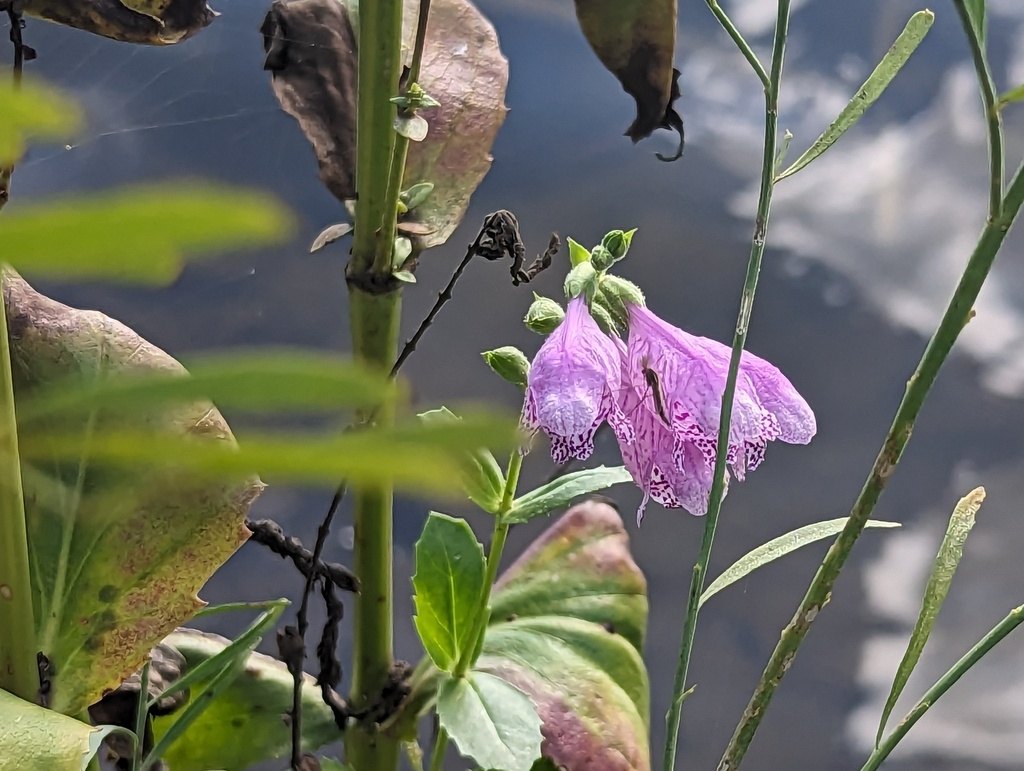
LATIN NAME: Physostegia
COMMON NAME: False Dragonhead
Plant Profile
Physostegia is a small genus of the mint family, native to North America from Canada south to northern Mexico, and the garden plant is almost always Physostegia virginiana, the false dragonhead. It grows in damp, sunny ground in the wild, along streams and in wet meadows, and it ranks among the last perennials to flower in a border, opening in late summer and holding until frost.
It makes an upright clump 60 to 120 cm tall with opposite, lance-shaped, toothed leaves and a spike of tubular, two-lipped flowers in pink, white or pale purple. The flowers open from the bottom of the spike upwards over several weeks, so a single stem is in bloom for a month, and a clump of a dozen stems carries colour from August into October.
The common name obedient plant comes from a curious property: each flower is attached to the stem by a flexible pedicel, and if you push the flower to one side it stays there instead of springing back. Children discover this before adults do, and it is the reason the plant is sometimes called the obedient plant rather than the false dragonhead.
Science & Biotechnology
Physostegia sits in the Lamiaceae, the mint family, and it shows the family’s characteristic square stems, opposite leaves and two-lipped flowers. It was formerly placed in the Scrophulariaceae because of its flower shape, but molecular work confirmed its place in the mint family, where it ranks among the few members with a spike rather than a whorl of flowers.
The obedient pedicel is a mechanical curiosity rather than an adaptation with an obvious function. The tissue at the base of the flower lacks the elastic recovery that most pedicels have, so it stays where it is bent. No pollinator benefit has been demonstrated, and the trait appears to be a by-product of the flower’s anatomy rather than a selected feature.
The genus has about 12 species, all North American, and several are grown in gardens, including P. virginiana, P. purpurea and P. angustifolia. They hybridise readily, and the garden forms are often of mixed parentage, so the height and the flower colour vary between suppliers. It shares the family with Physostegia virginiana, Mentha canadensis and Moluccella laevis.
Uses & Benefits
It is a plant for the middle or back of a border, for a damp meadow and for the edge of a pond, where its height and its late season are valuable. It combines well with asters, heleniums and ornamental grasses, all of which flower at the same moment, and it ranks among the few perennials that looks good with the first frosts on it.
It is a good cut flower, with long, straight stems and flowers that last a week in water. It is also attractive to bees and to butterflies, which work the spikes from the bottom upwards, and it provides nectar at a time when most of the garden has finished. The plant is not edible and has no medicinal use in Western practice.
The plant’s weakness is its roots. It spreads by rhizomes that run just below the surface, and in a rich, moist border it will colonise a square metre within two seasons and keep going. That makes it useful for a wild garden or a difficult damp corner, and a nuisance in a tight planting where it will overwhelm smaller neighbours.
Growing from Seed
Start the seed in a warm room six to eight weeks before the last frost, 18 to 21 °C, and keep the covering thin. Germination takes 21 to 30 days, and a period of cold stratification for four weeks before sowing improves both the speed and the percentage. The seed is small and the seedlings are slow at first.
Lift them into 7 cm pots, 15 °C from then on. Plant out in spring or early autumn, 45 cm apart, in full sun or light shade, in soil that stays moist. The plant tolerates wet ground better than most perennials, which is one reason it is useful at the edge of a pond.
Water regularly in the first season, and mulch in spring to hold moisture. The plant is hardy and needs no winter protection. Cut the stems back in late autumn or leave them standing for winter structure and for the seed heads, which are attractive in frost.
Our Take
Obedient plant is a plant with one great virtue and one great fault: it flowers in September, when little else does, and it runs. In a wild garden or a damp corner that is a bargain; in a tight border it is a mistake.
Give it room, or give it a bucket, and cut it for the house. The white form is the best of them, and a vase of white spikes in October is worth the trouble of keeping the roots in order.
Related Reading
If False Dragonhead appeals to you, these related plants are worth a look: