


Nepeta nervosa Seeds | Himalayan Catmint
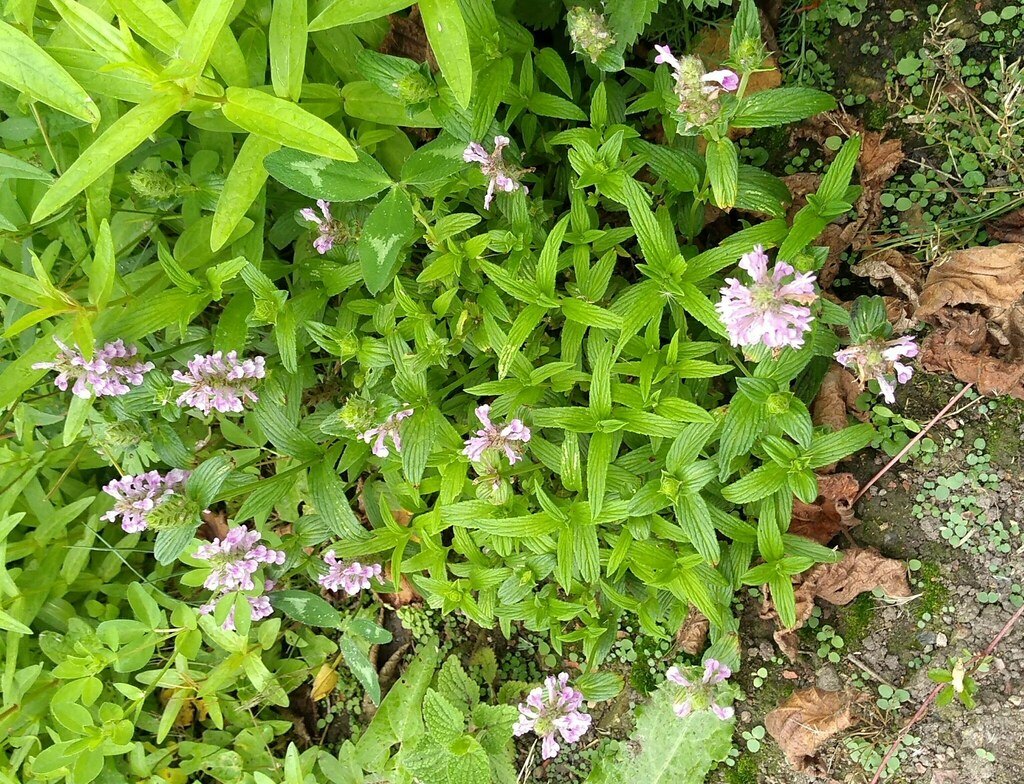
LATIN NAME: Nepeta nervosa
COMMON NAME: Himalayan Catmint
Plant Profile
Most catmints sprawl; this one sits still. Nepeta nervosa is a compact perennial of twenty to thirty centimetres from the West Himalaya, forming a tight clump of wedge-shaped, deeply veined leaves and dense, terminal spikes of violet-blue flowers through the summer months. It behaves like an alpine rather than a border catmint.
The species name records the plant’s best feature: the leaves are corrugated by sunken veins, giving them a quilted texture unusual in the genus. The spikes are short and dense, packed with tubular two-lipped flowers, and the whole plant carries the aromatic foliage scent of its family when brushed. Flower colour runs from mid blue to a soft violet, and a pink strain exists in collections.
Victorian plant hunters drew it from the Himalaya: collected by Royle’s parties in Kashmir and the adjoining ranges, it was described by Bentham in the 1830s. It has never left the specialist trade, and remains a plant more often met in seed lists than in garden centres.
Its natural span runs through Chitral, Gilgit and Baluchistan in Pakistan, Kashmir, Himachal Pradesh and Uttarakhand in India, and into Tibet, on stony slopes and alpine turf at altitude. Public records are strikingly thin for so classic a rock garden plant, with barely a handful of observations logged.
Science & Biotechnology
Catmints are defined by iridoid chemistry, and the nepetalactone that sends domestic cats sideways varies enormously between species. The garden value here rests on habit rather than cat entertainment; this is a species selected for its compact build, and its oil profile sits closer to the ornamental end of the genus.
Its build is a mountain answer to a mountain problem. The tight clump, the deeply veined leaves and the dense spikes suit thin soils, fierce sun and short growing seasons, where a sprawling border catmint would exhaust itself and never ripen seed. Low also means sheltered under early snow.
The spikes open from the base upward and serve bumblebees and other long-tongued bees through the alpine summer. Successive whorls keep a plant in flower for several weeks, and like its relatives it sets seed freely when a second plant grows nearby, which matters because a lone clump may set little.
Uses & Benefits
It is a rock garden plant by conviction: front of bed, between stones, in the free-draining scree that kills the taller catmints. Its blue reads brightest against grit and pale rock, and the neat foliage earns its keep from April to November without a single flower open. Plants from alpine nurseries often come divided, not seed-raised, for exactly that slowness.
Gardeners tired of catmint’s travelling habits get the blue without the spread. The rootstock creeps barely at all, seedlings are rare in good culture, and a plant stays where it is planted for years. Between paving, along alpine sink edges, it fills the gap nothing else of its colour occupies.
The one real killer is winter wet. A plant of drained mountain turf rots in a heavy lowland soil, so sharp drainage or raised culture is not a refinement but a requirement. Give it that and the remaining care list is close to empty. It sits among Nepeta tenuifolia, Salvia pratensis and Coleus scutellarioides, all Lamiaceae.
Growing from Seed
Sow in spring at fifteen to eighteen degrees, barely covered; germination takes two to three weeks and benefits from a few weeks of cold stratification first. The seed is small and dark, and a pinch covers a whole tray. Seedlings grow slowly the first season, and most gardeners pot them on twice before setting them out in their final crevice.
Full sun, gritty soil, and restraint with water. Top-dress with grit rather than feeding, shear the spent spikes once, and leave the clump alone otherwise. Division every few years in spring keeps plants young, taken with a knife and reset immediately in fresh scree.
Seed ripens in the dried spikes in late summer; cut the whole stem into a paper bag when the calyces crumble. Germination falls off sharply after a year in storage, so resow annually rather than banking it, and keep the best clumps going by division as the true archive.
Our Take
Our take: this is the catmint for gardeners who have been burned by catmint. It stays put, stays low, and delivers a saturated blue that border varieties cannot match at close range. Its rarity in the trade is a puzzle rather than a warning.
The honest deal is a small plant with strict terms: drainage or death, patience in the seedling year, and resown seed. In return it asks for nothing and never leaves. In a collection of alpines it is a foundation species, and in the trade it deserves to be far better known.
Related Reading
Continue exploring with these related plants: