


Abutilon Seeds | Flowering Maple
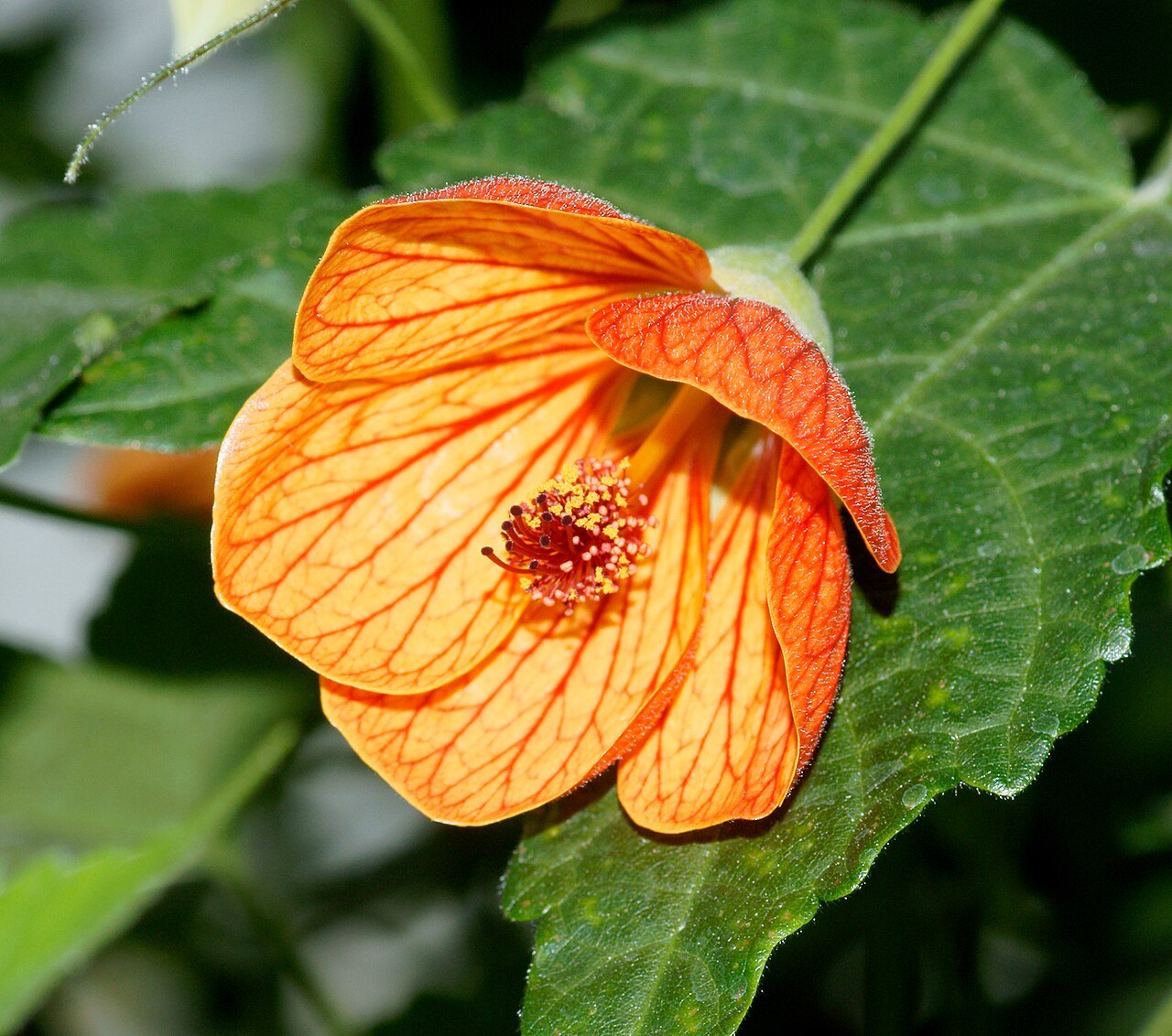
LATIN NAME: Abutilon
COMMON NAME: Flowering Maple
Plant Profile
Abutilon is a large genus of the mallow family, with about 200 species distributed through the tropics and subtropics of the Americas, Africa, Asia and Australia. The garden plants are mostly hybrids of Abutilon megapotamicum and A. pictum, grown for their hanging, bell-shaped flowers and their maple-like leaves.
The leaves are lobed and soft, often variegated with yellow or white, so the plant is called room maple or parlour maple. The flowers are 4 to 6 cm long, bell-shaped, with five overlapping petals in red, orange, yellow, pink or white, and they hang from the stems on slender stalks.
The Bella series is a seed-raised group selected for compact habit, 40 to 60 cm, and for flowering in the first year. It has made the plant available to gardeners who do not have a greenhouse, since the plants can be raised from seed each spring and treated as annuals.
Science & Biotechnology
Abutilon sits in the Malvaceae, the mallow family, alongside hibiscus, hollyhock and cotton, and it shares the family’s characteristic fused stamens, which form a tube around the style. That structure is why the flowers look like small hibiscus, and why the family is easy to recognise once you know it.
The genus includes fibre plants, medicinal plants and weeds, and A. theophrasti, velvetleaf, is one of the worst agricultural weeds in North America. The ornamental species are mostly tropical shrubs, and they are distinguished by their lobed leaves and their pendulous flowers.
The flower colour in the hybrids is controlled by a small number of genes, so the Bella series comes in a limited range of clear colours rather than the full spectrum. The yellow forms lack anthocyanins entirely, and the red forms have a high concentration of cyanidin derivatives. The Malvaceae list also carries Abutilon theophrasti, Hibiscus rosa-sinensis and Hibiscus moscheutos.
Uses & Benefits
It is grown as a house plant, a conservatory plant and a summer bedding plant, where its long season and its hanging flowers make it useful in a container or at the back of a border. In a mild climate it becomes a shrub 1 to 2 m tall, and it can be trained against a wall.
The flowers are produced continuously from spring to autumn, and they are visited by bees and by hummingbirds in the Americas. The plant is one of the few mallows that flowers in shade, which makes it valuable in a courtyard or a north-facing garden.
In traditional medicine several Abutilon species are used for inflammation and for fever, and A. indicum is an important medicinal plant in India. The garden hybrids are not used medicinally, and they are not edible. In a conservatory it can be trained as a standard, with a single stem and a head of foliage, and it responds well to pruning after flowering. The plant is also prone to whitefly and to red spider mite in dry air, so it is often grown outdoors in summer and brought in only for the winter.
Growing from Seed
Sow indoors ten to twelve weeks before the last frost at 21 to 24 °C, covering the seed lightly. A fortnight in a warm frame, three weeks in a cold one. The seed has a hard coat, and soaking it in warm water for a few hours before sowing improves the result.
Prick out into 9 cm pots and grow on at 18 °C in bright light. Pinch once or twice to encourage a bushy shape, then plant out after the last frost, 40 cm apart, in sun or light shade. In a container, use a soil-based compost and feed every two weeks.
Water regularly, and do not let the plant dry out completely, since it drops its buds if it is stressed. In a cold climate, take cuttings in late summer and overwinter the stock at 12 °C; in a mild one the plant may survive outdoors against a warm wall. Feed with a high-potash fertiliser from bud stage, and cut the plant back by a third in late winter to keep it compact and floriferous.
Our Take
The flowering maple is one of the best container plants for a shady patio, and one of the few that flowers all summer in less than full sun. It is not hardy, and it is not a plant for a cold garden, but it earns its place in a pot by a door.
Grow it in a large container, keep it watered, and take cuttings in autumn. It will flower from June to October, and the hanging bells are worth the trouble of overwintering it. It is worth the space in a cool, bright room.
Related Reading
More species in the same orbit as Flowering Maple: