


Lavatera trimestris Seeds | Annual Mallow
LATIN NAME: Lavatera trimestris
COMMON NAME: Annual Mallow
Plant Profile
Annual mallow is still sold as Lavatera trimestris, though the genus has been folded into Malva on molecular evidence, and the accepted name is now Malva trimestris. Gardeners have ignored the change, and the catalogues have mostly followed them. The move rests on molecular evidence and has been accepted by most authorities, though not by the seed trade.
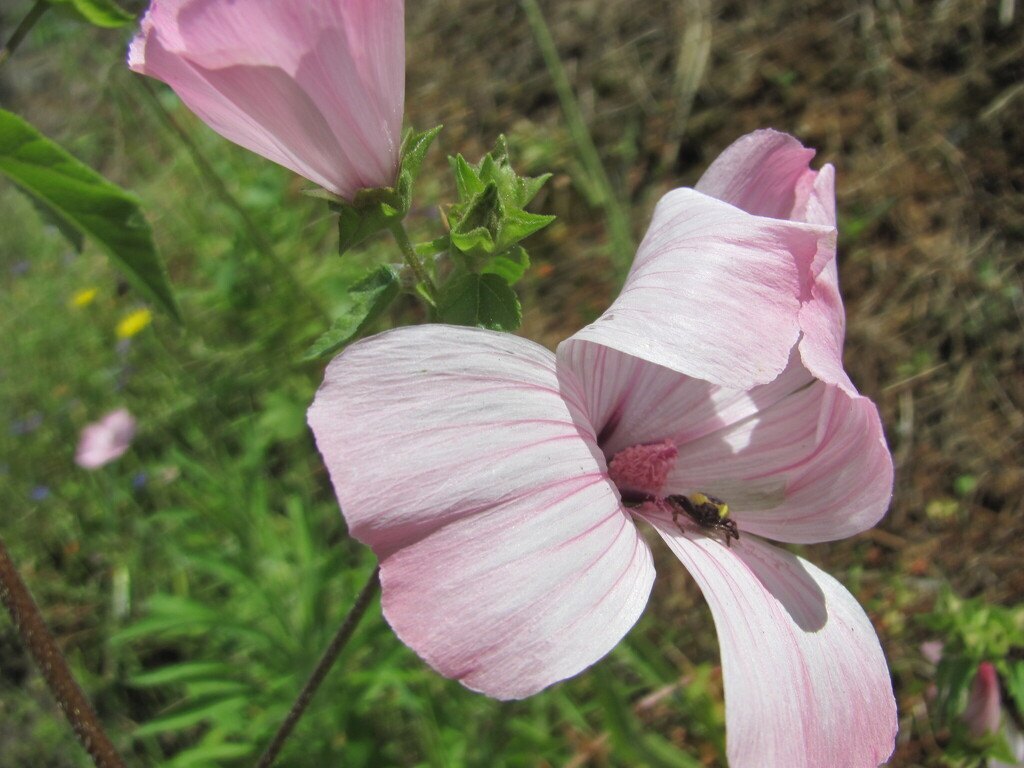
It is a fast, upright annual reaching a metre and a quarter in height and less than half that across, with rounded lobed leaves and shallow funnel flowers in white and pink, each with a maroon centre and maroon veins running out along the petals.
The specific epithet means of three months, and refers to the plant’s entire life: sown in spring, flowering by midsummer, dead with the first frost. It ranks among the few botanical names that is also a cultivation instruction. Three months is optimistic in a cold summer and four is nearer the truth in a warm one.
In the wild it is a plant of sandy ground, mostly near the sea, around the Mediterranean from Spain to Turkey and North Africa. It has escaped from gardens in Britain, California, South Africa and Australia, always on light soil and usually near the coast. The Malvaceae thread continues with Hibiscus moscheutos, Hibiscus manihot and Hibiscus aculeatus.
Science & Biotechnology
The reason the genus moved is the epicalyx, the ring of bracts just below the true calyx. In Lavatera those bracts are fused into a cup; in Malva they are separate. Molecular work showed the fusion arising more than once, and the genera were merged.
The flower’s reproductive parts are fused into a staminal column, a characteristic malvad structure in which the filaments join around the style and the anthers sit on the outside. Pollen is presented on that column, and a bee working the flower is dusted from all sides. The column bends under the insect’s weight, pressing pollen onto the underside where it will meet the next stigma.
The flowers are short-lived individually but produced continuously, which is how a plant that dies in October can flower from June. Each lasts a day or two, opening in the morning and closing in the afternoon, and the display is a rolling average rather than a single event.
Uses & Benefits
Its job in the garden is speed. Sown in April it will be a metre high and in full flower by July, which makes it one of the best fillers for a new border or a gap left by a failed shrub. Nothing else annual in the same colour range grows as fast. It also stands wind better than most tall annuals, because the stem bends rather than snaps.
Records peak hard in May, with April and July well behind, which reflects a Mediterranean flowering that starts early where winters are mild and shifts later where they are not. In a British garden the same plants flower from July to September.
Silver Cup and the Beauty Series both hold Awards of Garden Merit, and they are the strains worth buying: Silver Cup for a clear satin pink with darker veining, the Beauty Series for a mix that includes a good white. Both are annuals and both must be sown each year, though sowing both gives you a pink and a white in one bed without buying two packets.
Growing from Seed
Sow direct where the plants are to flower, because the taproot resents disturbance and transplants sulk for weeks. Wait until the soil has warmed in late spring, sow two seeds per station at the final spacing, and thin to the stronger seedling once they are up.
Spacing matters more than feeding. Forty-five centimetres apart gives plants that stand without support; closer than that and they lean, tangle and mildew. Do not enrich the ground, because rich soil produces leaf at the expense of flower, and a fat plant flops before the buds open.
Water until established and then only in dry spells. Deadhead if you want a longer display, or leave the last flowers to set seed and you will get a volunteer crop the following spring, usually within a metre of the parent and never quite where you wanted it. A staked annual mallow is nearly always a plant that was sown too thickly, and the remedy is spacing rather than string.
Our Take
Annual mallow is a plant for people who want results in their first season, and it delivers more reliably than most annuals. The satin texture of the petals, especially in the pink forms, is the detail that lifts it above the ordinary.
Sow it thickly, thin it properly, and resist the urge to stake it upright, because the slight lean is part of the look. Then pull it out in November without sentiment, and sow it again next April, which is exactly what the name says it is for.
Related Reading
Continue exploring with these related plants: