


Pentas Seeds | Star Flower
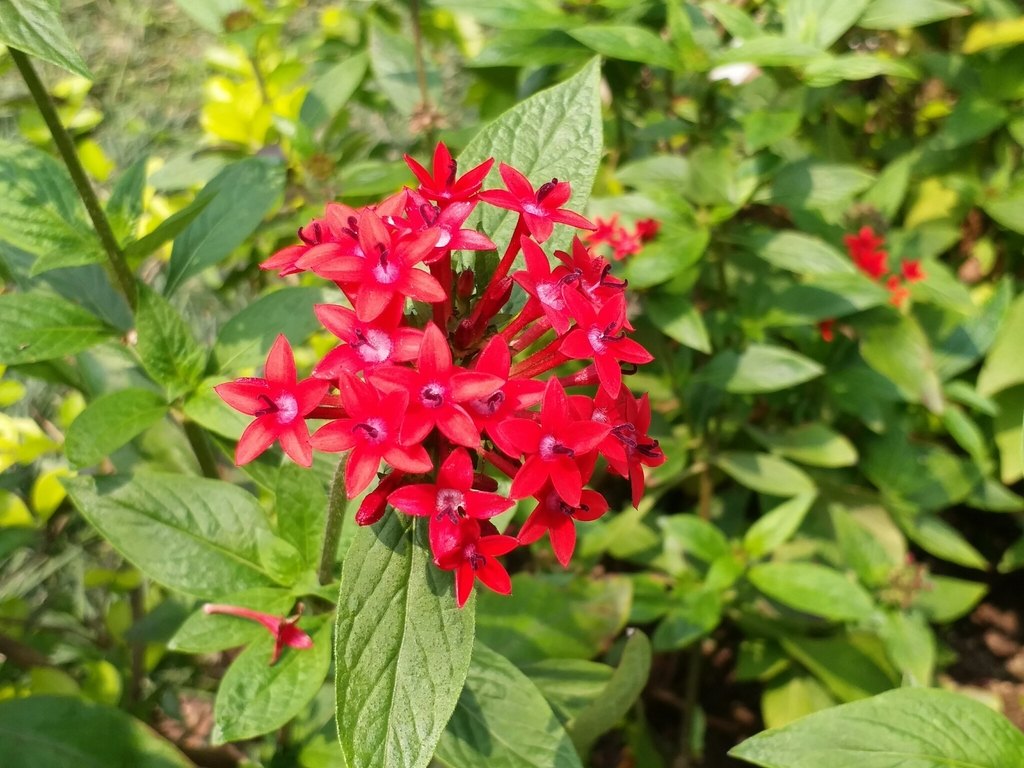
LATIN NAME: Pentas
COMMON NAME: Star Flower
Plant Profile
Pentas is a genus of about 40 species in the Rubiaceae, the coffee family, found in tropical and southern Africa, Madagascar, the Comoros and the Arabian Peninsula. The garden plant is almost always Pentas lanceolata, a shrublet 40 to 90 cm tall with opposite, slightly hairy leaves and dense rounded clusters of small star-shaped flowers.
Each flower has five narrow lobes, which is where the name comes from, and the clusters are 8 to 10 cm across, in white, pink, rose, red, lilac and purple. They are produced continuously through warm weather, and a plant in full flower is covered with them for months.
The species is a perennial in the tropics and a half-hardy annual elsewhere, and it ranks among the few plants that flowers as well in a container as in the ground. It is also one of the few that will flower in shade, though it flowers best in sun. Nearby in the classification: Pentas lanceolata, Asperula orientalis and Asclepias incarnata.
Science & Biotechnology
The Rubiaceae is a large family, about 13,000 species, and it includes coffee, quinine and gardenia as well as pentas. The family is characterised by opposite leaves with interpetiolar stipules, and by flowers with inferior ovaries, so the fruit of a pentas is a small capsule below the flower rather than above it.
The star-shaped flower is adapted to butterfly pollination: the narrow lobes give the insect a landing platform, and the long tube holds nectar that only a long tongue can reach. The colour range, from white through pink to red, is matched to the visual range of different butterfly species, and the flowers are also visited by hawk moths at dusk.
Pentas is one of the few genera in the family that has been bred for the ornamental trade on a large scale, and the modern cultivars are the result of hybridisation between P. lanceolata and P. bussei, which brings a more compact habit and a wider colour range. That hybrid origin is why seed strains vary and why cuttings are preferred for named forms. The genus has a base chromosome number of x = 10, and the cultivated forms are mostly diploid, so they breed true and why seed strains are reasonably uniform.
Uses & Benefits
Its main use is in containers and bedding, where its long season and its tolerance of heat make it valuable. It is also one of the best butterfly plants available: the flat clusters of small flowers are exactly the shape that butterflies need for landing, and a plant in flower will attract more species than almost anything else in a summer garden.
In tropical Africa it is used medicinally, the leaves taken for stomach complaints and the roots for fever, and it is planted around houses for its ornamental value. In the southern United States it is a standard summer bedding plant, sold in flower from April and planted out after the last frost.
The New Look and Graffiti series are compact, 30 to 40 cm, and come in a tight range of colours; the Star series is taller and more open. All of them are grown from seed or from cuttings, and all of them need heat to do well. In its native range the plant is visited by a wide range of butterflies and by day-flying moths, and it ranks among the species that has been studied for its role in butterfly conservation in East Africa.
Growing from Seed
Sow indoors ten to twelve weeks before the last frost at 21 to 24 °C, on the surface and only just covered, since the seed needs light. Germination runs from two to three weeks, faster in warmth. The seed is fine and the seedlings are small, so handle them carefully.
Prick out into 7 cm pots and grow on at 20 °C in bright light. Pinch once when the plants are 10 cm high to encourage branching, and pinch again two weeks later. Plant out at 30 cm spacing after the last frost, in the open.
Water regularly and feed every two weeks with a high-potash fertiliser once flowering starts. Deadhead to keep the clusters coming. In a cold climate, take cuttings in late summer and overwinter the stock plants at 15 °C; in a mild one the plants may survive outdoors with a mulch.
Our Take
Pentas is the best butterfly plant for a container, and one of the most reliable summer flowers for a hot climate. It is not hardy, it is not scented, and it is not fashionable, but it flowers for six months and it brings butterflies into the garden. Grow it in a pot by a door, where you can see the butterflies arrive, and keep it watered. It will do the rest.
Related Reading
More species in the same orbit as Star Flower: