


Asclepias incarnata Seeds | Swamp Milkweed
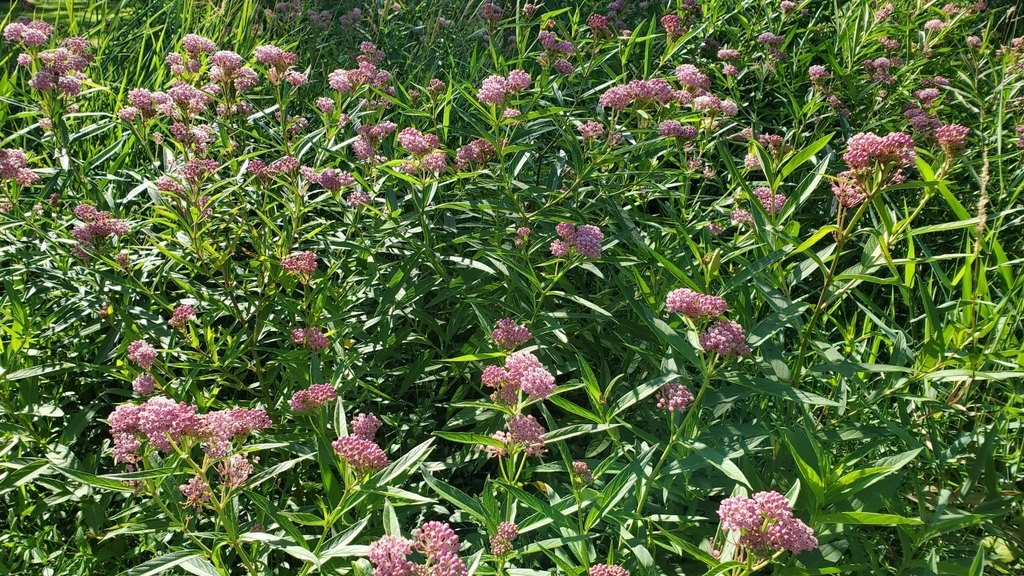
LATIN NAME: Asclepias incarnata
COMMON NAME: Swamp Milkweed
Plant Profile
Asclepias incarnata is a herbaceous perennial of the Apocynaceae, native to the wetlands of eastern North America, from Quebec and Manitoba south to Texas and Florida. It grows in swamps, wet meadows and along streams, in ground that is wet for most of the year, and it ranks among the few milkweeds that tolerates standing water.
It grows 1 to 1.5 m tall on upright stems, with lance-shaped leaves and rounded umbels of small pink flowers, 5 cm across, that are produced in midsummer and are strongly scented. The flowers are followed by large, pointed pods that split to release seeds with silky hairs, which is the milkweed’s signature.
The genus Asclepias has about 200 species, all American, and it is named after Asklepios, the Greek god of medicine, because of the medicinal uses of some species. The common name milkweed refers to the milky sap that bleeds from a broken stem, which contains cardiac glycosides and latex.
It ranks among the most important plants for butterflies in North America, since it is the larval host for the monarch, which lays its eggs on the leaves and whose caterpillars feed on nothing else. That relationship has made the plant a symbol of pollinator conservation, and it is now widely planted in gardens and in restoration projects.
Science & Biotechnology
The Apocynaceae is a large family, and it includes many plants with milky sap and cardiac glycosides, including oleander and frangipani. Asclepias is one of the few genera in the family that has become a garden plant, and it ranks among the few that is grown specifically for its ecological value rather than its beauty.
The flower structure is unusual: the pollen is gathered into pollinia, waxy masses that attach to the legs of visiting insects. That mechanism is efficient but risky, since insects can become trapped by the pollinia and die, and it ranks among the reasons the plant is pollinated by a relatively small number of specialised visitors.
The cardiac glycosides that make the plant toxic are the same compounds that make the monarch butterfly distasteful, and the relationship is one of the best-known examples of chemical defence transfer in nature. The caterpillar stores the glycosides in its body, and a bird that eats one monarch learns to avoid the species.
The genus has a base chromosome number of x = 11, and the species hybridise readily where they meet. That is one reason the taxonomy of the genus is difficult, and one reason garden plants of uncertain origin can be hard to identify.
Uses & Benefits
It is used in bog gardens, at the edge of ponds, in rain gardens and in pollinator plantings, where its tolerance of wet ground and its value to insects make it valuable. It is also a good cut flower, though the sap stains and the stems need searing before they go in water.
The plant is visited by a wide range of pollinators, including bees, wasps, butterflies and moths, and it ranks among the best nectar sources of midsummer. The seed pods are attractive in dried arrangements, and the silky hairs were once used as insulation and as a stuffing for pillows. The plant is toxic. The cardiac glycosides in the sap protect the monarch caterpillar from predators, so the butterfly is distasteful to birds, and they can poison livestock and people if eaten in quantity. The sap can also irritate skin and eyes.
Despite the toxicity, some Native American groups used the plant medicinally, and the young shoots were eaten after prolonged boiling, which destroys some of the toxins. That is not a practice to repeat without expert knowledge, and the plant should be treated as poisonous in a garden with children or pets. For more of the Apocynaceae, the list offers Asclepias verticillata, Oxypetalum caeruleum and Tabernaemontana alternifolia.
Growing from Seed
Milkweed seed needs cold stratification to germinate. Mix the seed with damp sand, seal it in a bag and refrigerate for four to six weeks before sowing, or sow outdoors in autumn and let winter do the work. Sow at 18 to 24 °C, covering the seed lightly, and the seed comes up over two weeks to a month.
Pot them into deep pots, because the taproot goes straight down, and keep them at 18 °C. Plant out in spring, 45 cm apart, in full sun and moist soil. The plant tolerates wet ground and is one of the few perennials that will grow at the edge of a pond.
Water regularly in the first season, and mulch to hold moisture. The plant is slow to establish and may not flower until its second or third year, which is normal for a milkweed and not a sign of failure. Once established it is long-lived and needs little care.
Our Take
Swamp milkweed is a plant for a wet corner and for the butterflies, and it ranks among the best plants you can grow if you care about insects. Its flowers are pretty, its scent is strong, and its ecological value is hard to overstate. Grow it at the edge of a pond or in a rain garden, where its roots can reach water, and let it seed. The monarchs will find it, and the garden will be the better for it.
Related Reading
If Swamp Milkweed appeals to you, these related plants are worth a look: