


Crepis rigescens Seeds | Rigid Hawksbeard
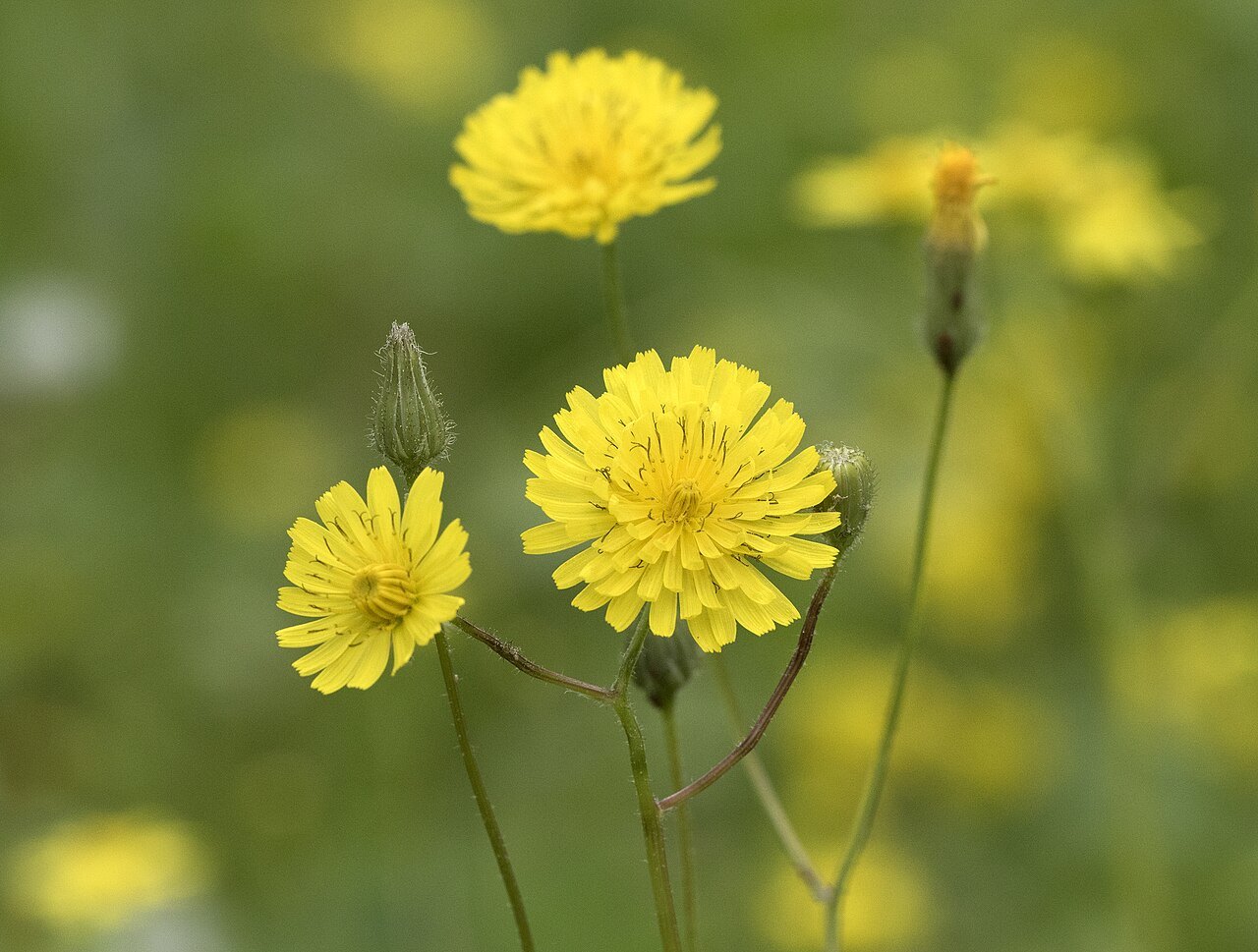
LATIN NAME: Crepis rigescens
COMMON NAME: Rigid Hawksbeard
Plant Profile
Crepis rigescens is a hawksbeard of the high country of southwestern China, described by Diels in the early twentieth century from Yunnan and Sichuan material. The epithet means growing stiff, and the stems do: upright, rigid, almost woody at the base, holding their heads without support in wind and weather.
The plant grows from a thick taproot into a rosette of deeply cut, dandelion-like leaves pressed flat to the ground, from which rise one or several flowering stems twenty to sixty centimetres tall, carrying a few reduced leaves and a loose head of yellow dandelion flowers two to three centimetres across.
After flowering the heads turn into the family’s standard package: brown ribbed achenes crowned with a white pappus of soft bristles, each seed built to travel on the wind across open meadow. The whole plant dies back to the crown each winter, returning from the taproot in spring.
Its range is the eastern Himalaya and the mountains of Sichuan and Yunnan, extending into northern Myanmar, on alpine and subalpine meadows, forest margins and grassy slopes between two and three and a half thousand metres, where the growing season is short and the light is fierce.
Science & Biotechnology
The genus Crepis is one of the great laboratory subjects of classical genetics. Early twentieth-century cytologists worked through its chromosomes because the genus has small, easily counted sets and a wide range of numbers between species, and that body of work made hawksbeards a reference case for chromosome evolution in plants. Teaching laboratories still use its root tips to demonstrate mitosis.
Many Crepis species also reproduce by apomixis, producing seed without fertilisation so that each seedling is a clone of its parent. The trait has made the genus a model for the genetics of asexual seed production, a subject of real interest to breeders who would like to fix hybrid vigour in a seed line.
Pollination is unspecialised. The yellow heads are open to bees, hoverflies, beetles and butterflies, the florets are self-compatible in many species, and the pappus carries the achenes on the wind for metres or kilometres. A plant with three ways to reproduce, clonal seed, selfed seed and wind-dispersed seed, is a plant that holds its ground. Three other Asteraceae are catalogued alongside it: Anthemis arvensis, Aster novi-belgii and Ageratum conyzoides.
Uses & Benefits
In the folk medicine of Yunnan the dried root is known as huan yang shen, the return-to-life ginseng, and is sold in local markets as a tonic for weakness, coughs and recovery after illness. It is a regional remedy rather than a pharmacopoeia article, and the pharmacology is thin.
For planting, the appeal is the meadow look: a flat rosette of cut leaves, stiff stems that hold yellow heads at eye level, and a seedhead that turns the plant into a soft white sphere in autumn. It suits gravel gardens, wildflower meadows and the dry edges of a border.
The plant is drought-tolerant, wind-firm and untroubled by pests in the way of most wild asters, and it feeds the generalist pollinators that a garden needs. Its one caution is the family’s usual one: the milky latex and the sesquiterpene lactones of the Asteraceae can irritate sensitive skin.
Growing from Seed
Sow in spring or autumn, on the surface or barely covered, because the seed needs light to germinate well. Keep the medium moist at warm room temperature and seedlings appear in two to three weeks, usually plentifully, since hawksbeard seed is generally viable and generous.
Transplant the seedlings young, while the taproot is still short, into deep pots or their final positions, and give them full sun and sharp drainage. Plants make a rosette the first year and flower in the second, after which the crown persists and repeats for several seasons if the ground is lean.
Leave a few heads to ripen if you want the plant to place itself, and cut the rest before the pappus forms if self-sowing would be a nuisance. Divide old crowns in early spring when the centre begins to thin, or simply save seed, which is easier and takes less time.
Our Take
Its scientific fame is out of all proportion to its garden reputation: a plant whose chromosomes helped build classical genetics in the early twentieth century, sold quietly as a tonic root in the markets of Yunnan, and almost unknown in cultivation outside China.
Sow it on the surface in spring, keep the taproot undisturbed where it grew, and give it lean, stony, sunny ground. Stiff stems, yellow heads and a white seedhead in autumn are the whole return, from a plant that asks for nothing else at any point.
Related Reading
If Rigid Hawksbeard appeals to you, these related plants are worth a look: