


Xerochrysum bracteatum Seeds | Strawflower
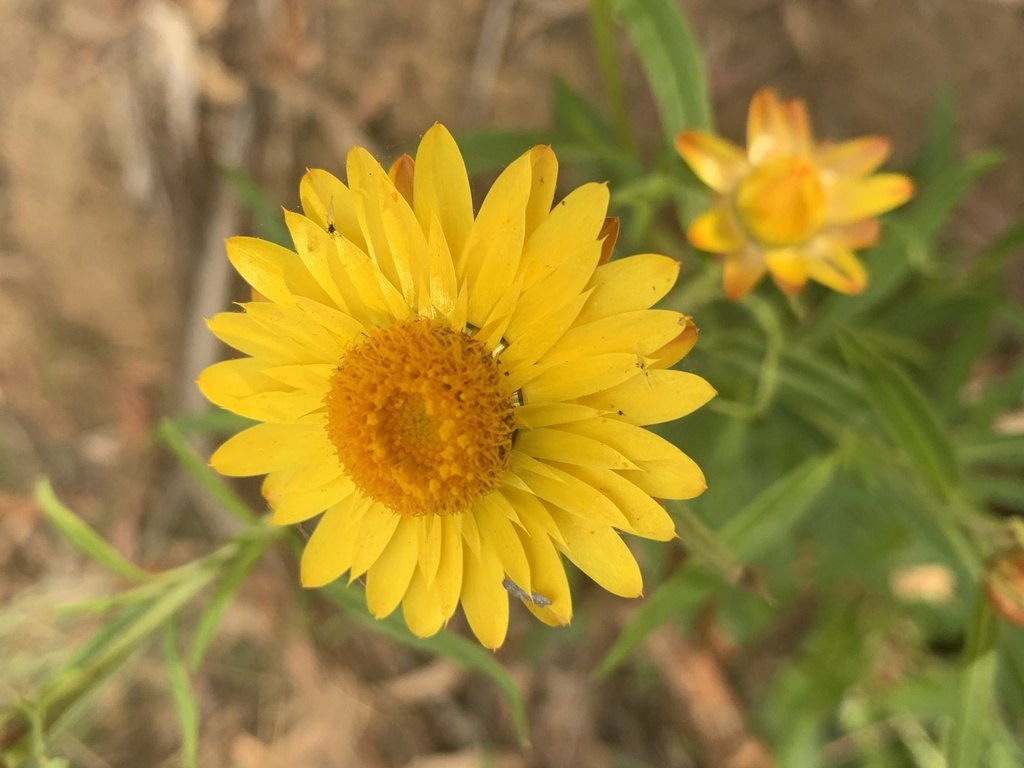
LATIN NAME: Xerochrysum bracteatum
COMMON NAME: Strawflower
Plant Profile
Strawflower grows wild across most of Australia, and the range is wider than most gardeners expect. It turns up on rainforest margins in Queensland, on red desert sand in the interior, and in subalpine grassland where frost comes early. The plant is usually annual, sometimes a short-lived perennial, and it reaches about a metre when it is happy. Foliage is green to grey and slightly rough to the touch.
The flower heads run from golden yellow to white, and they open from spring through autumn. What look like petals are bracts, stiff and dry and papery, arranged in several rows around a centre of true florets. That single structural detail explains everything the plant is used for.
Étienne Pierre Ventenat described it in 1803 as Xeranthemum bracteatum, in Jardin de Malmaison, a book commissioned by Joséphine de Beauharnais to catalogue the rare plants she had collected and grown at her château outside Paris. The epithet bracteatum refers to those bracts, which early botanists kept mistaking for petals. The Asteraceae thread continues with Coreopsis lanceolata, Ageratum houstonianum and Chrysanthemum lavandulifolium.
Science & Biotechnology
Each head carries several layers of involucral bracts, and each bract is stiffened with lignin and cellulose in a way that holds its shape after the tissue dies. Dry a head and nothing collapses. The colour survives because the pigments sit in the bract tissue rather than in thin, water-filled petal cells that shrivel on the first hot day.
The centre of the head is where the actual flowers are, hundreds of tiny tubular florets packed together. They open in rings from the outside in, so a strawflower head stays attractive for weeks instead of days. Butterflies, hoverflies, native bees, small beetles and grasshoppers all work the heads, and several moth larvae feed on the foliage.
Garden forms were developed in Germany from the 1850s, and growers there produced the colour range still sold in mixed packets: white, cream, gold, bronze, pink and deep purple, along with compact strains for bedding. In Australia the same species has been selected in the other direction, into perennial shrubs with woody bases that persist for several years.
Uses & Benefits
Strawflower is a cut flower first and a garden plant second, which is unusual. Stems are harvested when the bracts have opened fully but the centre florets are still tight, and they dry in a warm room without any further treatment. A bunch hung in a dark cupboard in July will still look presentable in December.
The one weakness is the stem, which wilts long before the bracts do, so florists often replace it with wire before a bunch goes into a vase. Lower-growing cultivars bred for hanging baskets and bedding carry the same flowers on shorter, stiffer stems and avoid the problem altogether.
In the border it earns its place by working hard in poor conditions. It wants full sun and it resents rich soil, which produces leafy plants that flop before they flower. Dry banks, gravel gardens, the strip between a path and a wall, and large containers all suit it.
For a wildflower or meadow planting it is a reliable annual that returns from its own seed, though never so freely that it becomes a problem. The flowers hold up in heat that flattens most annuals, and they keep producing until the first hard frost.
Growing from Seed
Sow in early spring, six to eight weeks before the last frost, and press the seed onto the surface of moist compost. It needs light, so do not cover it. Keep the tray at 15 to 20 °C and germination takes one to two weeks, sometimes three if the nights are cold.
Prick out into individual cells as soon as the first true leaves show, because seedlings left crowded stretch and never recover their shape. Grow on cool and bright, around 15 °C, and plant out after the last frost at 30 cm apart. The plants tolerate light frost once established.
Pinch the growing tips once, about three weeks after potting on, and you get a bushier plant with more stems for cutting. Water only when the soil has dried at the surface. Feed sparingly, if at all: excess nitrogen gives you soft growth, few flowers and stems that bend under the weight of their own heads.
Our Take
If you want one annual that pays you back with something you can keep, this is it. The dried heads last for years, the plants ask for almost nothing, and the colour is honest rather than the dusty imitation you get from most dried flowers. The one thing to accept is that it is not a plant for a rich, irrigated border. Give it poor ground and full sun, and it will outperform things that cost three times as much.
Related Reading
Readers interested in Strawflower frequently explore these as well: