


Crotalaria albida Seeds | White Rattlepod
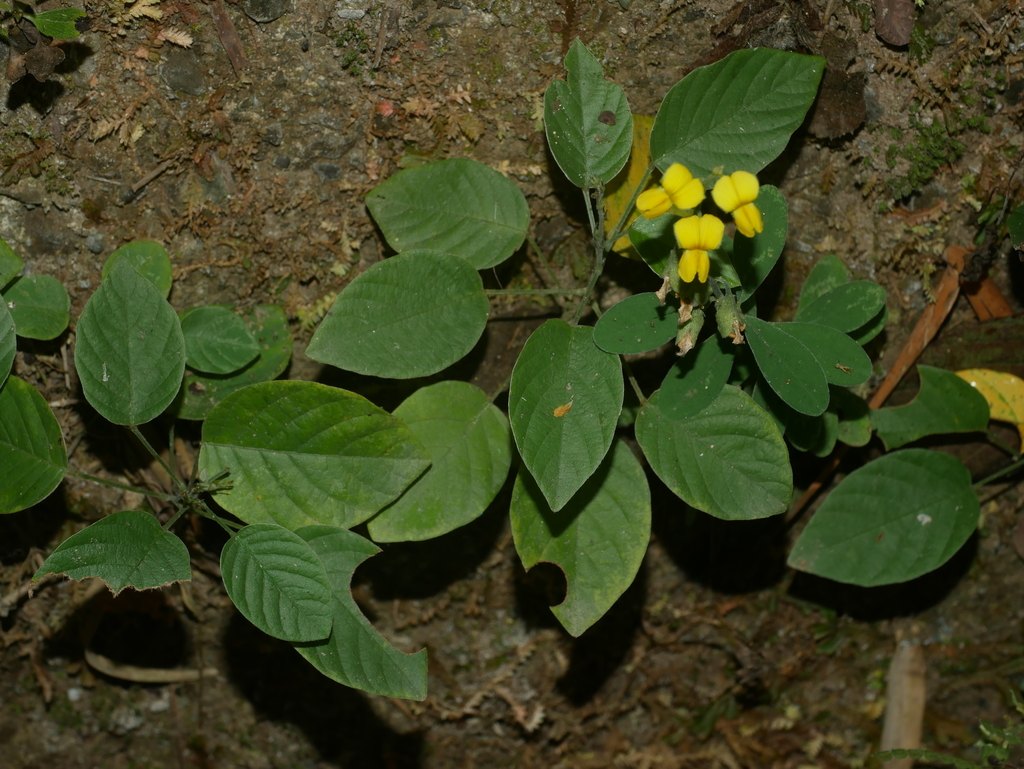
LATIN NAME: Crotalaria albida
COMMON NAME: White Rattlepod
Plant Profile
Crotalaria albida is a rattlepod of the tropical Asian hills, and the name is literal. Its pods inflate around the loose seeds so that a ripe one shakes like a small maraca, which is how the genus earned the English name and how generations of children have entertained themselves along roadsides.
The plant is a slender herb or subshrub fifty centimetres to a metre and a half tall, with simple lance-shaped leaves and terminal spikes of pale yellow-white pea flowers marked with faint purple veining. Flowering comes late in the year in the south, from October into December in the Chinese part of its range.
Its distribution sweeps the monsoon belt: India and the eastern Himalaya, Bangladesh, Myanmar, Thailand, Laos, Cambodia, southern China from Yunnan and Guangxi to Hainan, Vietnam, Malaysia, Java and the Lesser Sunda Islands. It favours open ground, grassy slopes, thickets and disturbed edges.
Like most of its genus the plant carries the family’s pea architecture in an unusual key: a banner petal broader than long, a keel curved like a small beak, and stamens joined into a tube around the ovary. The flower shape is built for bees, and the pod that follows is the loudest thing about it.
Science & Biotechnology
The genus’s reputation rests on pyrrolizidine alkaloids, and it is a serious one. These compounds damage the liver, cause cumulative poisoning in cattle and horses grazing contaminated forage, and turn up in honey and herbal preparations where the plants have been gathered by mistake. Every rattlepod deserves respect for that reason.
The alkaloids are also the plant’s defence, deterring generalist herbivores that would otherwise find a soft-leaved legume easy eating. Some butterflies have turned the chemistry to their own use, sequestering the compounds and becoming unpalatable in turn, a partnership that has made several Crotalaria species textbook examples of chemical ecology.
As a legume the plant fixes nitrogen through root nodules, housing rhizobia in the usual pink infected tissue, and that is why the genus has been used as green manure and cover in the tropics. The rattle pod, meanwhile, is a dispersal device: dry, light, and loose enough to roll and blow across open ground, spilling seed as it goes.
Uses & Benefits
In the folk medicine of southern China the whole plant is used under the name xiang ling dou for inflammation, boils and abscesses, applied externally as a poultice or a wash. Internal use is unusual and should stay that way given the alkaloid content of the genus.
As a soil improver the plant has a modest role in tropical farming, where fast-growing Crotalaria species are turned in as green manure before flowering. This species is one of the smaller and less aggressive members, useful in mixed cover rather than as a monoculture.
For wildlife the flowers are worked by small bees and the pods feed nothing much, but the plant’s real ecological value is as a nitrogen source in poor tropical soils, supporting the grasses and shrubs around it. It also colonises bare ground quickly after disturbance, holding soil through the first rains. Other Fabaceae on the list: Crotalaria pallida, Astragalus laxmannii and Samanea saman.
Growing from Seed
The seed coat is hard and needs breaking. Nick it with a file or pour near-boiling water over the seed and leave it to soak overnight, then sow at warm temperatures, twenty-five degrees or so, in a free-draining mix, barely covered, and expect germination within about one to three weeks.
Plants grow fast in heat and flower within a season from an early sowing, which makes the species a quick annual for a warm garden or a greenhouse border. In frost-free climates it behaves as a short-lived perennial, resprouting from the base after cutting and seeding itself into open ground nearby.
Give it full sun, poor to average soil and no rich feeding, which produces leaf at the expense of flower and makes the plants floppy. Do not graze the plant or feed it to stock, and keep it out of hay meadows, for that alkaloid caution is the one management rule that really matters with this genus.
Our Take
The rattlepod is a plant of small charms and one serious caution. The pale flowers are modest, the habit is weedy, and the pods are genuinely delightful, a piece of folk acoustics growing on a roadside bank in the last months of the year.
Scarify the seed, sow it warm, and grow it as a curiosity or a green manure in the tropics. Admire the rattle, keep it out of hay and fodder, and the plant will do its nitrogen-fixing work without being asked twice.
Related Reading
Continue exploring with these related plants: