


Corispermum declinatum Seeds | Declined Bugseed
LATIN NAME: Corispermum declinatum
COMMON NAME: Declined Bugseed
Plant Profile
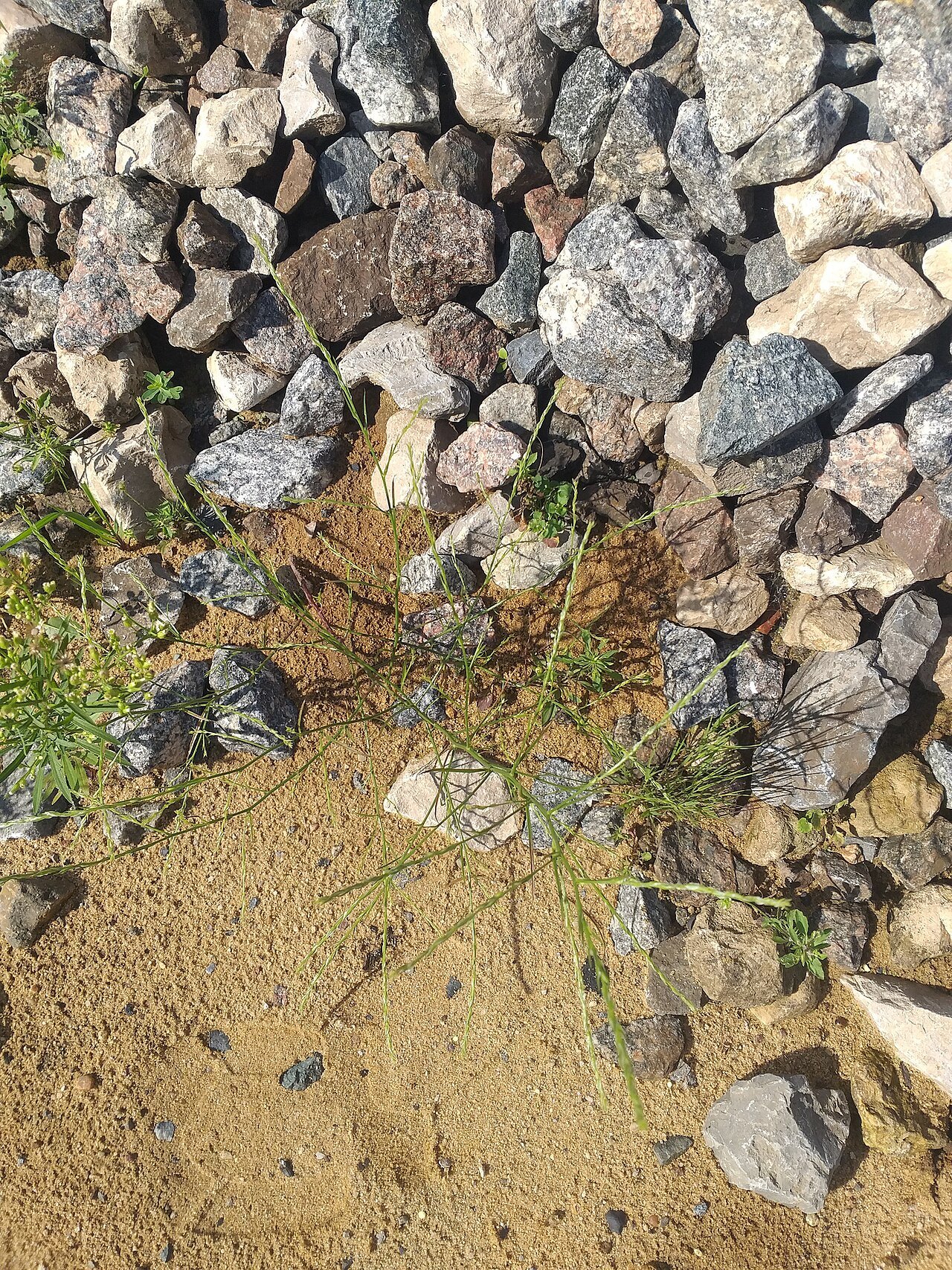
Corispermum declinatum is an annual of open sand, and its name is a small piece of entomology: the Greek words for bug and seed, given because the fruit looks like a beetle. The species epithet means drooping or leaning, a fair description of the way the fruiting branches bend under their load.
The plant is small and unassuming, ten to forty centimetres tall, branched from the base, with narrow, fleshy, grey-green leaves pressed close to the stem. It has no petals and no show: the flowers are tiny green knots packed along the upper stems, wind-pollinated and easy to miss until the fruit forms.
The fruit is the point. Each is a flattened one-seeded utricle three to four millimetres across, with a broad translucent wing around the edge that makes it look like a minute pale coin. Wing width and fruit shape are the characters botanists use to separate the bugseeds from one another, and they are not easy.
Its range covers the dry belt of the northern hemisphere: European Russia and Siberia from the Altai to Chita, Kazakhstan, Mongolia, Korea, and northern China from Xinjiang and Gansu through Inner Mongolia, Shanxi, Hebei and Shaanxi to Liaoning, with introduced records in the Baltic states. Three more Amaranthaceae sit in the same catalogue: Ptilotus exaltatus, Amaranthus hypochondriacus and Amaranthus gangeticus.
Science & Biotechnology
Bugseeds belong to the chenopod alliance, the group of amaranths in which C4 photosynthesis has evolved repeatedly, and their narrow leaves, dense stomata and tolerance of hot exposed ground fit that pattern. Standing on dry sand in full sun, the plant runs its whole life on very little water.
The winged fruit is a dispersal machine with two jobs. The wing catches wind and lets the seed tumble across open sand, and the same wing acts as a parachute when the fruit lands, orienting it flat so that the first rain can work it into the surface. On a dune, that combination of travel and burial is the difference between a seed that germinates and one that blows away.
The genus is taxonomically difficult, with species separated on fine fruit characters and considerable local variation, and the northern Chinese flora alone carries a dozen names that field botanists argue over. Molecular work has confirmed the genus as a natural group but has not yet settled how many species it contains.
Uses & Benefits
The plant’s chief service is ground cover on disturbed sand. It colonises dunes, riverbanks, road margins and field edges quickly, roots shallow but wide, and holds the surface through the windy season while slower perennials establish, a cheap and self-renewing nurse crop for stabilisation work.
Its seeds feed the small granivores of open country, from finches and larks to the rodents that live in sand, and the plants themselves are grazed lightly by sheep and goats in the steppe, though their value as forage is modest and their water content low.
For gardeners the bugseed is a curiosity rather than a star, but a useful one: an annual that thrives on the poorest sand, asks for no water, and produces fruit that is genuinely worth a hand lens. In a gravel garden or a wild patch it fills gaps that nothing else will take.
Growing from Seed
Direct sowing is the only sensible method, since the taproot resents transplanting. Sow in autumn for natural stratification, or in early spring as soon as the ground can be worked, scattering the seed on the surface and pressing it in rather than covering it, because light and a firm seedbed both help.
Germination is fast in warm weather, and the plants race through their cycle in a few months, flowering while still small and ripening fruit as the soil dries. On poor, sandy ground that speed is an advantage: the plant finishes before drought can stop it, and leaves seed for the next year.
Do not feed or water it. Rich soil makes a floppy, leafy plant that fruits poorly, and irrigation encourages the weeds that would otherwise leave the sand to the bugseed. Save seed from the plants with the broadest fruit wings if you are selecting, and let the rest self-sow where it stands.
Our Take
This is a plant to grow for the pleasure of looking closely at it. The flowers are nothing to speak of, the habit is weedy, and the fruit, a pale winged coin with a beetle’s outline, is the entire argument for giving it a square metre.
Scatter seed on bare sand in autumn or early spring, press it in, and never water. The plant will finish its life before the drought arrives, leave its winged seed in the surface, and come back next year without being asked.
Related Reading
Continue exploring with these related plants: