


Tagetes lucida Seeds | Mexican Tarragon
LATIN NAME: Tagetes lucida
COMMON NAME: Mexican Tarragon
Plant Profile
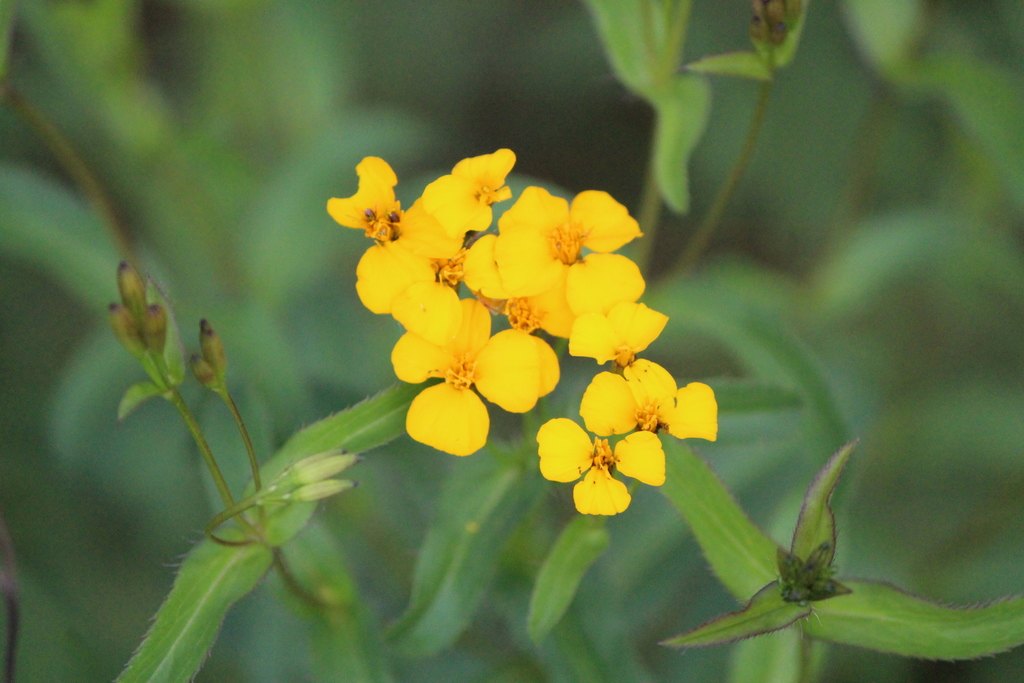
Mexican tarragon is a perennial 45 to 75 cm tall, upright in some landraces and bushy with many unbranched stems in others, with linear to oblong leaves about 7.5 cm long. The leaves are shiny medium green, never the blue-green of French tarragon, which is the first way to tell the two apart in a pot.
In late summer it carries clusters of small golden yellow heads about 15 mm across, with three to five ray florets, at the ends of the stems. The flowers are hermaphrodite and insect-pollinated, and they appear at the moment when the herb garden has usually finished. A plant in flower is as ornamental as most marigolds and far less brash.
It is native from central Mexico through Guatemala, Honduras and El Salvador, and it is a plant of the tropics at altitude rather than of the desert. That is why it is hardy in a surprising number of places: cold is less of a problem for it than wet.
Science & Biotechnology
The leaves smell of tarragon with a hint of anise, and the compound responsible is estragole, the same one that gives French tarragon its character. That is convergence rather than kinship: one is an Artemisia, the other a Tagetes, and they arrived at the same smell from different directions.
The Aztecs burned it as an incense called yauhtli and dedicated it to Tlaloc, the rain god. The Nahua still use it in ritual cleansings called limpias, rubbing the plant on the body of someone who has been struck by lightning, and it is still taken as a tea for colds, intestinal gas and diarrhoea. Archaeologists have found it as an additive in Maya tobacco mixtures.
There is a chemistry paper behind the tradition: a methanolic extract of the flowers inhibited Staphylococcus aureus, Escherichia coli and Candida albicans in culture, and the effect increased with ultraviolet exposure. That is a laboratory result on an extract, not a reason to treat an infection with a herb, and the distinction is the one that matters.
Uses & Benefits
It is the tarragon substitute for people who cannot grow tarragon. French tarragon sulks in heat, dies in wet winters and cannot be raised from seed; Mexican tarragon takes heat, comes through a wet winter more often than not and grows from seed in a season. The flavour is close enough for a béarnaise and better than the dried stuff.
The Aztecs used it in chocolatl, the drink that became chocolate, for the spicy note it gave. The dried leaves and flower heads make a pleasant anise-flavoured tea, which is how it is mostly used in Mexico and Central America now. A yellow dye comes from the flowers, and the dried plant is burned as an insect repellent.
In the garden it is a herb and a late-summer flower at once, which is a useful combination. Put it at the edge of the herb bed where the yellow can be seen in September, and cut it back hard in spring to keep it from going woody. Its Asteraceae company here includes Melampodium, Centaurea macrocephala and Dimorphotheca sinuata.
Growing from Seed
Sow indoors in March or April, barely covered, at 20 to 22 °C. Germination takes one to three weeks and the seedlings are vigorous. They are also easy to lose to damping off, so ventilate and water from below. Plant out once the frosts are over, 30 cm apart, in sun or a little shade.
It wants a reasonable soil and moderate water; dry ground makes it woody and short-lived, and rich ground makes it leggy. Pinch the tips through June to keep it bushy and to encourage the side shoots you will pick. The more it is cut, the better it looks.
In cold climates treat it as an annual and take cuttings in September from the best plants, rooting them on a windowsill. In mild ones it will overwinter and can be divided in spring. Save seed from a plant left to ripen at the end of the season; it sets freely where the summer is long enough.
Our Take
It deserves to be better known, and the reason it is not is that it sits between two categories: too ornamental for the herb bed, too herbal for the border. Grow it in both and stop worrying about the distinction.
The flavour is good, the flowers are good, and the plant is far tougher than French tarragon. What it is not is a drug, a cure or an incense for the modern house, whatever the older sources say. Use it in the kitchen and the garden, and let the rest be history.
Related Reading
More species in the same orbit as Mexican Tarragon: