


Atriplex hortensis Seeds | Garden Orache
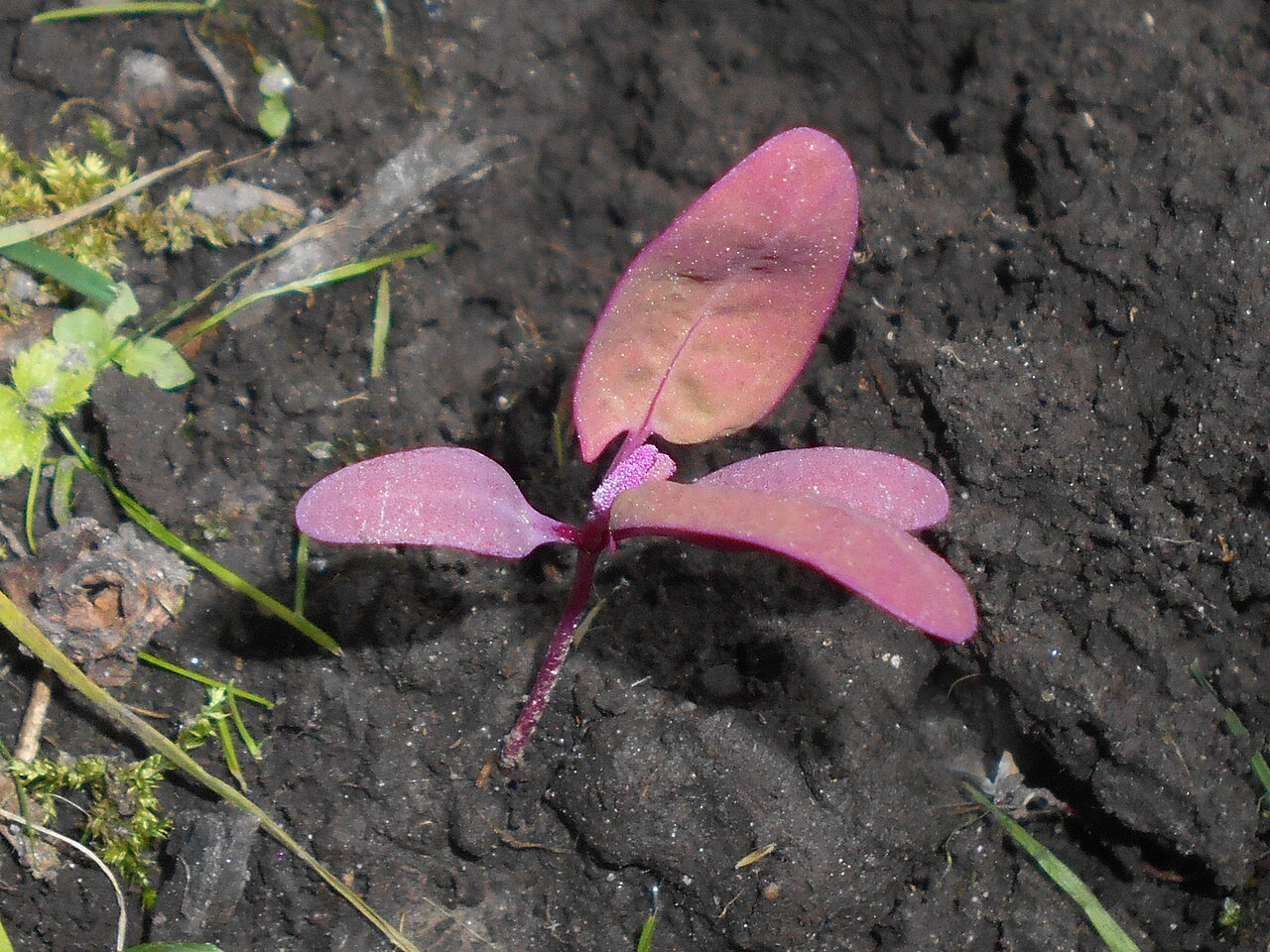
LATIN NAME: Atriplex hortensis
COMMON NAME: Garden Orache
Plant Profile
Atriplex hortensis, orache, is an annual of the amaranth family, native to Europe and Asia and naturalised in Canada, the United States, Australia and New Zealand. It was a common leaf vegetable across Europe before spinach arrived, and it is still grown as a warm-weather substitute for spinach in gardens where the real thing bolts in summer.
It grows 1 to 2 m tall on an upright stem, with triangular to arrow-shaped leaves in green or a deep, almost metallic red. The leaves are mealy at first, then smooth, and the plant carries loose spikes of insignificant greenish flowers that set small seeds enclosed in papery bracts, which hang on into autumn and give the plant a second season of interest.
The red form is the one gardeners now grow for display. It is not a subtle colour: in full sun the leaves are a dark ruby that reads across the garden, and in shade they turn a duller bronze-green. The green form is the one to eat, since the red colouring makes the leaves look like they belong in a flower bed rather than a salad.
Science & Biotechnology
Atriplex is a genus of about 250 species, many of them salt-tolerant, and it ranks among the few plant groups that includes both crops and halophytes. The salt tolerance comes from specialised bladder cells on the leaf surface, which accumulate salt and then burst, removing it from the tissue; that is why the leaves taste salty and why the plant can grow on ground that would kill a bean.
The genus was long placed in the Chenopodiaceae, the goosefoot family, but molecular work has absorbed that family into the Amaranthaceae, so orache now sits alongside amaranth and quinoa rather than alongside beet. The red colour is produced by betalains rather than anthocyanins, a pigment group found only in the Caryophyllales and never alongside anthocyanins. That is a useful botanical curiosity: if a plant has betalains it cannot have anthocyanins, and the two have never been found together in the same species. For more of the Amaranthaceae, the list offers Atriplex semibaccata, Halogeton arachnoideus and Salsola tragus.
Uses & Benefits
In the kitchen the young leaves are used raw in place of spinach and cooked like it, with a milder, slightly salty flavour and a softer texture. The red form holds its colour in salad, which makes it a useful substitute for red amaranth, and the leaves can be used to wrap rice or fish in the way that vine leaves are used in the eastern Mediterranean.
In the border the plant supplies height and leaf colour quickly, and it ranks among the few annuals that looks good in a vegetable garden and a flower border at the same time. The seed heads are architectural in autumn, and they dry well for winter arrangements.
It is nutritious, high in vitamin C and in iron, and it was valued for that in spring when fresh greens were scarce. It is also high in oxalates, like spinach, so people prone to kidney stones should not eat it in quantity.
Growing from Seed
Sow direct in early spring, as soon as the ground can be worked, at 15 to 20 °C. Cover the seed lightly and keep it moist; germination takes 7 to 14 days and is usually reliable. The plant has a taproot and transplants badly, so direct sowing is better than modules.
Thin to 20 to 30 cm apart for leaf production, or leave the plants closer if you want them to grow tall and thin for the border. Water regularly in dry spells; the plant tolerates poor soil but not drought, and dry ground makes it bolt.
For salad, pick the young leaves from the top of the plant and leave the lower ones to mature; the plant will keep producing for weeks if it is not allowed to flower. For seed, leave a few plants to set and collect the bracts when they turn papery. The plant self-sows freely, and in a mild climate it will appear every year without being sown.
Our Take
Orache is a plant that has fallen out of fashion and deserves better. As a vegetable it is more tolerant of heat than spinach, and as an ornamental it gives height and colour in six weeks. The red form in a border, with the sun behind it, is as good as any annual foliage plant.
Grow it in the vegetable garden for eating and in the border for looking at, and let a few plants go to seed. It will come back on its own, and you will wonder why you had not grown it before.
Related Reading
If Garden Orache appeals to you, these related plants are worth a look: