


Coreopsis lanceolata Seeds | Lanceleaf Tickseed
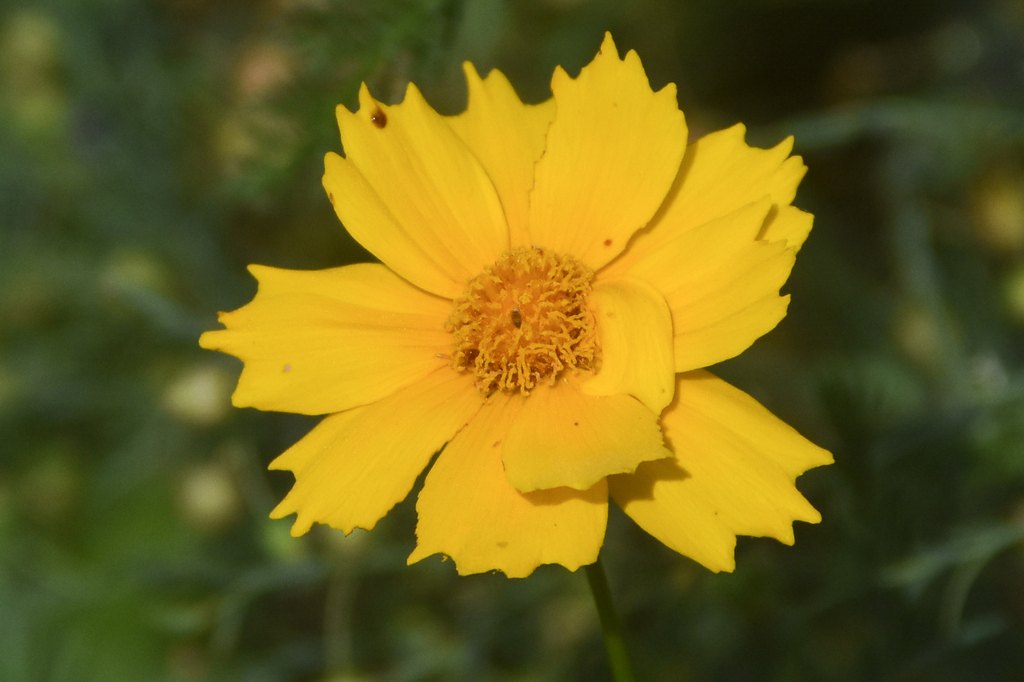
LATIN NAME: Coreopsis lanceolata
COMMON NAME: Lanceleaf Tickseed
Plant Profile
Lanceleaf coreopsis is a clump-forming perennial from the eastern and central United States, 40 to 60 cm tall, with yellow daisies 5 to 8 cm across held singly on long, almost naked stalks. The stems are stiff and upright, the foliage is concentrated at the base, and the whole plant has the look of a meadow flower that has wandered into a border and decided to stay.
Basal leaves are lance-shaped, 5 to 15 cm long, with smooth margins and thin stalks 3 to 10 cm long. Leaves higher up are stalkless, opposite, and either plain or cut into lobes, and they usually stop about halfway up the stem. The stem itself is slightly square and finely hairy, which is easy to feel with a fingertip.
The name is a small joke at the plant’s expense. Coreopsis comes from koris, a bug, and opsis, like: bug-like, because the seed resembles a tick. Tickseed is the English version of the same idea. The achenes are 3 mm long, brown, and they cling to clothing with much the same efficiency as the animal they are named after.
Science & Biotechnology
The flower head is two flowers in one. The yellow rays around the edge are sterile and exist to be seen; the disc florets in the centre are fertile and set the seed. That division of labour is common in the daisy family, and it is why a head can look perfect while producing nothing at all if the pollinators never arrive.
It spreads by rhizomes as well as by seed, so a single plant becomes a colony and why the plant survives both drought and waterlogging. The rhizome stores water and carbohydrate, and it pushes up new shoots from nodes that were buried by cultivation or by a shift in the soil after frost.
Introduced to Japan and China as an ornamental and then used in green projects along rivers and railways, it has become a serious invader. Japan listed it under the Invasive Alien Species Act in 2006 and prohibited its cultivation, transport, sale and purchase; it is now on the Ecological Society of Japan’s list of a hundred worst invaders.
Uses & Benefits
It is a pollinator plant first. Bees, wasps, butterflies, moths, flies and beetles all take nectar or pollen from the open heads, and birds and small mammals eat the seed. In a mixed planting it works as a landing pad, because the flat head is easy to stand on and the flower stays open in dull weather.
For cutting it is useful rather than elegant. The stems are long and straight, the flowers last a week and the buds continue to open in water, which is more than most yellow daisies manage. Condition them overnight and strip the lower leaves, which rot quickly and sour the water within a day.
The seed is edible and was used by some of the peoples of its native range, though the quantity is small and the flavour is unremarkable. The plant’s real value is ecological and ornamental, and it is grown in restoration mixes across the Midwest for exactly that reason rather than for the kitchen. The same family turns up again in Coreopsis basalis, Coreopsis grandiflora and Osteospermum ecklonis.
Growing from Seed
Sow in autumn or late winter. The seed needs light and about three weeks at 18 to 21 °C, and germination is better after four weeks of cold. Direct sowing is easier than transplanting, because the seedlings have a taproot and resent being moved once it has formed and started to thicken.
Plant in full sun and sandy, well-drained soil. Heavy clay holds water in winter and rots the crown, which is the usual cause of failure. On clay, plant on a mound of grit and compost so the crown sits above the winter water table rather than in it.
Deadhead to keep the flowers coming, and divide the clumps every three years in early spring. Do not overwater: a wet summer produces floppy stems that fall open in the middle and never recover. In a meadow, leave the seed heads for the birds and cut the whole lot down in March.
Our Take
It is reliable, cheap and yellow, and there is nothing wrong with any of that. The reason to choose it over the other yellow daisies is the long season and the way it holds itself up without staking, which is more than can be said for most of its relatives in a wet year.
Outside its native range, think before you plant. A plant that is banned in Japan and listed as a weed in eastern Australia should not be let seed into bushland, and the flowers are not so extraordinary that the risk is worth taking in a warm climate.
Related Reading
If Lanceleaf Tickseed appeals to you, these related plants are worth a look: