


Ageratum conyzoides Seeds | Ageratum
LATIN NAME: Ageratum conyzoides
COMMON NAME: Ageratum
Plant Profile
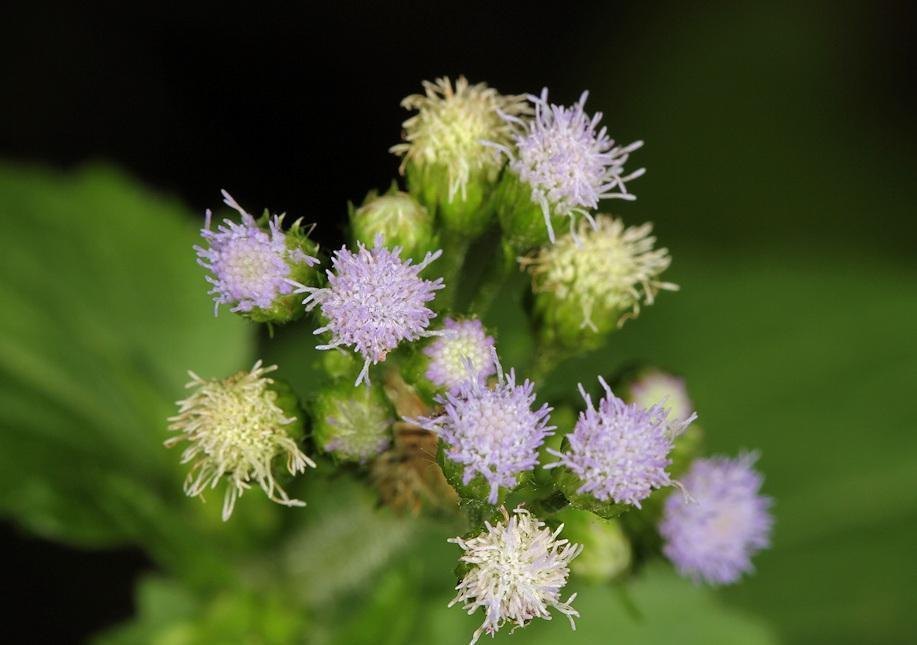
Ageratum, also called goatweed, whiteweed or mentrasto, is an herb of half a metre to a metre, with ovate leaves 2 to 6 cm long and flat clusters of white to mauve flower heads. It is native to tropical America, especially Brazil, and it has walked from there across the entire tropical belt.
The names it collects in passage are a travel diary. In Vietnamese it is cut lon, meaning pig feces, on account of its habit of growing in dirty areas; English gives it billygoat for the smell. Both refer to the same thing: a strong, medicinal, slightly animal odour from every bruised part of the plant.
Its range now follows cultivation within twenty degrees of the equator to altitudes of 2,500 metres, and the flower heads are the family standard: small, flossy, and produced in quantity. To a gardener it looks much like its cousin the garden flossflower, which is exactly the confusion that seed listings should be careful to resolve.
In its home range it is a plant of disturbed ground, field edges and waste places rather than deep forest. Everything about its biology, fast growth, continuous flowering and enormous seed output, is built for vacancy, which is the same set of traits that makes it a first-rate weed wherever farmers open soil.
Science & Biotechnology
The medical file is double-edged and well documented. Traditional cultures use it widely against dysentery and diarrhea, and the plant carries genuine bioactivity: it is an insecticide and nematicide, and laboratory screening keeps finding reasons for the folk reputation. PFAF’s medicinal rating of three out of five is high for a weed.
But ingestion can cause liver lesions and tumours. The plant contains the pyrrolizidine alkaloids lycopsamine and echinatine, the class of compounds responsible for some of the most serious herbal poisonings on record, and a mass poisoning in Ethiopia followed contamination of grain with this species. Self-harvested tea is how the folk use turns dangerous.
The insecticidal side is the safer interest. Extracts of the plant repel and kill storage pests and nematodes, and research groups in the tropics continue testing it as a crop-protection extract, which would let the chemistry work on insects while the alkaloids stay away from human livers.
Uses & Benefits
In traditional medicine across Africa, Asia and the Americas the plant is applied for wounds, skin complaints and gut infections, and its use is embedded enough that whole reviews have catalogued the ethnobotany by country. The pharmacology is real; the safety margin is not.
As a garden subject it offers what the bedding flossflower offers, masses of soft lavender-blue heads above green foliage, with a tougher constitution in tropical heat. In frost-free regions it can fill the same bed space the annual hybrids do, and it will do it without being asked twice.
The honest placement is this: a useful research and medicinal plant, a legitimate summer bedding subject in temperate climates where frost kills it before it can escape, and a serious invasive responsibility in the tropics. Africa, Australia, Southeast Asia, Hawaii and the United States all list it as invasive, and it is a moderate weed of rice cultivation in Asia. Its Asteraceae company here includes Ageratum houstonianum, Pycnosorus globosus and Gaillardia aristata.
Growing from Seed
Sow in spring at ordinary warmth, on the surface or under the lightest covering, and the seed will move fast: this is a plant bred by roadsides for fast, complete germination. Grow the seedlings warm and plant out after frost, 25 to 30 cm apart, into any ordinary soil.
It flowers without pause through summer and sets seed continuously, so the practical rule in temperate gardens is simple: enjoy it as an annual and compost it whole before the heads ripen. In frost-free climates, do not sow it at all near farmland, waterways or unmanaged ground.
The seed itself is small and wind-assisted in the manner of the family, with a pappus that carries it off any breeze. Collect it deliberately, into a bag, from plants you have chosen, and never let a stand go to seed open ground. The weed files were not built by careless botanists.
Our Take
Ageratum is the seed list’s most complicated entry: a real medicine, a real poison, and a real weed, often in the same paragraph. Treated as a temperate annual behind a garden fence, it is handsome and trouble-free; treated casually in the tropics, it writes its own case file.
Sow it in the cold-climate border only, pull it before the seed ripens, and admire what the pharmacologists admire. Treated as a tropical plant in a temperate garden, it is handsome, fragrant and perfectly safe; treated as an annual in the tropics, it writes its own case file. The choice is entirely the gardener’s postcode.
Related Reading
Readers interested in Ageratum frequently explore these as well: