


Heuchera hybrida Seeds | Coral Bells
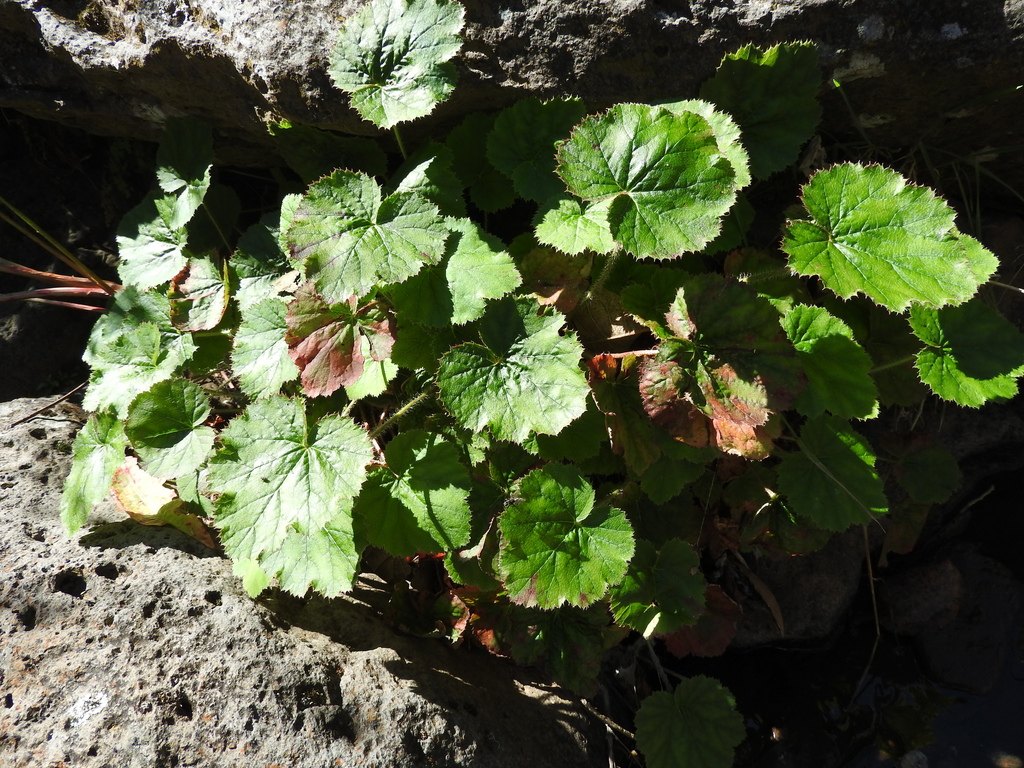
LATIN NAME: Heuchera hybrida
COMMON NAME: Coral Bells
Plant Profile
Heuchera hybrida is a garden category rather than a wild species, a swarm of crosses between the American alumroots that has been selected for leaf colour above all else. The parents include Heuchera americana, H. sanguinea, H. micrantha and H. richardsonii. The wild species are woodland plants of eastern and central North America, and most of them are modest in colour.
The oldest of the hybrids is Heuchera × brizoides, raised in France in the nineteenth century from H. micrantha and H. sanguinea, and still grown for its airy panicles of small red flowers. Modern coral bells owe more to H. americana and to the colour work of the 1990s. The French hybrids were the mainstay of the trade until the 1990s.
The genus is named for Johann Heinrich von Heucher, a professor of medicine at Wittenberg who corresponded with Linnaeus and who never saw most of the plants that carry his name. It sits in Saxifragaceae, alongside saxifrages, astilbes and tiarellas. The family is mostly herbaceous and mostly northern in distribution.
The foliage is the point now. Leaves range from lime and gold through amber, peach and purple to near-black, and many carry silver or red veining. The flowers, on slender stems a foot or two high, are a bonus rather than a reason. The leaves are evergreen in mild winters, and they persist under snow in colder ones.
Science & Biotechnology
The plants are evergreen or semi-evergreen perennials with a thick, woody base called a caudex, from which the leaves arise on long stalks. The caudex must sit at or just above the soil surface; buried, it rots, and this is the commonest way to lose a heuchera. A caudex that has risen above the soil should be buried again in autumn.
The flower stems are scorpioid cymes, curled at the tip when young and straightening as the flowers open from the base upwards. Each flower is small, bell-shaped and five-lobed, and the nectar is accessible to short-tongued insects as well as long. The flowers open over several weeks, which extends the season for insects.
The leaf colour is produced by anthocyanins in the epidermis, and it varies with light, temperature and season. Plants that are dramatic in spring can fade to green by August, and the same clone can look different in two gardens. Shade deepens the colour in most purple clones and washes out the yellows. Related entries here include Astilbe arendsii, Astilbe and Hylotelephium spectabile.
Uses & Benefits
Coral bells are used in shade borders, woodland gardens and containers, where the foliage carries the display from spring to autumn. They combine well with ferns, hostas and hellebores, and they hold colour in winter in mild climates. They are also good plants for the front of a shrub border.
The species and older hybrids are excellent nectar plants for small bees and hoverflies, and the seed heads feed finches if they are left standing. Modern foliage hybrids flower less freely, which is a trade-off worth knowing. Older forms are worth growing for the bees alone.
The root has been used medicinally by some Native American peoples as an astringent, a use that the common name alumroot records. It is not a garden medicine and should not be treated as one. The astringency comes from tannins in the root, so it was used on wounds.
Growing from Seed
Sow the dust-fine seed on the surface in winter or early spring, because it needs light to germinate, and keep it humid. Germination is slow and uneven, and seedlings vary enormously, so named plants are raised from cuttings. Named cultivars must be propagated vegetatively to keep their colour.
Divide established clumps every three or four years in spring, when the caudex has begun to rise out of the ground. Replant with the crown just proud of the surface, and water until new roots are made. A mulch of grit around the crown keeps the caudex dry in winter.
The plants want well-drained soil, shade from the strongest afternoon sun and constant but not wet moisture. They fail in heavy clay and in deep dry shade, and they heave out of the ground in frost, so check them in spring. Slugs damage the young leaves more than any other pest.
Our Take
The heuchera has become a foliage plant first and a flower plant second, and the change has been so complete that many gardeners do not know it flowers at all. That is a loss as well as a gain. The flowers are small but they are numerous and they last.
Grow it for the leaves if you like, but leave a few stems to flower for the bees. Both are worth having. A plant that pleases two senses at once is a good garden plant. Plant it with the crown high and let the leaves do the rest.
Related Reading
If Coral bells appeals to you, these related plants are worth a look: